
Jumping: biology, mechanics, and uses in animals and sport
Jumping is a rapid propulsive movement that temporarily frees a body from the ground. This article explains its mechanics, anatomical adaptations, roles in animals and humans, sports, and related distinctions.
Overview
Jumping is a rapid movement in which an organism propels itself off a supporting surface, becomes airborne for a distinct period, and then returns to the substrate. It is distinguished from other forms of locomotion by the pronounced aerial phase and by the specific timing of force generation. For a general definition of biological movement see organism motion.
Image gallery
6 Images



Mechanics and anatomy
At its simplest, a jump converts stored or generated muscular energy into kinetic energy and then into vertical and/or horizontal displacement. Key variables include impulse (force multiplied by time), takeoff angle, and the center of mass trajectory. Muscles, tendons and skeletal leverage determine performance: elastic recoil in tendons increases efficiency while joint ranges and limb proportions set practical limits. Jumping differs from sustained gaits such as running because the body spends a measurable interval fully unsupported.
Animals, evolution and specializations
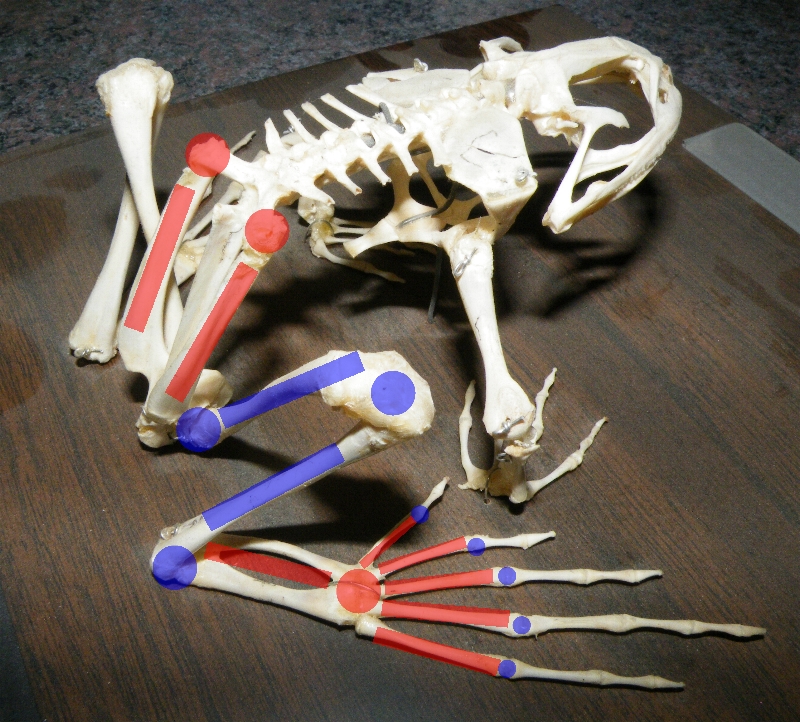
Many animal groups show convergent adaptations for jumping. Some mammals, for example marsupials like the kangaroo, employ powerful hindlimbs and long tendons to travel by hopping. Amphibians such as frogs use explosive hindlimb extension to escape predators and capture prey. More broadly, numerous animals — from insects to small mammals — evolve levers, spring-like tissues or altered limb proportions to increase takeoff velocity or control landing.
Human uses: sport, work and culture
Humans exploit jumping in athletics and practical tasks. Track and field events isolate different aspects of the skill: the long jump emphasizes horizontal distance, the high jump tests vertical clearance, and equestrian show jumping assesses timing and technique with animals. Beyond sport, jumping is part of dance, martial arts, and emergency movements such as vaulting obstacles.
Types and classifications
- Reactive jumps: brief ground contact and rapid force (e.g., many animal escapes).
- Propulsive jumps: larger energy buildup before takeoff (e.g., crouching long jump).
- Repeated or bounding jumps: series of hops used in locomotion (e.g., kangaroo hopping).
- Biomechanical variations: single-leg vs. two-leg, vertical vs. horizontal emphasis.
Notable facts and applications
Jumping is useful as a model for studying neuromuscular coordination, rehabilitation and robotic design because it compresses control and power delivery into a short interval. Engineers mimic tendon elasticity to improve energy recovery in prosthetics and jumping robots. In ecology, jump performance affects predator–prey interactions, habitat use and dispersal capability. Research continues to refine how anatomy, technique and environment shape what an organism can jump.
Questions and answers
Q: What is jumping?
A: Jumping is a form of movement where an organism propels itself up through the air and then falls back down.
Q: How is jumping different from running and galloping?
A: Jumping is different from running and galloping because the body is airborne for a longer period of time.
Q: What are some animals that use jumping as their main form of traveling?
A: Kangaroos are an example of an animal that uses jumping as their main form of traveling.
Q: Do all animals use jumping as their main form of traveling?
A: No, not all animals use jumping as their main form of traveling. Some animals, such as frogs, only use jumping to escape predators.
Q: What are some activities and sports that involve jumping?
A: The long jump, high jump, and show jumping are examples of activities and sports that involve jumping.
Q: Why is jumping important in sports?
A: Jumping is important in sports because it is often used as a measure of strength and skill, and is a fundamental aspect of activities like the long jump, high jump, and show jumping.
Q: What are some benefits of jumping?
A: Jumping can improve muscle strength, coordination, cardiovascular health and can also be an effective way to burn calories.
Related articles
Author
AlegsaOnline.com Jumping: biology, mechanics, and uses in animals and sport Leandro Alegsa
URL: https://en.alegsaonline.com/art/51576