
Differential geometry: shapes, curvature, and applications
Branch of mathematics applying calculus and linear algebra to study curves, surfaces, and higher-dimensional spaces; explores curvature, geodesics, and metrics with many scientific and engineering uses.
Differential geometry is a branch of mathematics that studies geometric objects using the tools of calculus and linear algebra. Early descriptions call it the geometry of smooth shapes, built from concepts in differential and integral calculus and from linear algebra. Its classical subjects include the theory of curves and surfaces, and the extension of those ideas to abstract spaces where local coordinates behave like pieces of Euclidean space. Modern treatments treat geometric structures on manifolds and use analytic techniques to probe their properties. For a concise orientation to the field see this general overview: mathematical field.
Image gallery
2 Images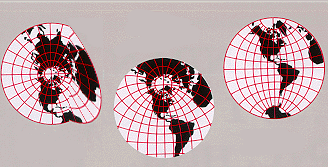

Core concepts
At the heart of differential geometry are several interrelated notions. A smooth manifold is a space that locally resembles a plane or higher-dimensional Euclidean patch and supports differentiation. Each point on a manifold has a tangent space, where vectors describe instantaneous directions. A metric (in Riemannian geometry) gives a way to measure lengths and angles and therefore defines distances and curves of shortest length called geodesics. Curvature quantifies how a shape deviates from being flat; for example, the curvature of a surface in three dimensions can be described at each point by principal curvatures. Differential forms, connections and curvature tensors are algebraic devices that encode how geometry changes from point to point.
Historical background
The subject developed in stages during the 18th and 19th centuries as mathematicians investigated the geometry of the plane and of space. Questions about the sum of the angles of a triangle on a curved surface and how that differs from the Euclidean value are classical: in Euclidean geometry that sum is 180°, a statement often cited when introducing curvature and global geometry. Carl Friedrich Gauss made pioneering contributions by relating intrinsic curvature of surfaces to measurable quantities, and he asked practical questions—such as whether bearings and distances used in navigation truly behave as on a flat plane—which helped stimulate rigorous ideas about curvature and measurement (Gauss, historical curiosities). Bernhard Riemann later generalized geometry to higher-dimensional manifolds and metrics, laying the groundwork for the modern field.
Important results and methods
Differential geometry connects local differential quantities to global topology and analysis. Theorems such as the Gauss–Bonnet relation illustrate how integrated curvature relates to topological invariants of a surface. Techniques include taking derivatives of tensor fields, studying geodesic flow, and using partial differential equations to evolve geometric structures (for example, flows that smooth or deform metrics). These analytic tools have been central to later breakthroughs; notable modern work used geometric analysis in the proof of topological conjectures such as the one resolved by Grigori Perelman, who applied methods from Ricci flow and differential geometry in his proof of the Poincaré conjecture (Perelman).
Applications and examples
Though rooted in pure mathematics, differential geometry has broad applications. In physics it provides the language of general relativity, where spacetime is modeled as a four-dimensional manifold with a metric that determines gravitational effects. In cartography and surveying, considerations about how to represent the curved Earth on flat maps led to studies of projections and distortions (map projections). Navigation systems that rely on satellites invoke geometric and relativistic corrections for accurate positioning (satellite navigation). Other uses include computer graphics (for shading and surface modeling), robotics (motion planning along constrained surfaces), and geometric data analysis in statistics and machine learning.
Subfields, distinctions and further reading
Differential geometry spans several interrelated subfields. Riemannian geometry emphasizes metrics and curvature on manifolds; symplectic geometry studies structures important in classical mechanics; and global differential geometry focuses on how local curvature affects global shape. Computational and discrete variants adapt smooth ideas to meshes and graphs for practical algorithms. For introductory expositions and topic surveys see resources on classical geometry, the study of triangles and angle sums in curved spaces, and applied discussions involving surfaces and curves. For historical context and modern developments consult materials that discuss Gauss’s empirical questions about bearings (navigation) and the role of geometric analysis in resolving deep topological problems.
Key takeaways
- Differential geometry applies calculus to geometric problems and studies manifolds, metrics, geodesics and curvature.
- Its methods link local differential quantities with global topological properties and have produced influential theorems and tools.
- Applications range from theoretical physics to practical engineering, cartography and computer science.
- Introductory and advanced pathways exist for learners interested in pure theory or computational applications; follow general references and surveys for entry points (field overview).
Related articles
Author
AlegsaOnline.com Differential geometry: shapes, curvature, and applications Leandro Alegsa
URL: https://en.alegsaonline.com/art/27346