
General relativity: Einstein’s theory of gravitation and spacetime
A concise, neutral overview of general relativity: its core ideas of curved spacetime, main equations, experimental tests, applications (GPS, cosmology), and how it differs from Newtonian gravity.
General relativity is the modern classical theory of gravitation that describes gravity not as a force in the Newtonian sense but as a manifestation of curved spacetime. Introduced by Albert Einstein in 1915, the theory unifies the concepts of space and time into a single four-dimensional continuum. Mass, energy and their motion change the geometry of that continuum, and objects move along paths determined by that geometry.
Image gallery
10 Images
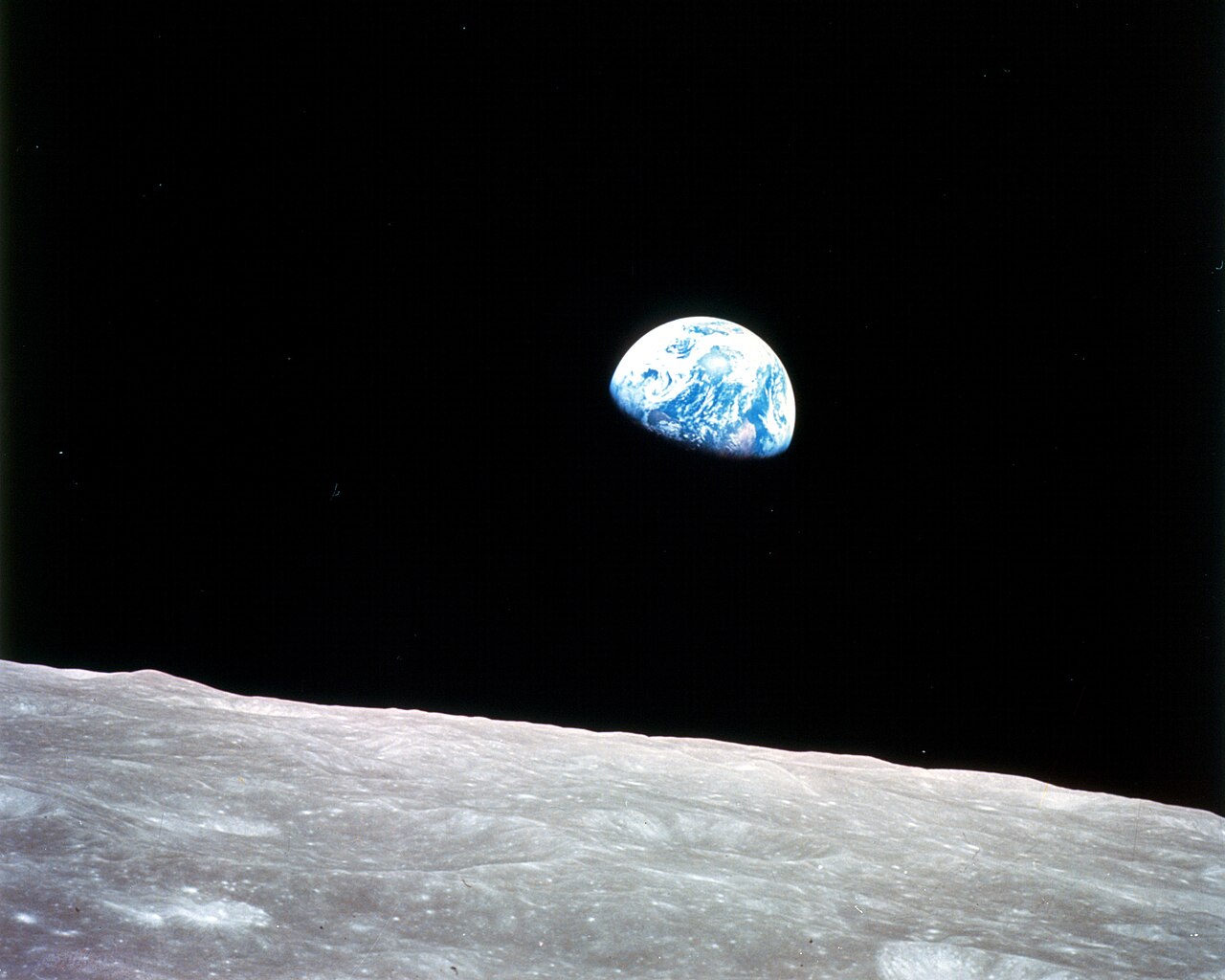




Key concepts and structure
General relativity is built from a few interrelated ideas. The geometry of spacetime is described by a metric and associated curvature. Free-falling objects follow geodesics — the straightest possible paths in curved geometry. The sources that determine curvature are summarized by quantities such as matter, energy and momentum, and their relationship to curvature is expressed by the Einstein field equations. In everyday language, the curvature of space and time tells matter how to move, and matter tells spacetime how to curve.
Predictions and experimental tests
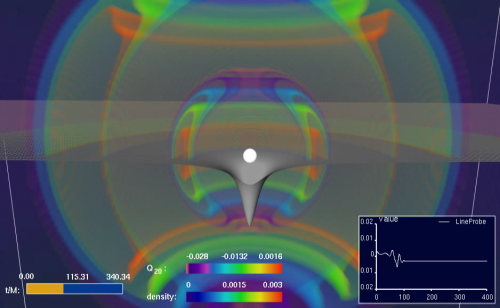
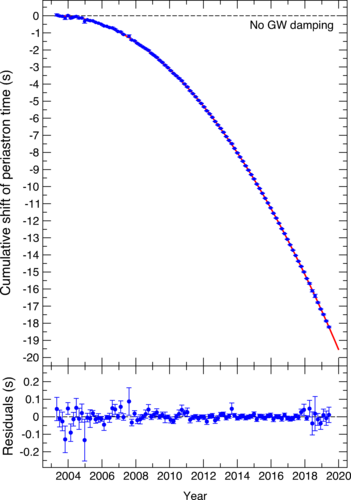
The theory produces distinctive, testable effects. It explains orbital anomalies such as the precession of Mercury, predicts the bending of light by mass (gravitational lensing), and implies gravitational redshift and time dilation in a gravitational field. A modern confirmation came from direct detection of gravitational waves, produced by accelerating massive bodies and observed by detectors like LIGO. These and other measurements have repeatedly confirmed the theory’s predictions to high precision.
Uses and practical importance
Beyond fundamental physics, general relativity is essential in astrophysics and cosmology: models of black holes, neutron stars, the expanding universe and gravitational lensing all rely on it. It also has practical technological implications; for example, satellite-based navigation systems must correct clock rates for relativistic effects to achieve accurate positioning, showing that relativistic corrections are not merely academic.
History and development
Einstein developed general relativity as an extension of special relativity and earlier ideas about gravity. Its mathematical formulation drew on differential geometry and the work of many mathematicians and physicists. Over the twentieth century the theory was extended, applied to cosmology, and combined with observations to form the standard relativistic models used today.
Scope, limitations and distinctions
General relativity reduces to Newtonian gravity in the appropriate low-speed, weak-field limit, but it departs strongly when fields are strong or velocities approach the speed of light. It is a classical (non-quantum) theory and is expected to be incomplete at the smallest scales where quantum effects of gravity should appear. Nevertheless, it remains the best-tested description of gravitation in its domain of applicability and a foundation for modern gravitational physics and cosmology. For further overviews consult introductory sources (space, time, biography) and more technical treatments (field equations, geometry, gravity).
Related articles
Author
AlegsaOnline.com General relativity: Einstein’s theory of gravitation and spacetime Leandro Alegsa
URL: https://en.alegsaonline.com/art/37960
Sources
- www-history.mcs.st-and.ac.uk : General relativity
- www-history.mcs.st-and.ac.uk : Mathematical Physics index
- st-andrews.ac.uk : School of Mathematics and Statistics
- st-andrews.ac.uk : University of St. Andrews
- doi.org : 10.1119/1.4895342
- doi.org : 10.1098/rsta.1920.0009
- arxiv.org : 1602.03837
- ui.adsabs.harvard.edu : 2016PhRvL.116f1102A
- doi.org : 10.1103/PhysRevLett.116.061102