
Dialog system (conversational agent)
Software that carries on structured interaction with humans using text, speech or other signals; covers architecture, history, applications, and design trade-offs.
A dialog system, also called a conversational agent, is a software system designed to interact with people using coherent, structured language. Implementations range from simple scripted question-and-answer flows to advanced, learning-based systems that manage multi-turn conversations. Dialog systems can communicate via multiple channels: textual chat, synthesized or recognized speech, visual displays, gestures or haptic feedback. A helpful technical overview is often provided by a system-level description such as system architecture guides.
Image gallery
1 Image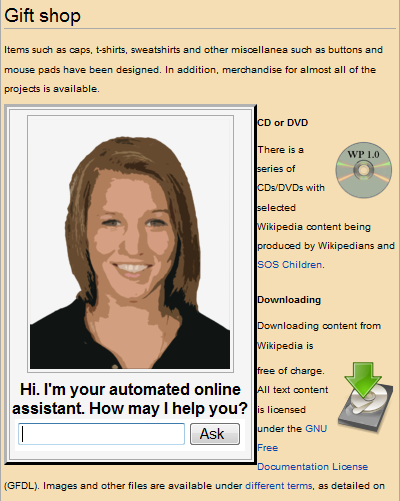
Core components and how they work
Most modern dialog systems separate responsibilities into a few principal components. Natural language understanding (NLU) converts raw user input into a structured representation. A dialog manager tracks conversational state, makes decisions about the next action and handles turn-taking. Natural language generation (NLG) produces readable or spoken replies. When speech is involved, automatic speech recognition (ASR) and text-to-speech (TTS) modules handle audio I/O. Input and output channels are often described in technical references such as text interfaces and speech processing, while integration concerns appear under input and output design discussions.
History and development
Early dialog systems were rule-based, operating with hand-crafted patterns and finite-state flows. As statistical methods and machine learning matured, probabilistic models and data-driven approaches allowed systems to learn from conversation logs. More recently, neural network architectures and large pretrained language models have enabled richer, open-ended responses and better context handling. Commercial voice assistants such as Alexa or Siri combine many of these technologies into consumer-facing services.
Applications and examples
Dialog systems are used across many domains: customer support chatbots that answer common queries, task-oriented assistants that book appointments or control devices, educational tutors that provide interactive learning, and accessibility tools that support users with impairments. In many settings the same underlying components are adapted for different goals: a terse, deterministic dialog manager for transactional tasks, or a generative model for exploratory, open-domain conversation.
Design considerations and distinctions
- Task-oriented vs. open-domain: Task systems focus on completing a defined objective; open-domain systems prioritize natural, free-form interaction.
- State and context: Robust context tracking is essential for multi-turn coherence and personalization.
- Evaluation: Objective metrics (task success, response time) and subjective measures (user satisfaction) are both important.
- Ethics and safety: Privacy, transparency, and mitigation of harmful or misleading responses are active design requirements.
Practical deployment also raises engineering challenges such as latency, resilience, localization, and integration with backend services. While graphical wizards or simple menus can appear dialog-like, they typically lack the state complexity and language processing components that define full dialog systems.
Outlook
Research continues on better context modeling, multimodal interaction (combining vision, gesture and language), and controllable generation to reduce errors and bias. As models and system design mature, dialog systems are likely to become more reliable helpers across work, education, healthcare and daily life, while ongoing attention to user trust and regulation will shape their adoption.
Questions and answers
Q: What is a dialog system?
A: A dialog system or conversational agent (CA) is a computer system intended to converse with a human, in coherent, structured language.
Q: What are some of the communication modes used in dialog systems?
A: Various so-called "dialog systems" have employed text, speech, graphics, haptics, gestures and other modes of communication on both the input and output channel.
Q: Why is the definition of dialog system debatable?
A: What does and does not constitute a dialog system may be debatable.
Q: Which popular digital personal assistants are meant to be CAs?
A: Alexa, Bixby, Cortana, Siri, and digital PAs are meant to be CAs.
Q: What is GPT3 Lena?
A: GPT3 Lena is a conversational AI bot.
Q: What is the latency time of modern systems?
A: The latency time of modern systems is 4 years.
Q: Would an up-to-date CA be able to read the given text?
A: Yes, an up-to-date CA would be able to read this text.
Related articles
Author
AlegsaOnline.com Dialog system (conversational agent) Leandro Alegsa
URL: https://en.alegsaonline.com/art/27097