
Danish people: identity, history, and cultural overview
An overview of the Danish people (Danes): origins, language, history from the Viking era, cultural traits, diaspora and distinctions between ethnicity and citizenship.
Overview
The term Danes refers to people associated with the modern nation-state of Denmark and to an ethnic community traditionally linked to the territory of that state. In everyday use it can mean either inhabitants of the country or members of an ethnic group who share a common language, culture and historical memory. That distinction — between citizenship and ethnic identity — is important when discussing who counts as Danish in different contexts.
Image gallery
4 Images

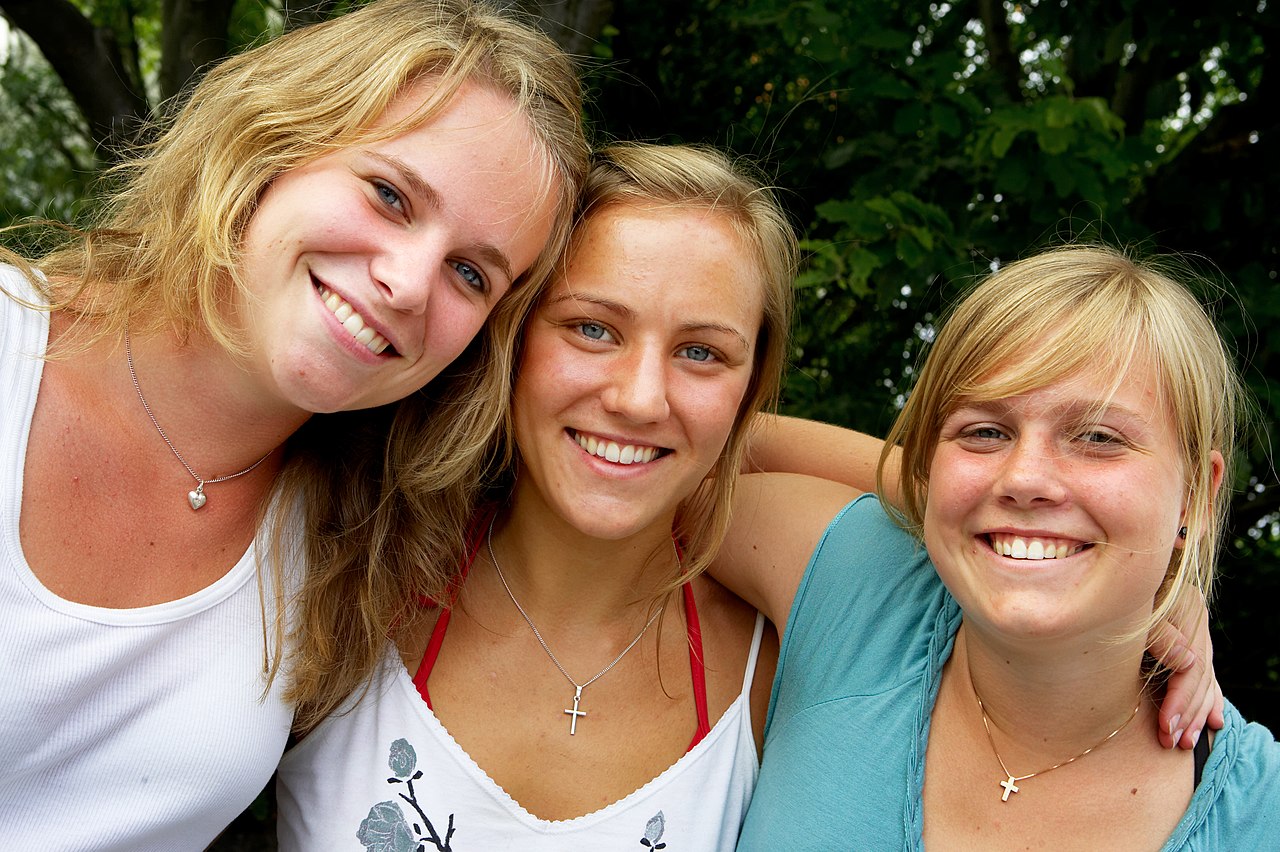

Language and identity
Most Danes speak the Danish language, a North Germanic tongue closely related to Norwegian and Swedish. Language is a central marker of Danish cultural identity, but other elements contribute as well: family patterns, social customs, values such as trust and egalitarianism, and everyday practices often summarized by the popular concept of hygge. Historically the majority of Danes have been members of the Lutheran state church, which has shaped many public rituals and holidays, though contemporary Denmark is largely secular in practice.
Historical development
People identifying as Danes trace a long historical presence in the region. Early medieval sources and monumental inscriptions, most famously the Jelling Rune Stone, refer to the conversion of the Danes to Christianity under Harald Bluetooth in the 10th century. From that era emerged the Danish kingdom and a society shaped by Viking activity, medieval state formation and later processes of centralization and modernization. Over centuries, the character and composition of the Danish population changed through trade, migration and political unions, yet many Danes view a continuous cultural thread from the early medieval population to the present day.
Culture, society and contributions
Modern Danish society is noted for its comprehensive welfare institutions, high levels of civic trust and a strong emphasis on social equality. Denmark has achieved international recognition in design, architecture, literature and industry. Notable cultural figures and innovations associated with Danish heritage include fairy-tale authorship, existential philosophy, and companies and products with global reach. These items illustrate cultural influence rather than defining the entirety of what it means to be Danish.
- Language: Danish as a common cultural bond.
- Social model: emphasis on egalitarian welfare arrangements.
- Creative output: literature, design and industrial innovation.
Distribution, diaspora and minorities
Most ethnic Danes live inside the borders of Denmark, but there are Danish-speaking communities and individuals beyond them. A recognized Danish minority lives in Southern Schleswig (now in Germany), and many people of Danish background live abroad. Modern migration has both brought newcomers into Danish society and led to Danish emigration; contemporary debates often distinguish long-standing ethnic communities from more recent arrivals and discuss integration, identity and citizenship in that light. For discussions of population change and movement see materials on immigration.
Distinctions and notable facts
It is useful to separate three related senses of “Danish”: legal citizens of the state; members of an ethnic or cultural community; and residents who participate in Danish society regardless of origin. Language and shared traditions remain strong identity markers, but modern Denmark is also home to diverse communities and influences. Scholars and institutions study these dynamics in different ways; for more formal definitions and demographic descriptions see sources on the Danish ethnic group and related research.
Questions and answers
Q: Who are Danish people?
A: Danish people, also known as Danes, are a nation and ethnic group who are born in Denmark and speak the Danish language.
Q: Is there a Danish minority group outside of Denmark?
A: Yes, there is a Danish minority in Southern Schleswig.
Q: What is the Jelling Rune Stone?
A: The Jelling Rune Stone is a historical artifact that mentions the Danes and how Harald Bluetooth converted them to Christianity in the 10th century.
Q: How long has Denmark been inhabited?
A: Denmark has been continuously inhabited since the 10th century.
Q: Has Denmark experienced cultural and ethnic influence from outside of the country?
A: Yes, Denmark has experienced significant cultural and ethnic influence and immigration from all over the world.
Q: How do Danes view themselves in relation to their early ancestors?
A: Danes tend to see themselves as ethnic descendants of the early Danes mentioned in historical sources.
Q: Who was responsible for converting the Danes to Christianity?
A: Harald Bluetooth was responsible for converting the Danes to Christianity in the 10th century, as recorded on the Jelling Rune Stone.
Related articles
Author
AlegsaOnline.com Danish people: identity, history, and cultural overview Leandro Alegsa
URL: https://en.alegsaonline.com/art/25423
Sources
- dst.dk : Danmarks Statistik
- euroamericans.net : 2000 American census
- www12.statcan.ca : "Statistics Canada: Ethnocultural Portrait of Canada Highlight Tables, 2006 Census"
- ssb.no : "Persons with immigrant background by immigration category, country background and sex. 1 January 2009 (Immigrants and Norwegian-norn to immigrant parents + Other immigrant background)"
- abs.gov.au : "Redirect to Census data page"
- tatsachen-ueber-deutschland.de : National minorities
- scb.se : Statistics Sweden
- danes-in-argentina.dk : danes-in-argentina.dk/
- news.bbc.co.uk : "BBC NEWS - UK - Born Abroad - Denmark"
- ine.es : "Spanish National Statistics Institute"
- udvandrerne.dk : udvandrerne.dk
- statsborger.dk : "Danes in foreign countries"
- stats.govt.nz : "Statistics New Zealand"
- statice.is : "Population by country of birth 1981-2006 by country and year: Denmark, 2006"
- cso.ie : "Server Error 404 - CSO - Central Statistics Office"