
Davis Strait — Arctic sea passage between Greenland and Baffin Island
Davis Strait is the broad channel between mid‑western Greenland and Baffin Island, connecting Baffin Bay and the Labrador Sea. It influences regional oceanography, ecosystems, navigation and fisheries.
Davis Strait is a broad Arctic channel situated between mid‑western Greenland and Nunavut’s Baffin Island, off the coast of Canada. It forms the marine link between Baffin Bay to the north and the Labrador Sea to the south. The strait is notable for its width and for the role it plays in the exchange of water, ice and biological productivity between the Arctic and the North Atlantic.
Image gallery
4 Images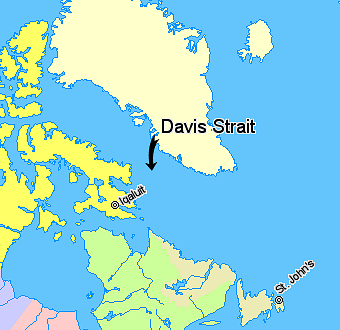


Physical characteristics
The seafloor of the Davis Strait generally ranges from about 1,000 to 2,000 metres in depth, making it shallower than adjacent basins. Strong currents and mixing occur where colder Arctic outflow meets warmer Atlantic water, and seasonal sea ice can persist well into spring. These physical conditions create complex patterns of temperature, salinity and ice cover that influence local weather and marine habitats.
History and naming
The strait is named for the English navigator John Davis (1550–1605), who explored parts of the North American Arctic while searching for the Northwest Passage in the late 16th century. European charts and subsequent voyages used the name as exploration and mapping of the region advanced. Indigenous peoples had long known and navigated the waters for hunting and travel.
Ecology and human uses
Davis Strait supports a rich array of marine life and has been important for coastal communities and commercial fisheries. Typical uses and ecological features include:
- Fisheries for species such as cod, shrimp and other groundfish, which attract fishing fleets seasonally.
- Abundant marine mammals and seabirds, including seals, whales and large seabird colonies that feed on rich plankton and fish assemblages.
- Scientific research into oceanography, climate change and sea‑ice dynamics, because the strait is a key pathway for water exchange between the Arctic and North Atlantic.
- Seasonal shipping and navigation, increasingly discussed as Arctic accessibility changes, though ice and weather remain limiting factors.
Notable distinctions and contemporary relevance
The Davis Strait is often cited as one of the world’s broader straits by surface width. Its intermediate depth—shallower than both the neighbouring Labrador Sea and Baffin Bay—affects how currents and sea ice behave there. The strait lies between jurisdictions and shores that are part of Greenland and Canada, and it remains important for regional fisheries management, indigenous livelihoods and studies of the changing Arctic marine environment.
Because of its strategic position and environmental sensitivity, Davis Strait continues to draw attention from oceanographers, resource managers and navigators interested in how Arctic–Atlantic exchanges influence climate, ecosystems and human activity.
Related articles
Author
AlegsaOnline.com Davis Strait — Arctic sea passage between Greenland and Baffin Island Leandro Alegsa
URL: https://en.alegsaonline.com/art/25846