
Baffin Island: Canada's Largest Arctic Island
Overview of Baffin Island: geography, climate, ecology, human settlement, history and contemporary importance in the Canadian Arctic.
Baffin Island is the largest island in Canada and a major landmass within the Arctic. Its French name is shown in some sources as Île de Baffin. Measured at roughly 507,451 km², it ranks among the world's biggest islands and is commonly cited as the fifth largest globally; the island's published area underscores its vast scale.
Image gallery
10 Images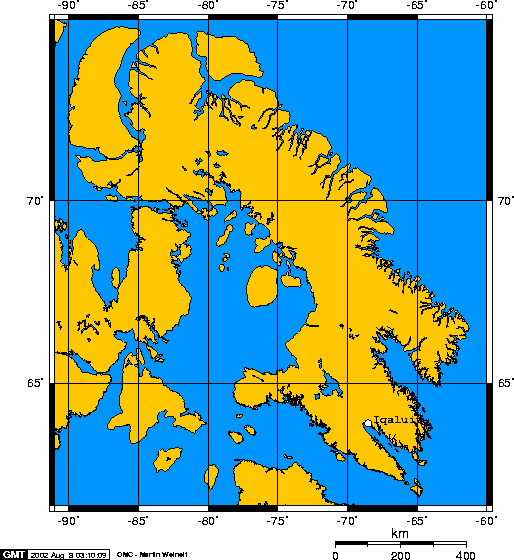


Geography and landscape
Located in the eastern Canadian Arctic, Baffin Island lies within the territory of Nunavut and forms a central part of the Canadian Arctic Archipelago. The island is separated from Greenland by Baffin Bay and features an intricate coastline of fjords, inlets and peninsulas. Its interior is dominated by mountainous terrain, ice caps and tundra, with dramatic features carved by past glaciers. The land is, by definition, an island—remote, rugged and sparsely populated.
Climate, ecology and wildlife
Baffin Island experiences an Arctic climate with long, cold winters, brief cool summers and extensive sea-ice cover for much of the year. Vegetation is limited to tundra communities in lowlands and sheltered valleys. The island supports iconic Arctic animals such as polar bears, Arctic foxes, seals and various whale species, and it is an important nesting area for migratory seabirds. These ecosystems are sensitive to climate change and to shifts in sea-ice patterns that affect food webs and hunting grounds.
People, settlements and economy
Human presence on Baffin Island is primarily Inuit. A small number of communities are scattered along the coasts; population figures have been small relative to the island's size, with historic counts often reported around 11,000 inhabitants in older summaries (for example, a figure cited in 2007). Iqaluit, on the island's southeastern coast, serves as a regional hub and the capital of Nunavut. Traditional subsistence hunting and fishing remain important, alongside contemporary activities such as government services, resource exploration, arts and tourism.
History and cultural notes
Baffin Island has long been inhabited by Inuit peoples whose history and knowledge of the land predate European contact. The island's English name honors the early 17th‑century English navigator William Baffin, while Norse sagas referred to parts of the region as Helluland. European exploration, missionary activity and later economic interests altered patterns of settlement and trade, but Inuit communities have preserved languages, art forms and subsistence practices that continue to shape the island's cultural identity.
Importance and notable facts
Baffin Island is noteworthy for its size, remote Arctic landscapes and role in northern ecology and culture. It attracts scientific research into glaciology, climate change and Arctic biology, as well as visitors seeking wilderness travel. At the same time, the island faces contemporary challenges including maintaining infrastructure for scattered communities, balancing resource development with traditional livelihoods, and adapting to environmental change.
- Major themes: Arctic environment, Inuit culture, remote economy.
- Distinctive features: fjords, ice caps, sparse population density.
- Administrative context: part of Canada and governed within Nunavut.
Related articles
Author
AlegsaOnline.com Baffin Island: Canada's Largest Arctic Island Leandro Alegsa
URL: https://en.alegsaonline.com/art/8239