
Death zone (high-altitude mountaineering)
The 'death zone' is the extreme-altitude region above about 8,000 m where reduced oxygen and pressure make sustained human life impossible without aid. Risks, physiology, and prevention in mountaineering contexts.
Overview
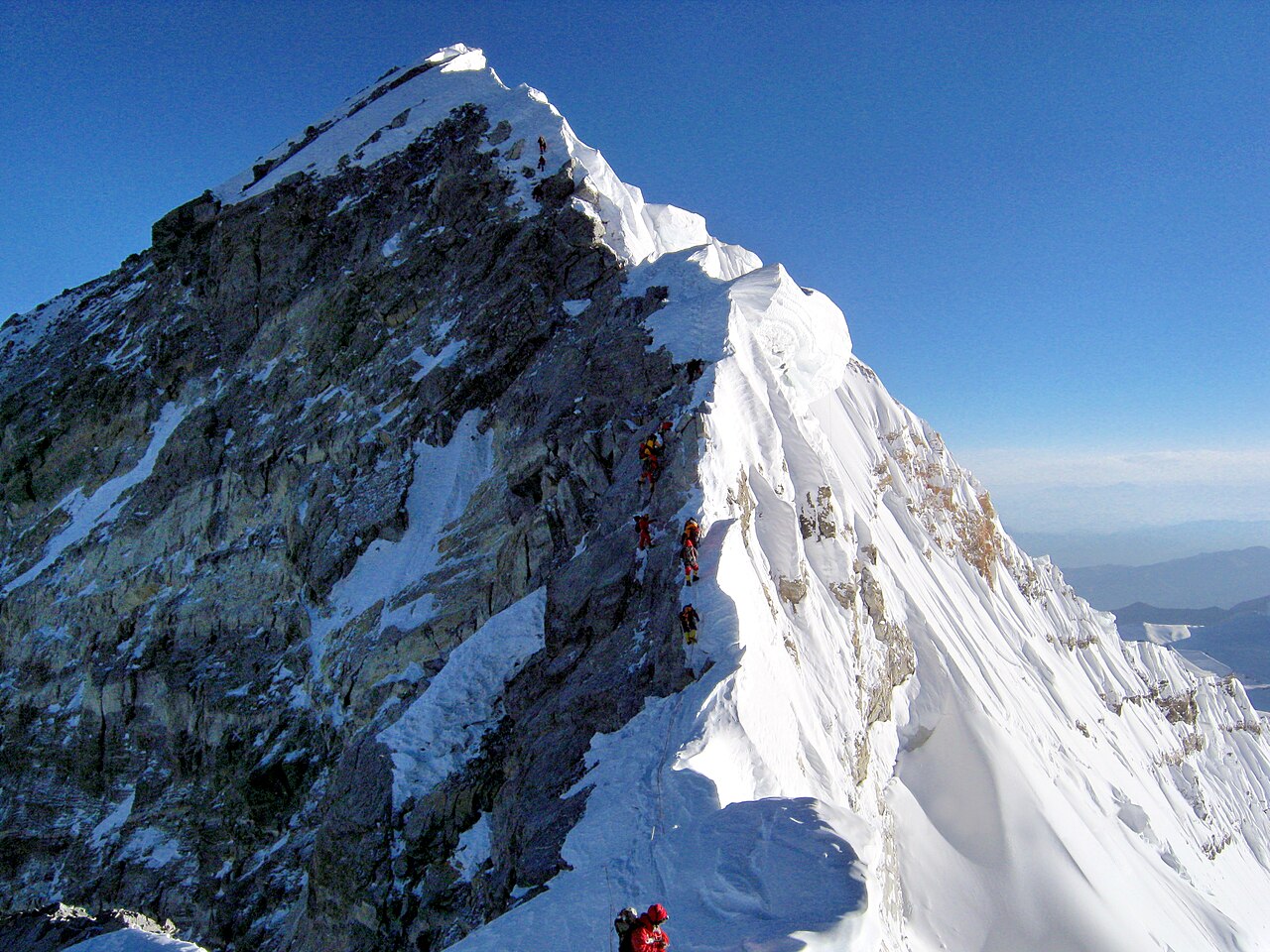
The term "death zone" refers to altitudes where the air contains too little oxygen to sustain human life for an extended period. In practical mountaineering usage this threshold is usually set at about 8,000 metres (≈26,247 feet). Many of the world's highest climbing routes enter this region, and it is associated with a greatly increased risk of incapacitation and death even for experienced climbers. For discussion of high-altitude environments see high altitude.
Image gallery
3 Images

Why oxygen becomes limiting
As elevation rises, atmospheric pressure falls and the partial pressure of oxygen decreases. This means each breath delivers less oxygen to the lungs and therefore to the bloodstream. The physical relationship between pressure and altitude is described in meteorology and physiology texts — see atmospheric pressure references for technical context. Climbers often use supplemental oxygen to raise the amount of available oxygen per breath; plain discussion of oxygen use is available at oxygen.
Physiological effects and symptoms
In the death zone the body cannot fully acclimatize and begins to deteriorate. Common problems include impaired judgment and decision-making, extreme fatigue, slowed reaction times and progressive loss of muscle strength. Serious medical conditions that can be precipitated or worsened include high-altitude cerebral oedema (HACE), high-altitude pulmonary oedema (HAPE), and severe hypoxia. Typical warning signs are listed below.
- Confusion, poor concentration and hallucinations
- Persistent shortness of breath and coughing
- Severe weakness, inability to move or descend
- Loss of coordination or slurred speech
Management, limits and practical advice
Because physiological deterioration continues at extreme altitude, climbers and expedition leaders adopt strict limits on time spent above the threshold. Many guides recommend minimizing exposure in the death zone and avoiding prolonged rest there; popular field guidance advises limiting continuous time to a matter of hours rather than days — see common mountaineering advice at safety guidance. Use of bottled oxygen, staged acclimatization, conservative turnaround rules and rapid descent in the face of symptoms are standard risk-reduction measures.
Roads, rescues and notable facts
Most fatalities on the world's highest mountains occur in the death zone. For example, a large proportion of recorded deaths on Mount Everest occurred on slopes above the conventional 8,000-metre boundary; see resources on Mount Everest for incident summaries. Helicopters and other aircraft are severely limited in their ability to operate at extreme altitude because of the thin air, so aerial rescue options are constrained; see material on mountain aviation at helicopters. The 14 peaks above about 8,000 metres are all clustered in the Himalaya and Karakoram ranges, which you can read about via regional sources.
Distinctions and context
Not all high-altitude zones are equally dangerous: gradual acclimatization reduces risk at elevations below the death zone, and many alpine climbs occur safely at intermediate altitudes with appropriate preparation. The death zone is distinguished by the inability of the human body to replace lost physiological function over time; staying longer increases the probability of irreversible injury. For recreational climbers, careful planning, respect for objective limits and conservative decision-making remain the most reliable protections.
Related articles
Author
AlegsaOnline.com Death zone (high-altitude mountaineering) Leandro Alegsa
URL: https://en.alegsaonline.com/art/26055
Sources
- abc.net.au : "The Death Zone"