
Damascus Gate (Bab al‑Amud) — principal north gate of Jerusalem's Old City
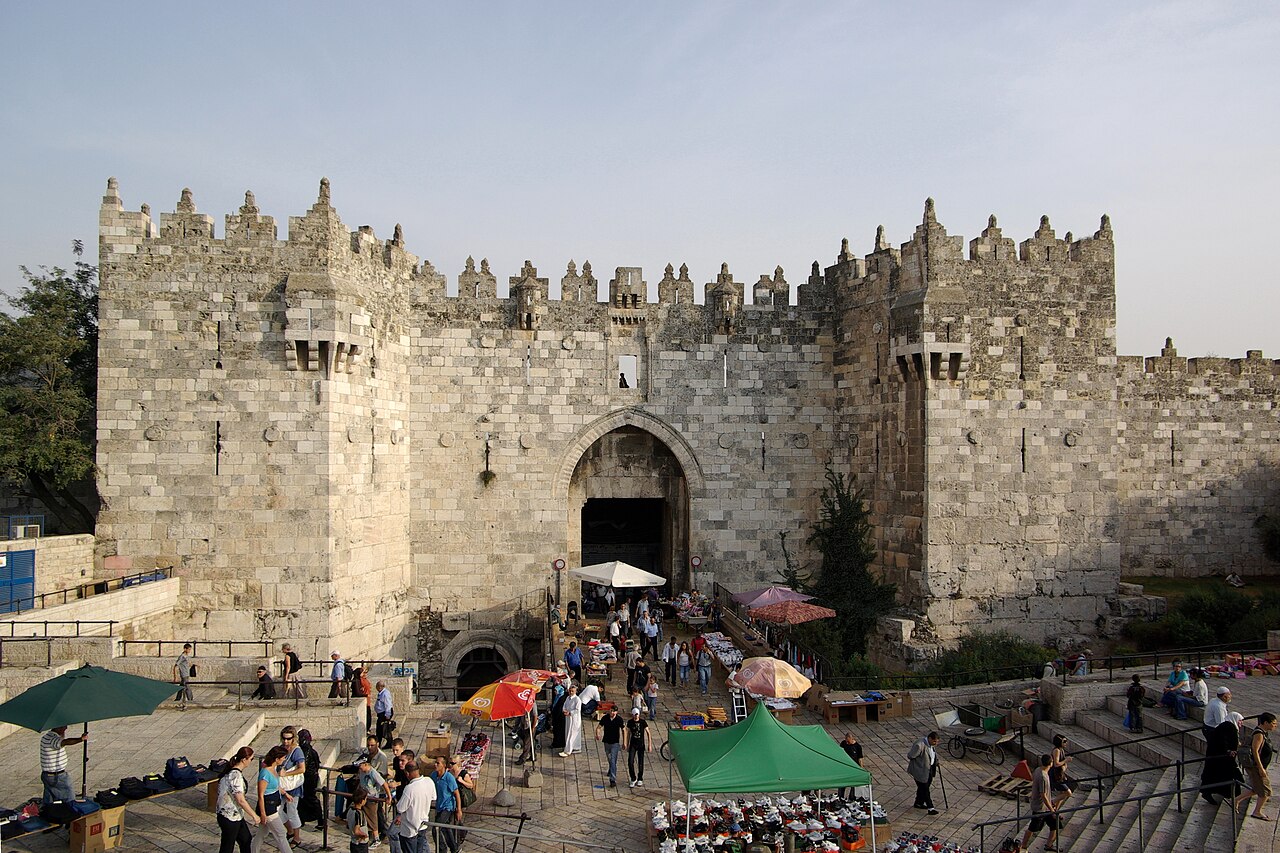
Damascus Gate (Bab al‑Amud) is the main northern entrance to Jerusalem's Old City. Built by the Ottomans in 1538 over a Roman gateway, it marks a long sequence of urban, religious and archaeological history.
Overview
Damascus Gate is the principal northern entrance to the Old City of Jerusalem and one of its most visually striking and historically layered gates. Its Arabic name, Bab al‑Amud (the Gate of the Column), and its Hebrew name, Sha'ar Sh'khem (Nablus Gate), reflect the gate's role as the traditional route toward the northern road to Nablus and Damascus. The gate stands at the city walls near the geographic coordinate point often cited for visitors and scholars: coordinates reference.
Image gallery
7 Images




Architecture and visible features
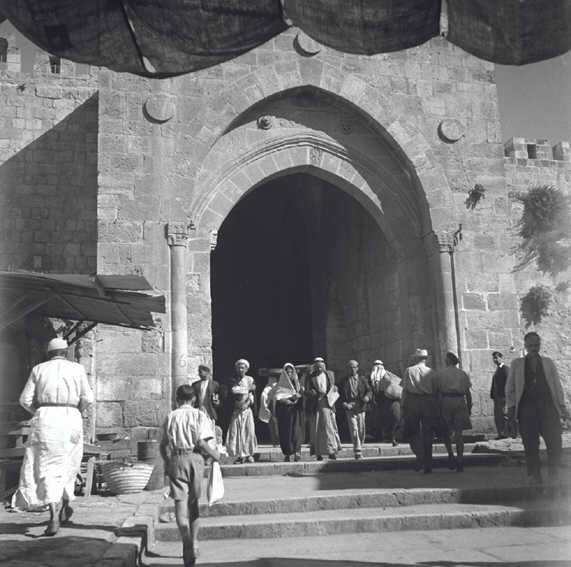
The present stone façade that faces outward was erected in the early 16th century under Ottoman rule. It overlays and incorporates remains of earlier constructions from the Roman and Byzantine periods. The gate complex includes an outer courtyard and passage that once connected to an inner gate and road. Archaeological work has revealed foundations and paved surfaces beneath the standing masonry, showing how successive cultures rebuilt and reused the same approach to the city.
Names and historical layers
The gate's Arabic appellation, Bab al‑Amud, commemorates a monumental column that once stood in a plaza just inside the gate; that pillar served as a local point of reference during the Roman and later periods but was removed or destroyed and has not been recovered. The Hebrew name, Sha'ar Sh'khem, records the road that leads north toward Nablus (ancient Shechem). The gate that we see today was built in 1538 by Ottoman authorities on the site of an earlier Roman gate, a history summarized in many studies of Jerusalem's urban evolution and mentioned in accounts of the city's gates as the oldest gate in continuous use.
Historical chronology (select points)
- Roman and Byzantine phases: a monumental gateway and public square occupied the site and gave rise to the column that inspired the Arabic name (the underlying Roman works are sometimes referenced under the broader term Roman gate).
- Early modern Ottoman rebuilding: the standing outer façade dates to the reign of Suleiman the Magnificent (1530s), when Jerusalem's city walls and gates were comprehensively rebuilt.
- British Mandate period and later: authorities shifted the city's Kilometer Zero marker to the nearby Jaffa Gate during the British Mandate (British Mandate), though Damascus Gate retained its traditional role as a focal point for travel to the north; the Jaffa Gate is referenced as Jaffa Gate.
Archaeology, surroundings and contemporary use
Excavations around Damascus Gate have exposed paving, masonry, and urban features from the Roman and Ottoman periods, offering a compact sequence of Jerusalem's long occupation. A large cave known in tradition as Zedekiah's Cave (or Solomon's Quarries) lies nearby and has been part of the site's popular and archaeological narrative. In the early 21st century an outdoor amphitheater was installed just outside the gate to provide seating for performances and public events; this addition reflects ongoing efforts to balance preservation, tourism and community use.
Significance and notable facts
Damascus Gate remains one of the busiest and most recognized gateways into the Old City, serving residents, merchants and visitors. It is both a practical urban threshold and a powerful symbol of Jerusalem's layered past. The gate area functions as a meeting point, a market zone, and a place where archaeology, architecture and modern urban life intersect, making it a frequent subject of historical research and public interest.
Related articles
Author
AlegsaOnline.com Damascus Gate (Bab al‑Amud) — principal north gate of Jerusalem's Old City Leandro Alegsa
URL: https://en.alegsaonline.com/art/25259