
Cytoplasm: structure, composition and cellular roles
The cytoplasm is the gel-like interior of a cell that surrounds the nucleus, contains organelles and the cytoskeleton, and provides the medium for metabolism, transport and structural organization.
The cytoplasm is the internal material of a living cell that occupies the region between the nucleus and the cell membrane. It is often referred to as protoplasm outside the nucleus and comprises both a fluid phase and numerous suspended structures that together sustain the cell's life.
Image gallery
1 Image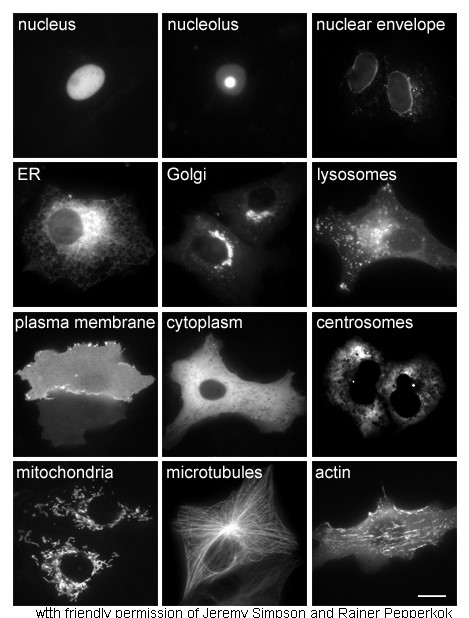
Composition and organization
Broadly speaking the cytoplasm consists of a watery matrix containing dissolved solutes and a high concentration of large biomolecules. Much of the volume is water, but the soluble portion known as the cytosol is filled with ions, metabolites and diverse macromolecules such as proteins. Interwoven through this matrix is the cytoskeleton, a network of filaments that organizes space and drives movement, and a system of membranes and compartments that includes the endoplasmic reticulum and other membrane-bound organelles. Together these elements create microenvironments with distinct chemical compositions and mechanical properties.
Primary functions
The cytoplasm provides the setting for many essential cellular processes. It supplies the medium where metabolic pathways run, where ribosomes synthesize proteins, and where macromolecular assemblies form and disassemble. It also transmits mechanical forces and positions organelles so they can carry out specialized tasks. Typical roles include:
- Metabolism and biosynthesis: enzymes and substrates meet in the cytosol to convert nutrients into energy and building blocks.
- Support and architecture: the cytoskeleton shapes the cell, anchors organelles, and organizes intracellular transport routes.
- Intracellular transport: motor proteins move vesicles and complexes through the cytoplasm to specific destinations.
- Dynamic responses: processes such as cytoplasmic streaming, localized assembly and disassembly, and changes in viscosity enable rapid reorganization.
Variation, dynamics and biological context
Cytoplasmic structure varies with cell type and physiological state. In prokaryotes, which lack a true nucleus, functional complexes such as ribosomes and protein assemblies are embedded directly in the cytoplasm close to the plasma membrane. In eukaryotes, the cytoplasm surrounds membrane-bound compartments and shows gradients and domains that reflect local activities. The interior can switch between more gel-like and more fluid states to accommodate transport and division. Because the cytoplasm is densely packed, a phenomenon called macromolecular crowding affects how molecules interact, diffuse and assemble.
Distinctions, study and significance
Terminology matters: the term "cytoplasm" usually means all material between the nucleus and the plasma membrane (including organelles), while the cytosol refers only to the soluble matrix. Historically, cytoplasm was a central concept in microscopy and cell theory; today it remains a focus of live-cell imaging, biochemical fractionation and biophysical study. Changes in cytoplasmic organization are important in development, infection, and disease, and are exploited in biotechnological applications such as targeted delivery and synthetic biology.
For general orientation and further introductions see entries on outside the nucleus, general cell structure and the older concept of protoplasm. Detailed discussions of intracellular compartments and the roles of the cytoskeleton, endoplasmic reticulum and other organelles expand on the themes summarized here.
Related articles
Author
AlegsaOnline.com Cytoplasm: structure, composition and cellular roles Leandro Alegsa
URL: https://en.alegsaonline.com/art/24962