
Cytosine
Cytosine is a pyrimidine nucleobase found in DNA and RNA, pairing with guanine. It is chemically reactive (deaminates to uracil) and is a central substrate in epigenetic methylation and DNA repair.
Cytosine is one of the canonical nucleobases that encode biological information. It occurs in both DNA and RNA, where it contributes to the sequence that determines cellular function and heredity. In living organisms cytosine helps store and transmit genetic information inside every cell by forming part of the backbone of the nucleic acids.
Image gallery
2 Images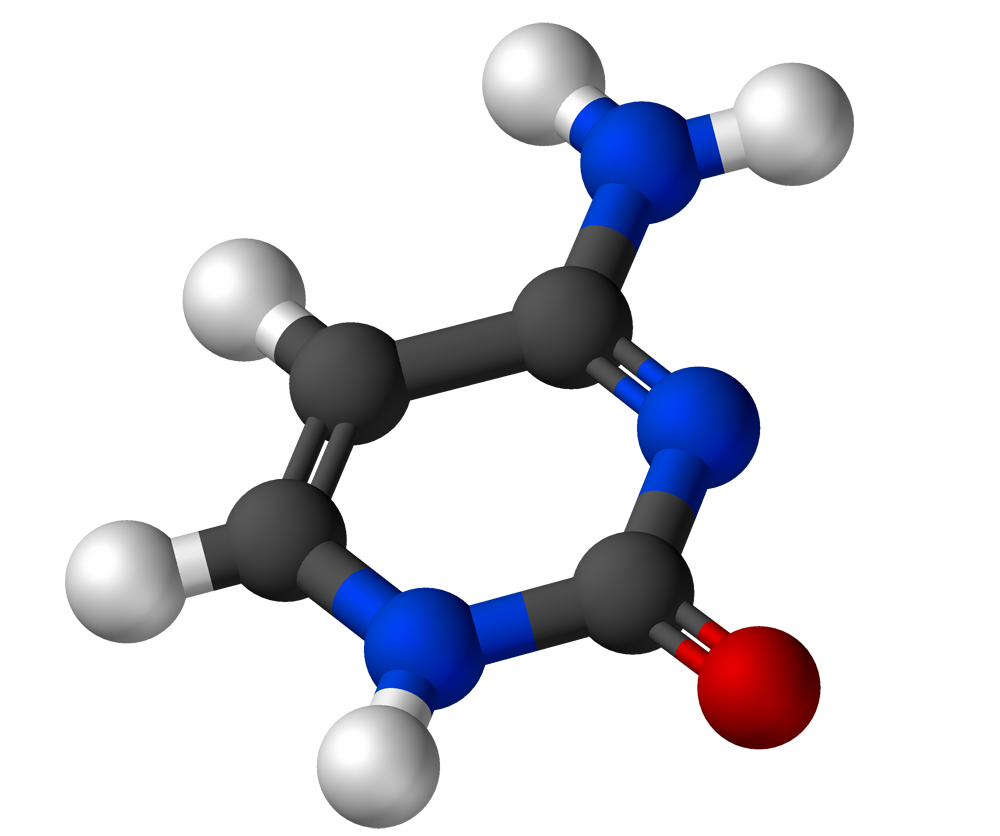

Chemical characteristics
Cytosine is a pyrimidine base with a single six-membered aromatic ring and functional groups that permit hydrogen bonding. In double-stranded DNA it pairs with guanine through three hydrogen bonds, contributing to the stability of the helix. Chemically it exists predominantly in the amino tautomer under physiological conditions and is susceptible to chemical changes such as spontaneous deamination, oxidation, and alkylation.
Deamination and repair
A notable chemical reaction of cytosine is spontaneous deamination, which converts cytosine into uracil. If a deaminated base is not corrected this change can produce a point mutation in the genetic sequence after replication. Cells use dedicated systems of DNA repair enzymes—such as uracil-DNA glycosylase and downstream base-excision repair components—to recognize and remove uracil from DNA and restore the original cytosine.
Role in epigenetics
Cytosine is central to epigenetic regulation because it can be chemically modified. Addition of a methyl group at the 5-position produces 5-methylcytosine, a common epigenetic mark that influences gene expression. Studies of epigenetics examine how patterns of cytosine modification are written, read and sometimes erased, affecting cellular identity, development, and disease risk. Some modified forms are maintained through cell division, making them important for cellular memory.
Applications and significance
Cytosine and its modified forms are central to many laboratory methods and clinical tests: sequencing technologies detect cytosine bases and methylation patterns; PCR and synthetic oligonucleotides routinely include cytosine; and methylation profiling is used as a biomarker in cancer and developmental research. Understanding cytosine chemistry is therefore important for genetics, molecular biology and medicine.
- Key points: cytosine pairs with guanine, can deaminate to uracil, and is a substrate for methylation.
- Repair systems correct cytosine-derived errors to preserve genome integrity.
- Epigenetic modifications of cytosine influence gene activity without changing sequence.
For further reading on structural, biochemical and medical aspects, consult specialized resources and reviews that focus on nucleic-acid chemistry, DNA repair pathways, and epigenetic mechanisms (nucleobase overview, nucleic acids, repair systems). Additional introductory material is available through resources that explain how cytosine-related changes affect mutation rates and gene regulation (deamination, methyl groups, epigenetics).
Related articles
Author
AlegsaOnline.com Cytosine Leandro Alegsa
URL: https://en.alegsaonline.com/art/24964