
Cell membrane (plasma membrane): structure, function and diversity
Overview of the cell (plasma) membrane: its structure, components, transport roles, variation among organisms, and biological importance.
The cell membrane, also called the plasma membrane or cytoplasmic membrane, is the thin, flexible boundary that surrounds all living cells. It separates the cell interior from the external environment and controls the movement of substances into and out of the cytoplasm. In common descriptions it is a lipid-based bilayer decorated with proteins and carbohydrates that together perform mechanical, transport and communication roles essential to life.
Image gallery
3 Images
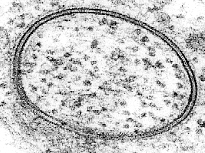

Structure and components
At its core the membrane is a lipid bilayer made primarily of phospholipids whose hydrophobic tails face inward and hydrophilic heads face outward. This arrangement produces a barrier a few nanometres thick (typically on the order of 5–10 nm). Key components include:
- Lipids: phospholipids form the bilayer; sterols such as cholesterol in many eukaryotes modulate fluidity.
- Proteins: integral (transmembrane) and peripheral proteins provide channels, pumps, receptors and structural links.
- Carbohydrates: short sugars attached to proteins or lipids form a glycocalyx involved in recognition and adhesion.
Functions and transport
The membrane is selectively permeable: small nonpolar molecules can cross by simple diffusion, while ions and larger polar solutes require protein-mediated routes. Typical transport processes include facilitated diffusion through channels, active transport via ATP-driven pumps, and bulk movement by endocytosis or exocytosis in eukaryotic cells. Membrane proteins also detect external signals and initiate intracellular responses, and differences in ion distribution across the membrane establish electrical potentials used by nerve and muscle cells.
Differences among organisms
All living cells have a plasma membrane, but its context differs. Many animal cells are bounded only by the membrane. In contrast, organisms such as bacteria, fungi and plants commonly have additional rigid cell walls outside the membrane that provide structural support and limit passage of large molecules. Bacterial membranes also host processes such as respiration that occur in organelles in eukaryotes.
Origin, dynamics and importance
The widely accepted fluid mosaic model describes the membrane as a dynamic two-dimensional fluid where lipids and proteins move laterally. Membrane components are synthesized and assembled through coordinated pathways (for example, in the endoplasmic reticulum and Golgi apparatus in eukaryotes). Because membranes mediate transport and signalling, they are central to physiology and medicine: many drugs, toxins and antibiotics act on membrane components, and membrane proteins are frequent therapeutic targets.
Understanding the cell membrane illuminates how cells interact with their environment, maintain internal order, and cooperate within tissues and ecosystems. For further reading, consult basic cell biology texts and curated online resources: cells, cytoplasm, and organism-specific summaries at animal, bacterial, and plant biology pages.
Questions and answers
Q: What is the cell membrane?
A: The cell membrane is a thin flexible layer around the cells of all living things. It is sometimes called the plasma membrane or cytoplasmic membrane.
Q: What does the cell membrane do?
A: Its basic job is to separate the inside of cells from the outside. In all cells, it separates the cytoplasm inside the cell from its surroundings.
Q: Do animal cells have anything other than a membrane?
A: No, animal cells are only contained in just a membrane.
Q: Do bacteria, fungi and plants have anything else besides a cell membrane?
A: Yes, bacteria, fungi and plants also have strong cell walls which support the cell and block the passage of large molecules.
Q: How does a cell wall differ from a cell membrane?
A: A cell wall provides additional support for bacteria, fungi and plant cells whereas a cell membrane only serves to separate what's inside from what's outside of the cell.
Q: What kind of molecules are blocked by a cellular wall?
A: Cellular walls block large molecules from passing through them.
Tags
Related articles
Author
AlegsaOnline.com Cell membrane (plasma membrane): structure, function and diversity Leandro Alegsa
URL: https://en.alegsaonline.com/art/17891
Sources
- users.rcn.com : Kimball's biology pages
- bioinformatics.oxfordjournals.org : "An ENSEMBLE machine learning approach for the prediction of all-alpha membrane proteins"
- doi.org : 10.1093/bioinformatics/btg1027
- pubmed.ncbi.nlm.nih.gov : 12855459