
Crocus: cormous flowering plants and the source of saffron
Crocus is a genus of about 80 bulb-like perennials in the iris family, grown for showy early- or late-season flowers and including the saffron-producing Crocus sativus. Native across Europe to China.
Overview — Crocus is a small genus of roughly 80 species of perennial plants in the iris family. Members of the genus grow from small, rounded storage organs called corms and are valued for their bright, goblet-shaped flowers. Botanically the group is treated as a single genus within a wider group of flowering plants, and species differ in size, color and season of bloom.
Image gallery
10 Images


Characteristics
Crocuses produce one to several narrow, grass-like leaves and a single cup-shaped flower from each corm. Flower colors range from white through yellow, purple and striped varieties. Different species and cultivated forms flower at different times: some appear in autumn, some in winter and others in early spring. Flowers are often short-lived but can form striking carpets when many corms bloom together.
Distribution and habitat
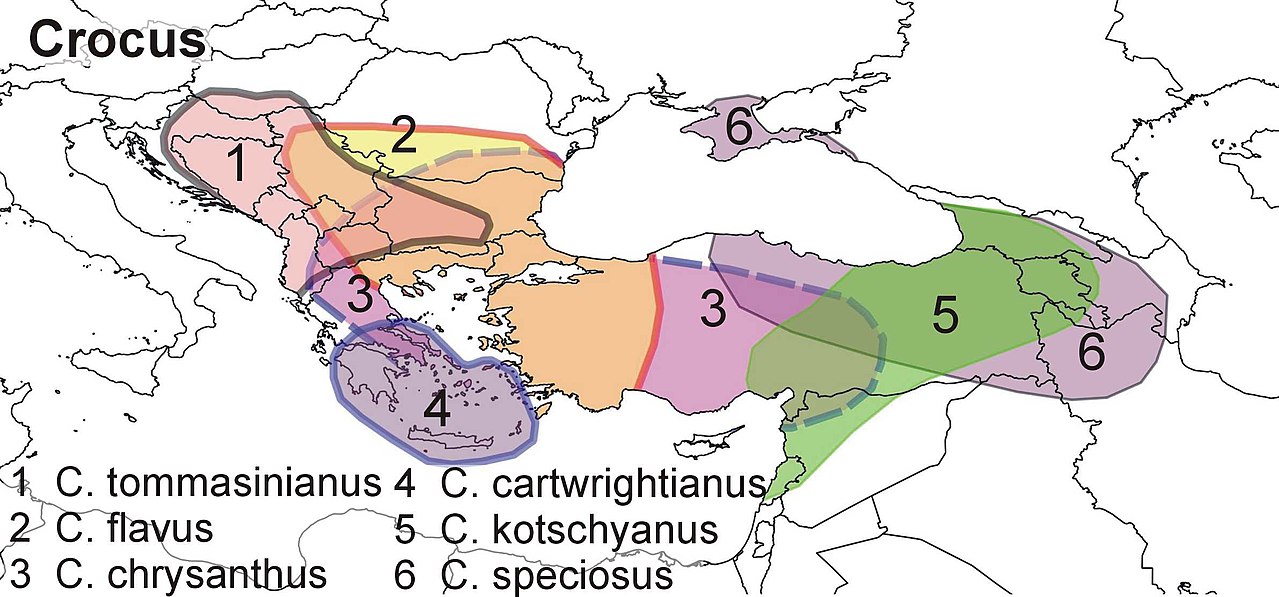
Wild crocuses are native to a broad belt extending from central and southern Europe across North Africa and the Aegean islands into the Middle East and further east through Central Asia to western China. They occupy a range of environments including open woodlands, alpine meadows, scrub and cultivated fields, often at elevations from sea level up to alpine zones.
Uses and cultivation
Crocuses are widely grown in gardens, rockeries and lawns for their early or late season color. One cultivated species, Crocus sativus, is the source of saffron, a spice produced from the flower’s stigmas. Saffron cultivation is labor intensive because stigmas must be hand-harvested from many flowers. Gardeners propagate crocuses by dividing corms after foliage dies back; they prefer free-draining soil and a period of summer dryness.
- Ornamental value: used in borders, containers and naturalized plantings.
- Food and cultural: saffron has culinary and historical importance.
- Ecology: early-flowering species provide nectar and pollen for insects.
Identification and notable facts
Crocuses are sometimes confused with plants called ‘‘autumn crocus’’ that belong to a different family. Accurate identification relies on flower structure, corm form and timing of leaf emergence. Selective breeding has produced many cultivars with larger flowers and novel patterns. Conservation of some wild species is a concern where habitats are fragmented or over-collected for the trade.
For general plant information and cultivation advice see resources on the genus (genus overview), basic botany (flowering plant traits), corm biology (storage organs) and regional floras for Europe (Europe), North Africa (North Africa), the Middle East (Middle East), the Aegean (Aegean), Central Asia (Central Asia) and seasonal flowering guides (autumn, winter, spring).
Related articles
Author
AlegsaOnline.com Crocus: cormous flowering plants and the source of saffron Leandro Alegsa
URL: https://en.alegsaonline.com/art/24266