
Coypu (nutria): a semi‑aquatic rodent and its ecological role
Concise account of the coypu (Myocastor coypus): identification, native range, introductions for fur, ecology, impacts on wetlands, and approaches to control and management.
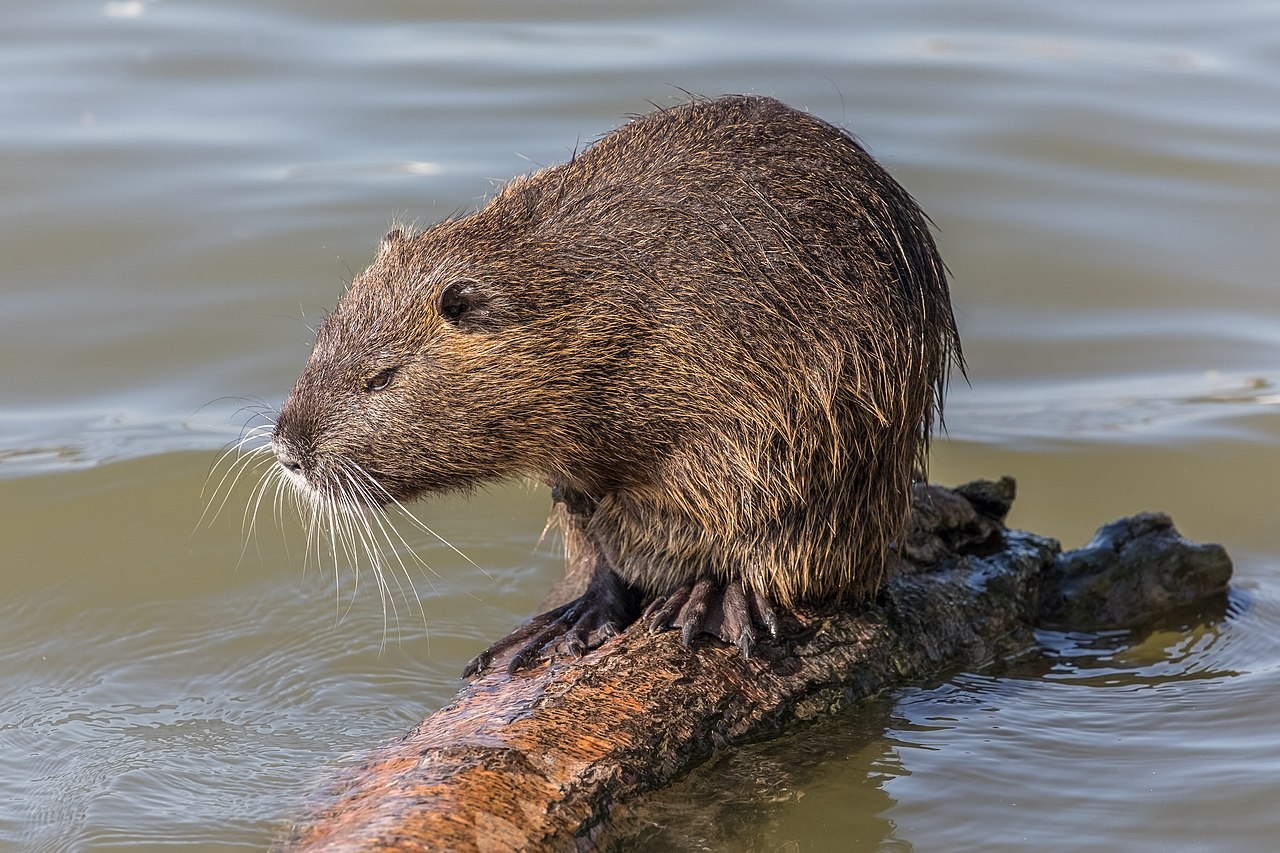
Coypu (also called nutria; Myocastor coypus) is a large, largely herbivorous rodent adapted to life in and near freshwater and coastal wetlands. It is semi‑aquatic, with dense guard hairs over a softer underfur, prominent orange to yellow incisors, and partially webbed hind feet that aid swimming. The species was historically exploited for fur and later transported outside its native range for farming.
Image gallery
10 Images




Physical characteristics
Coypus have a heavy, compact body and a long, cylindrical tail rather than the flattened tail of beavers. Adult animals are much larger than most common rodents, with dexterous forepaws used for feeding and grooming. Fur color varies from brown to reddish tones, and the coarse outer hairs protect the insulating underfur.
Native range and introduction history
The species is native to southern South America, including Argentina, Bolivia, Brazil, Paraguay, Chile and Uruguay. Beginning in the 19th and 20th centuries, coypus were exported and kept on fur farms in many regions. Escapes and deliberate releases led to established populations across North America, Europe, parts of Asia and Africa; a notable early introduction for farming and breeding occurred in Louisiana.
Diet, behaviour and habitat
Coypus feed mainly on aquatic plants, roots and emergent vegetation. They graze on marsh plants and can pull up large amounts of vegetation while feeding, which may open bare patches in marshes. They use burrows in banks or build surface nests from vegetation, and are often most active at dusk and at night. Social behaviour varies with food availability and habitat structure.
Reproduction and life cycle
Reproduction is characterized by relatively fast breeding: coypus reach maturity in their first year and can raise several litters in a favourable year. Litters contain multiple young that are reared in nests or burrows; this reproductive potential helps populations establish quickly when introduced to suitable wetland habitats.
Ecological impacts and conflicts
- Vegetation loss: intense grazing can reduce emergent plants, marsh grasses and submerged beds, diminishing habitat complexity for birds and fish.
- Bank erosion: burrowing and feeding near shorelines can weaken banks, dikes and levees, increasing erosion and flood risk.
- Competition and community change: in invaded regions they may compete with native herbivores and change plant community composition.
- Human concerns: agricultural damage, damage to infrastructure, and potential disease transmission are additional reasons for management.
Control, management and policy
Because coypus can cause ecological and economic harm when invasive, management approaches focus on preventing new introductions, early detection, and population control where established. Techniques include trapping, exclusion, habitat modification, and coordinated removal or eradication programmes. Success depends on sustained effort, landscape coordination and consideration of animal welfare and legal frameworks. In some regions, long‑term suppression rather than complete eradication is the pragmatic goal.
Human use and legal status
Historically raised for fur, coypus remain of interest in some local industries, but their farming and movement are regulated in many places because of invasion risks. Laws or management plans may prohibit release and prescribe control measures where populations threaten wetlands or infrastructure.
Identification and distinctions
Although often called "nutria," the name "coypu" is also widely used. It is readily distinguished from beavers or muskrats by tail shape and by its prominent incisors. Correct identification helps direct appropriate management and reduces confusion with native species.
Further reading
For regional information on status, impacts and management options consult local wildlife agencies and wetland conservation organizations. Practical guidance and legislation vary by country and region, and coordinated local action is often needed to protect vulnerable wetland ecosystems.
Related articles
Author
AlegsaOnline.com Coypu (nutria): a semi‑aquatic rodent and its ecological role Leandro Alegsa
URL: https://en.alegsaonline.com/art/23898
Sources
- nutria.com : "Home - Nutria.com"