
Crane (bird): overview, biology, distribution, and conservation
Cranes are long-legged, long-necked wading birds of the family Gruidae. This article covers their appearance, behaviour, global range, species diversity, cultural role and conservation challenges.
Cranes are large, long-legged and long-necked birds belonging to the family Gruidae and placed in the order Gruiformes (classification details). They are notable for their tall stature, upright posture on the ground and a distinctive flying silhouette in which the neck is extended forward and the legs trail well behind the body. Aviation of the neck and leg posture helps distinguish cranes from some superficially similar birds.
Image gallery
10 Images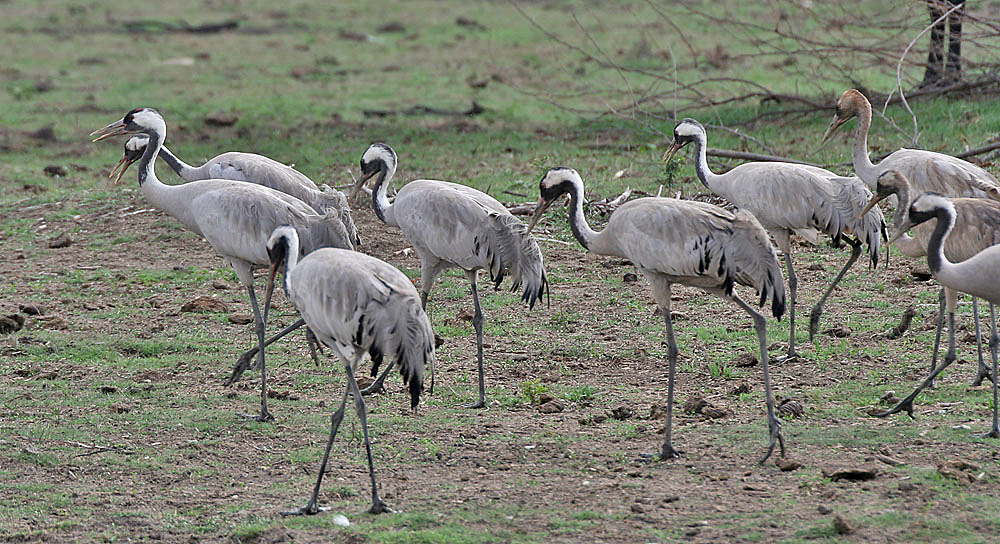


Key characteristics
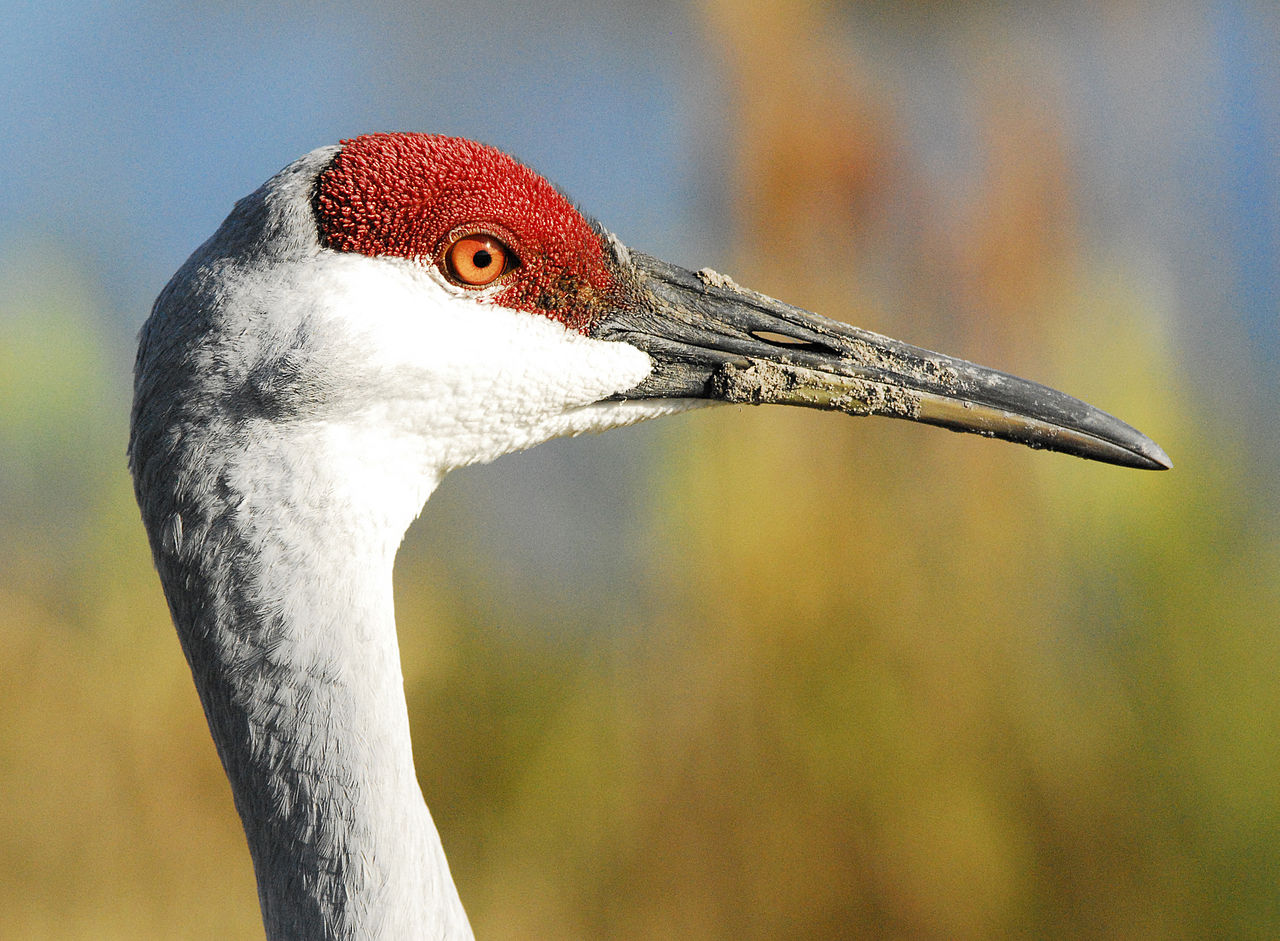
Cranes combine several anatomical and behavioural traits that suit a life in open wetlands, grasslands and agricultural fields. There are about 15 recognised species grouped into several genera; the sarus crane (Grus antigone) is among the tallest and can reach nearly two metres in height. Cranes are often compared with herons, but they are generally larger, with proportionally heavier bills and a partly bare or patterned head (herons for comparison). Their bills are adapted for probing and grasping a varied diet (bill structure), and when airborne their long legs are conspicuously extended behind them (flight posture).
Distribution, habitat and fossil record
Fossil remains show that ancestral cranes occur in the Northern Hemisphere, with early fossils found in North America (fossil evidence). Today cranes have a broad global distribution and are found on most continents; they are absent from Antarctica (Antarctic absence) and are not native to mainland South America (South American range). Different species use diverse habitats, from shallow marshes and floodplains to dry savannas and agricultural landscapes. Some species are migratory and travel long distances between breeding and wintering areas, while others remain resident where conditions allow.
Behaviour and ecology
Cranes are omnivorous and opportunistic feeders: their diet can include aquatic invertebrates, fish, small vertebrates, seeds, tubers and cultivated grain. Many species perform elaborate courtship dances involving coordinated leaps, bows, wing flaps and vocal displays; these dances strengthen pair bonds and are a conspicuous part of crane natural history. Most cranes nest on the ground in wetlands or on small islands, producing a small clutch of eggs which both parents help to raise. Vocalisations range from loud, resonant calls to softer contact notes used within pairs and families.
Species diversity and conservation
Although cranes are widespread, several species have small or declining populations. Notable conservation concerns include severely threatened species such as the whooping crane and the Siberian crane, and other populations are vulnerable to human pressures. Major threats include hunting and persecution (hunting impact) and the loss or degradation of wetlands and grasslands through drainage, conversion and development (habitat destruction). Conservation actions commonly involve habitat protection and restoration, regulation of hunting, captive breeding and carefully managed reintroductions, and international cooperation for migratory populations.
Cultural importance and notable facts
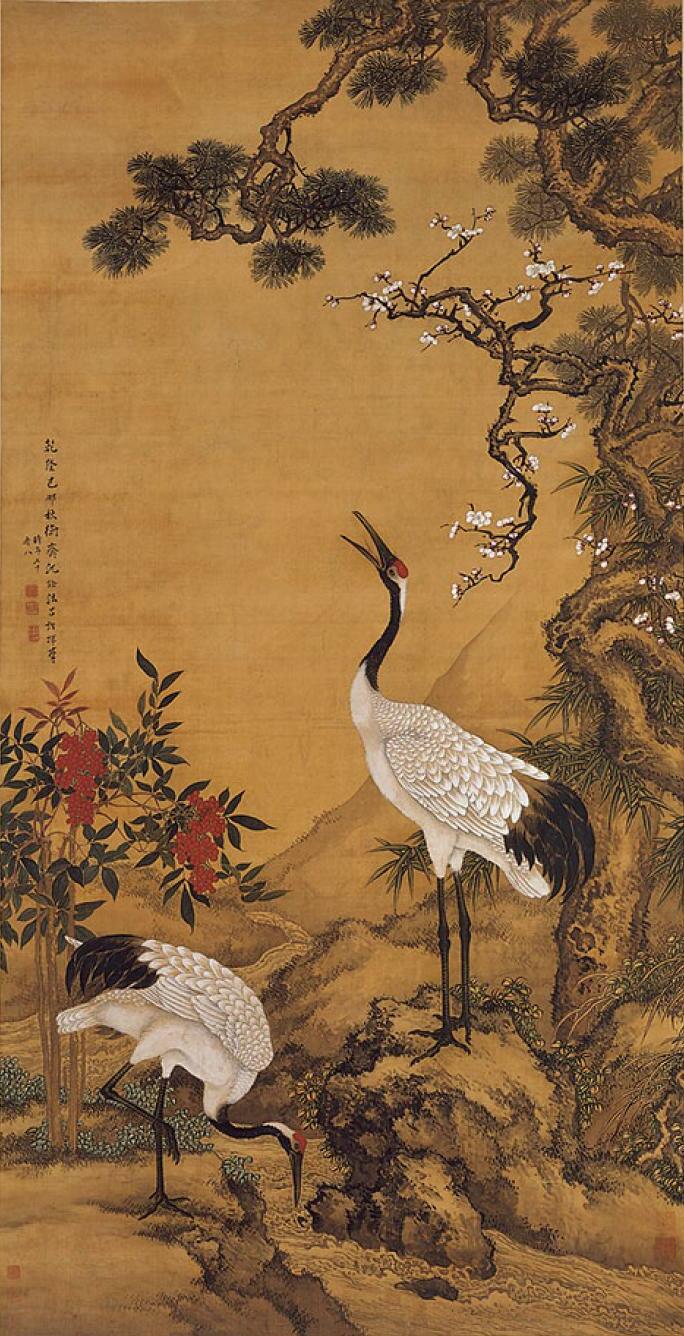
- In several East Asian cultures the crane is a symbol of longevity, fidelity and good fortune; specific species such as the red-crowned crane are celebrated in art and folklore.
- Cranes are long-lived for birds of similar size and form long-term pair bonds in many species, which contributes to their social complexity.
- Field identification often relies on a combination of size, head pattern, leg and bill shape, posture, and calls rather than a single feature.
For more detailed taxonomic lists, species accounts and region-specific conservation status, consult specialist sources and regional bird guides. Additional reading and databases are available online from ornithological organizations and conservation groups (family overview, species lists, notable species, similar birds, anatomy notes, flight traits, paleontology, geographic limits, range maps, threat assessments, habitat studies).
Questions and answers
Q: What is a crane?
A: A crane is a type of tall wading bird.
Q: How many species of cranes are there?
A: There are 15 species of cranes.
Q: What is the tallest species of crane?
A: The tallest species of crane is the sarus crane, which can grow to a height of up to 1.8 meters.
Q: How do cranes look different from herons?
A: Cranes are usually larger than herons, and have a partly naked head and a more heavy bill.
Q: What does a crane look like when it's flying?
A: When a crane is flying, its long neck is stretched out in front and its legs trail out behind.
Q: Where were the earliest fossils of cranes discovered?
A: The earliest fossils of cranes were discovered in North America.
Q: Where are living forms of cranes found?
A: Living forms of cranes are found all over the world except for Antarctica and South America.
Related articles
Author
AlegsaOnline.com Crane (bird): overview, biology, distribution, and conservation Leandro Alegsa
URL: https://en.alegsaonline.com/art/23951
Sources
- elibrary.unm.edu : elibrary.unm.edu
- zoosprint.org : "Status of sarus crane Grus antigone antigone in Rajasthan and its ecological requirements"
- britannica.com : "crane (bird) -- Britannica Online Encyclopedia"
- associatedcontent.com : "Interesting facts about cranes"
- bbc.co.uk : bbc.co.uk/news/uk-england-devon-20067666