
Crab-eating macaque (Macaca fascicularis)
A Southeast Asian monkey species also called the long-tailed or cynomolgus macaque; common in wild and used widely in research. Discusses appearance, behavior, range, human interactions and conservation.
Overview
The crab-eating macaque, Macaca fascicularis, is a medium-sized Old World monkey native to much of Southeast Asia. Known commonly as the long-tailed macaque, cynomolgus monkey, or Philippine monkey, it is adaptable and often lives near human settlements as well as in forests, mangroves and coastal areas. The species has been important both culturally in regions where it occurs and scientifically as a laboratory animal.
Image gallery
10 Images


Characteristics and behavior
These macaques have a slender body and a notably long tail relative to their size. Their fur is generally greyish-brown with lighter underparts. Social life is organized into multi-male, multi-female groups with clear dominance hierarchies; grooming and vocal communication are key social behaviors. They are omnivorous and opportunistic feeders: their diet includes fruit, seeds, insects, small vertebrates and, as their common name suggests, crustaceans and other shoreline prey where available.
Distribution, habitat and notable abilities
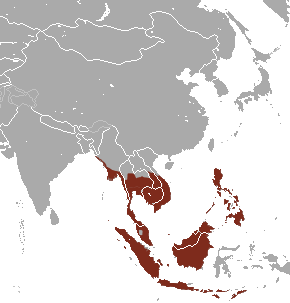
Macaca fascicularis occurs across a wide area of Southeast Asia and on many offshore islands. It tolerates a range of habitats from inland forest to coastal mangroves and is frequently seen in agricultural and urban fringes. Populations on some islands have adapted to forage on shellfish and other intertidal foods; in a number of locations these macaques have been observed using simple tools, such as stones, to open shells—an example of problem-solving and cultural variation in feeding techniques.
Human interactions and scientific use
The species is one of the most widely used nonhuman primates in biomedical and behavioral research because of its size, physiology and ease of breeding in captivity. Crab-eating macaques have contributed to studies in neuroscience, infectious disease, immunology and vaccine development. Their use in laboratories has raised ethical and regulatory discussions in many countries about welfare, housing, and the appropriate scope of research. For further context on conservation and research debate see regional information and sources on primate ethics.
History, notable events and taxonomy
Scientific interest in this species spans centuries of natural-history study and, more recently, modern biomedical work. A widely reported milestone occurred in 2018 when scientists in China reported cloning infant crab-eating macaques; the two cloned individuals were given the names Zhong Zhong and Hua Hua in media coverage. News about that work and its implications for research and ethics appeared alongside technical reports and commentary; see summaries of the event via institutional releases and academic discussion linked to research overviews.
Conservation status and threats
Although the species remains widespread and is often abundant, local populations can decline from habitat loss, hunting, capture for the pet and laboratory trade, and conflict with humans when macaques raid crops or urban areas. The International Union for Conservation of Nature (IUCN) currently assesses the species at a lower risk than many primates, but conservation measures and responsible management are still important where pressures are high. Common conservation concerns include habitat protection, regulation of trade, and mitigation of human–macaque conflict.
Quick facts
- Scientific name: Macaca fascicularis.
- Common names: crab-eating macaque, long-tailed macaque, cynomolgus monkey, Philippine monkey.
- Habitat: forests, mangroves, coastal and disturbed human landscapes.
- Notable: used in biomedical research; individuals have been cloned and tool use has been documented.
For introductory resources and species summaries, see regional and scientific profiles linked above. Additional details on behavior, distribution, and conservation strategy are available through specialist literature and institutional reports.
Related articles
Author
AlegsaOnline.com Crab-eating macaque (Macaca fascicularis) Leandro Alegsa
URL: https://en.alegsaonline.com/art/23904
Sources
- iucnredlist.org : "Macaca fuscicularis"
- biostor.org : "Simia fascicularis Raffles, 1821 (Mammalia, Primates): request for the suppression under the plenary powers of Simia aygula Linnaeus, 1758, a senior synonym. Z.N.(S.) 2399"
- worldcat.org : 0007-5167
- iczn.org : "Supplement 1986-2000"
- bucknell.edu : "Macaca fascicularis fascicularis"
- google.com : Mammal Species of the World
- worldcat.org : 62265494
- biodiversitylibrary.org : Systema naturæ. Regnum animale
- news.bbc.co.uk : "Scientists 'clone' monkey"