
Crab spiders (Thomisidae): ambush predators and masters of camouflage
Crab spiders (family Thomisidae) are ambush predators with crab-like posture, strong front legs and varied camouflage. They occur worldwide in diverse habitats and include about 170 genera and 2,000+ species.
Overview
Crab spiders are members of the family Thomisidae, a widespread and diverse group of primarily sit-and-wait predators. The family includes roughly 170 genera and more than 2,000 described species. They are named for their superficial resemblance to small crabs: a flattened body, laterally directed front legs and the ability in many species to move sideways or backwards. For a general taxonomic summary see Thomisidae family overview.
Image gallery
10 Images






Physical characteristics
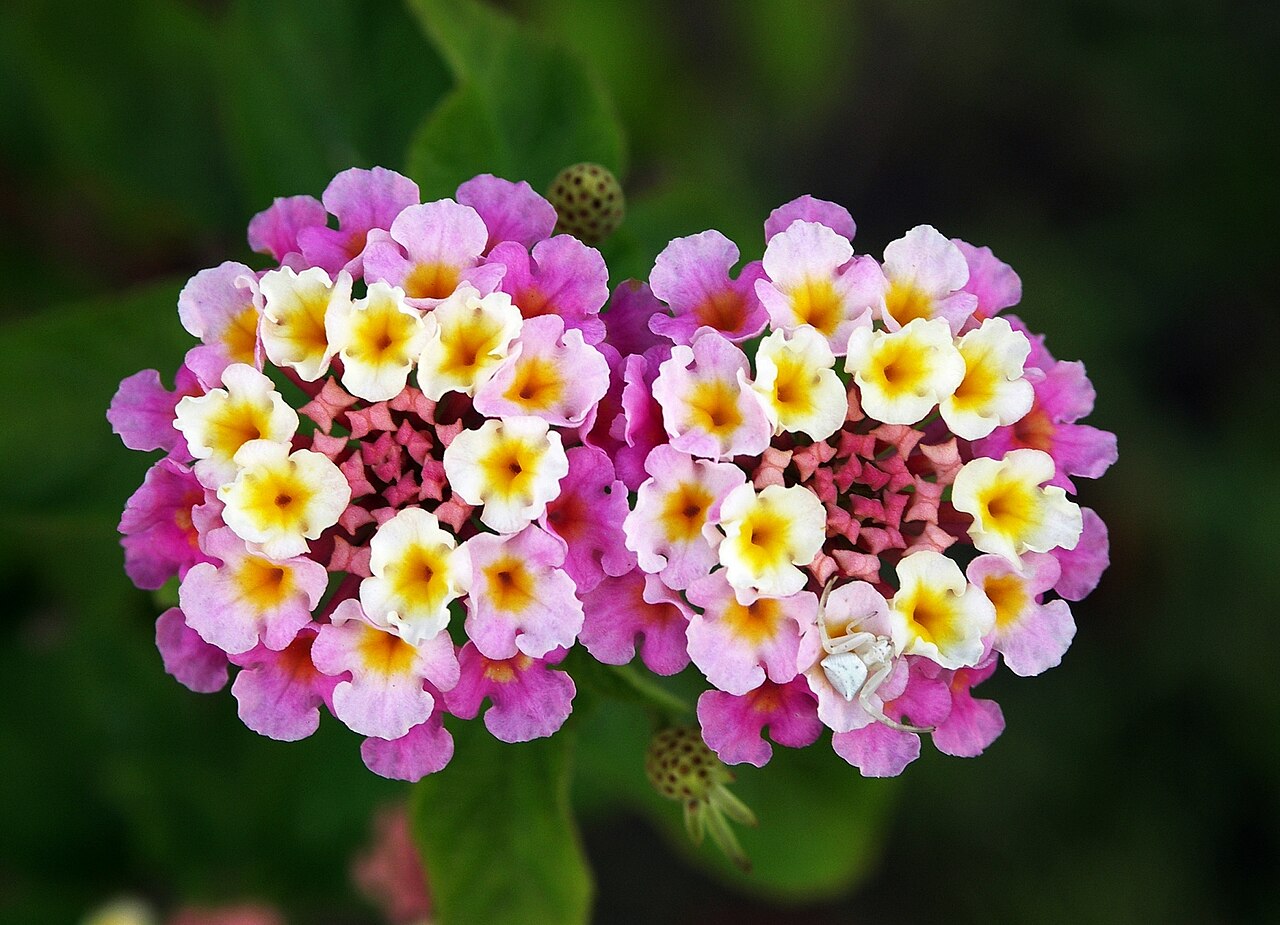
Crab spiders have a distinctive body plan that suits an ambush lifestyle. The two front pairs of legs are usually larger and oriented outward, used to seize and hold prey. Bodies are often compressed, angular or broadly flattened, which helps them remain inconspicuous on leaves, bark, petals and other surfaces. Coloration varies widely: many species are cryptically patterned in browns and greys, while others are white, yellow, green or mottled. A number of flower-associated species can change shade slowly over days to better match a background. Females are commonly larger than males, and sexual dimorphism in size and coloration is frequent in the family. For lists of genera and species-level information see species and genera resources.
Behavior and hunting
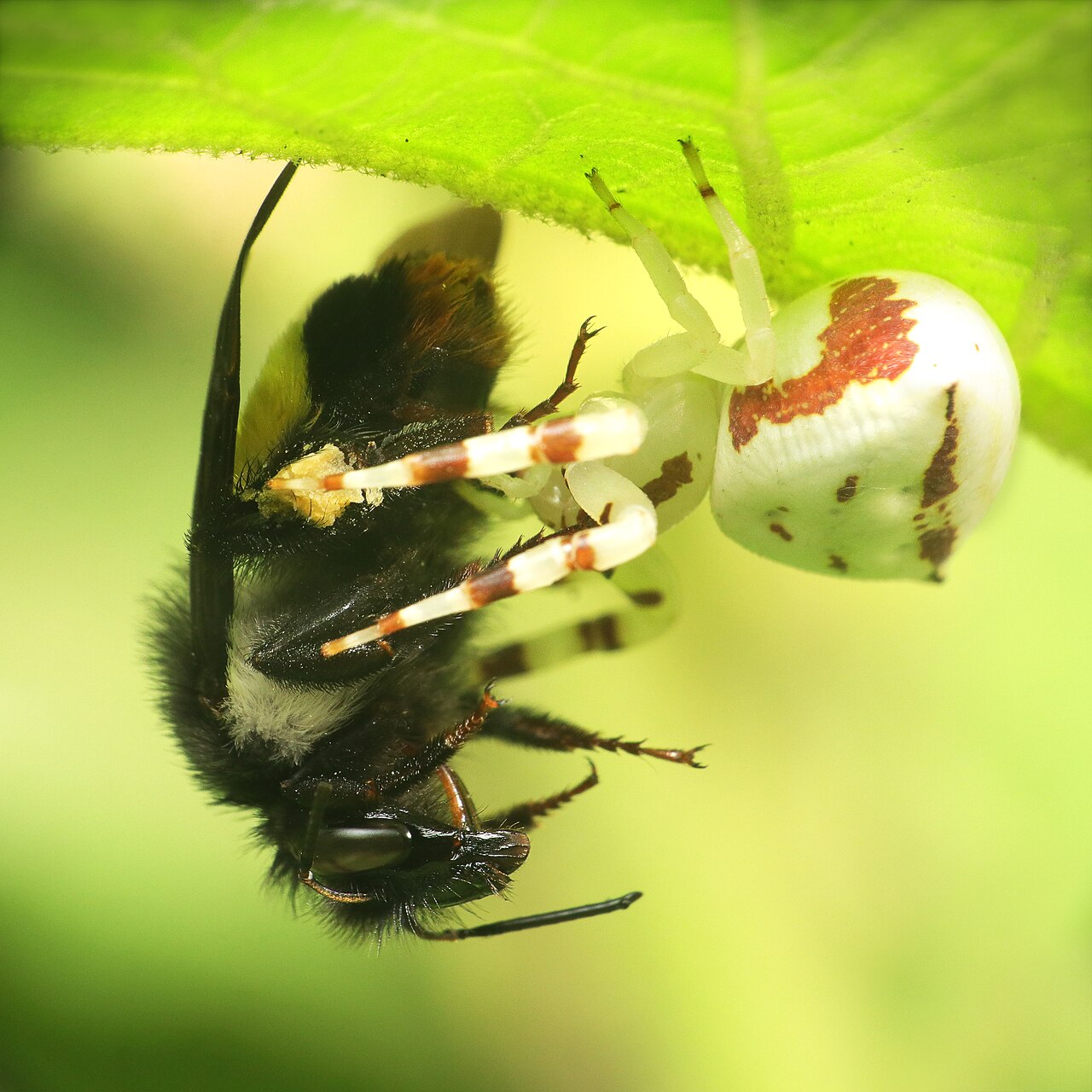
Most crab spiders are active hunters that do not use webs to catch prey. Instead they employ ambush tactics: perching on flowers, leaves, fruit or tree trunks and waiting for suitable prey to come within reach. When an insect approaches, the spider seizes it with the stout front legs and delivers a venomous bite to immobilize it. Prey handling is rapid and typically efficient; larger prey may be subdued by a combination of grip and venomous injection. Observational and experimental summaries of hunting strategies are available at hunting and ambush behavior and accounts of venom action at venom and prey immobilization.
Camouflage, mimicry and concealment
Camouflage is a hallmark of many Thomisidae. Background-matching color patterns, disruptive markings and body shapes that resemble petal or leaf edges make them difficult for both prey and predators to detect. Some species adopt extreme disguises: a few flower-associated species blend so well into floral backgrounds that they are nearly invisible to pollinators, while others mimic inedible objects such as plant debris or even bird droppings. These strategies increase hunting success and reduce predation risk. Research and photographic examples of these disguises can be consulted via camouflage studies and mimicry examples.
Life cycle and reproduction
Like other spiders, crab spiders develop from eggs contained in silk egg sacs. Females typically attach egg sacs to vegetation or sheltered surfaces and may guard them for a time. Juveniles hatch and go through a series of molts before reaching maturity. Mating behaviour varies among genera: males may approach cautiously to avoid being mistaken for prey, and in some species elaborate courtship or positioning is used to transfer sperm safely.
Distribution, habitats and ecology
Crab spiders are cosmopolitan in distribution, occurring on every continent except Antarctica. They inhabit a wide range of environments including meadows, hedgerows, forest understories, gardens and tropical rainforests. Some genera show strong associations with particular microhabitats, for example flowers or bark, while others are generalists. Their predatory role can influence local insect communities and pollination dynamics by removing or deterring flower visitors. Regional faunal lists and habitat studies provide more detailed information at regional records and habitat studies.
Interactions with people and predators
Crab spiders are generally harmless to humans; bites are uncommon and not known to cause serious medical problems in healthy adults. In gardens and agricultural settings they can be beneficial as natural enemies of pest insects. Predators of crab spiders include birds, larger arthropods and parasitic wasps in some regions. Their ecological importance and accessibility have made them subjects of studies in behavioural ecology and pollination biology.
Notable genera and identification
Several genera are well known to naturalists: Misumena and Misumenoides include species often seen on flowers, Thomisus contains many colorful flower hunters in tropical regions, and Xysticus comprises many ground- and vegetation-associated species in temperate zones. Identification to genus or species usually requires examination of body form, eye arrangement and, for precise determinations, features of the reproductive anatomy. Field guides and keys can be consulted for identification at genera and identification.
Further reading
Related articles
Author
AlegsaOnline.com Crab spiders (Thomisidae): ambush predators and masters of camouflage Leandro Alegsa
URL: https://en.alegsaonline.com/art/23907
Sources
- research.amnh.org : The world spider catalog