
Crane fly (Tipulidae): appearance, life cycle and ecological role
Crane flies (family Tipulidae) are long-legged dipterans often mistaken for large mosquitoes. This article covers their appearance, life stages, diversity, ecology, and distinctions from similar arthropods.
Overview
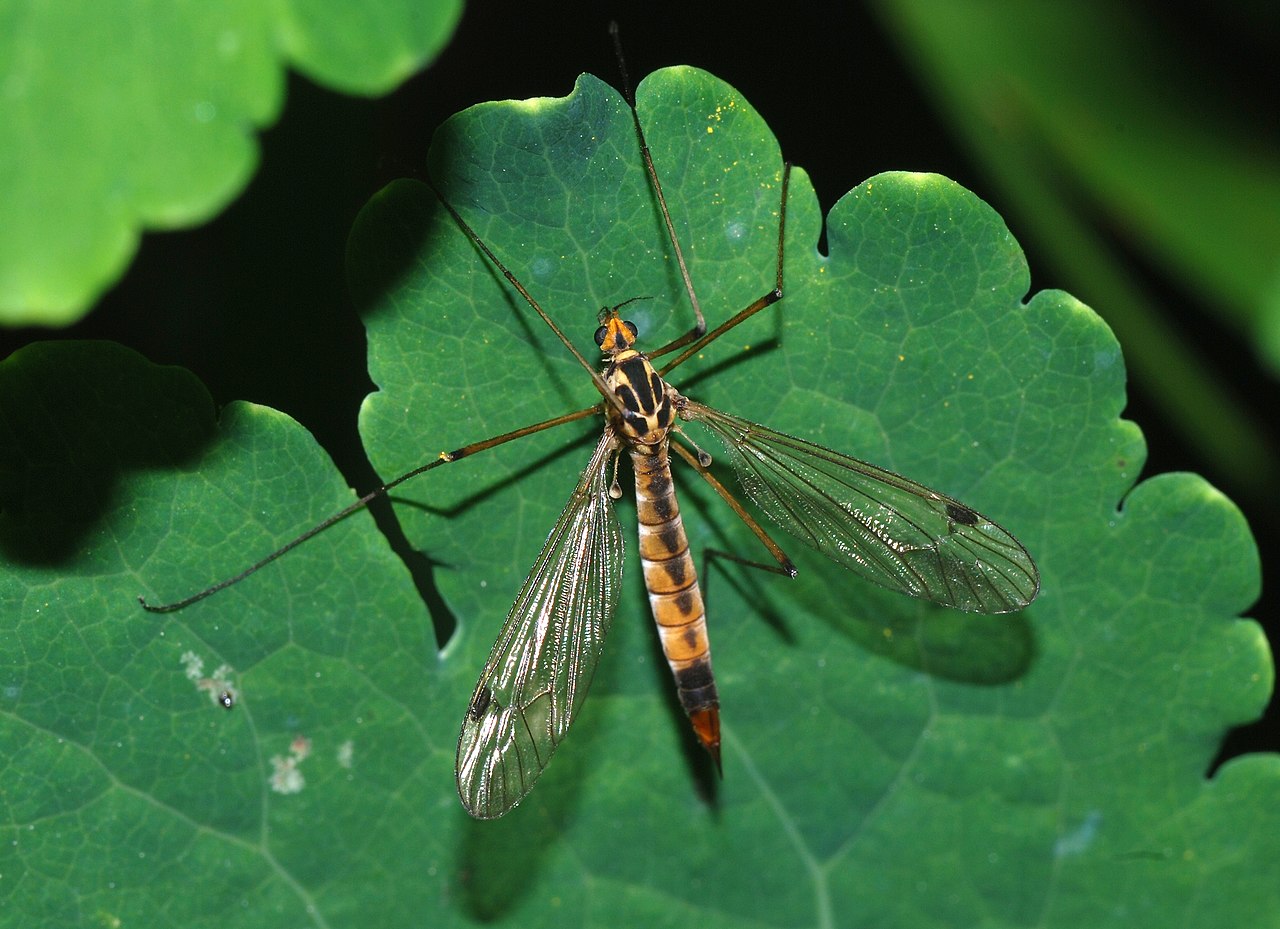
Crane flies are flying insects placed in the family Tipulidae. They are members of the order Diptera and are commonly recognized by their very long legs and slender bodies. Because of their shape and size, people frequently compare them to large mosquitoes, but crane flies are distinct in behavior and anatomy from true mosquitoes (Culicidae).
Image gallery
6 Images



Characteristics and life cycle
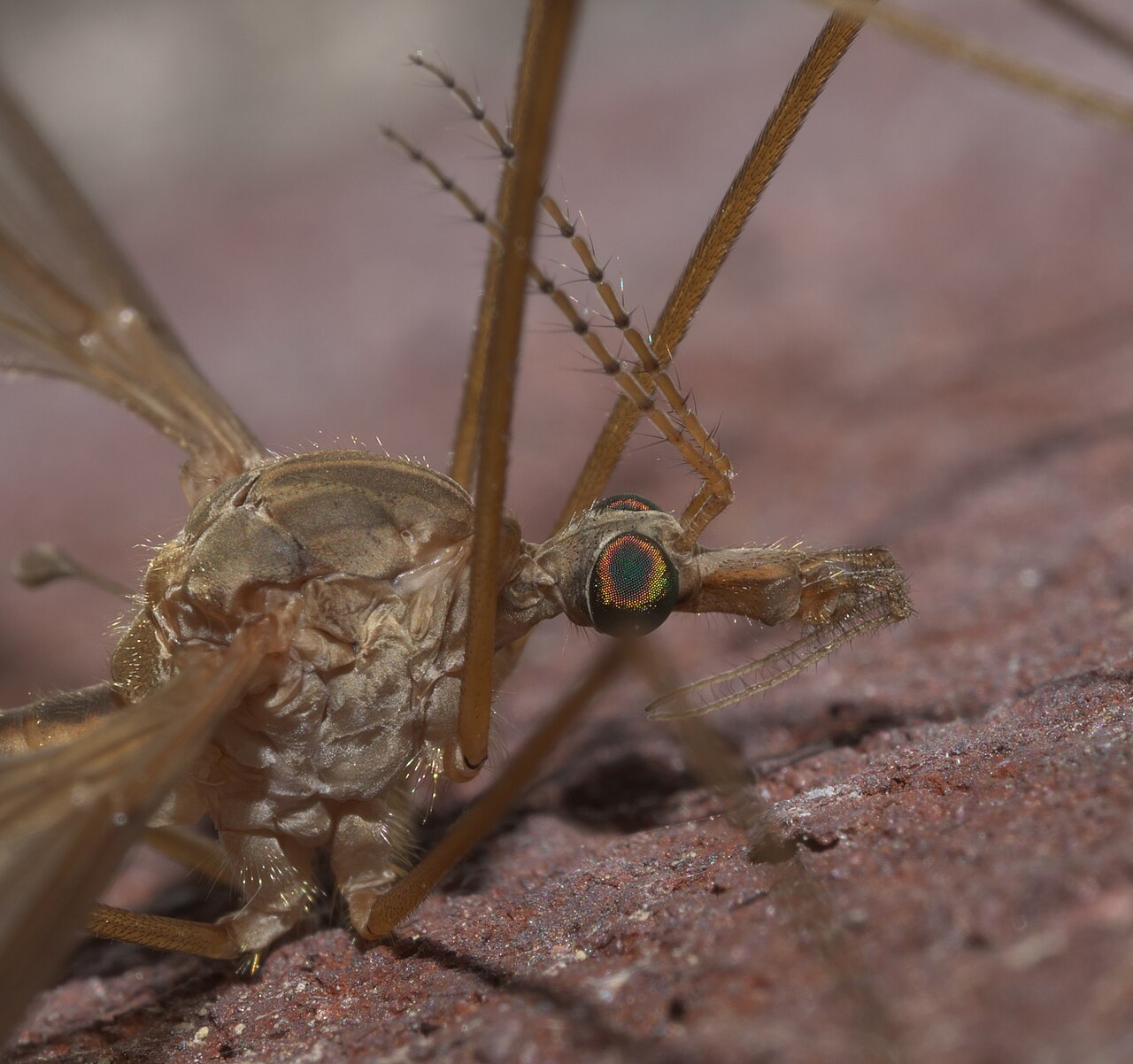
Adults typically have a delicate appearance: narrow wings, elongated legs that break off easily, and a thin, elongated thorax and abdomen. Like all flies, crane flies possess a single pair of functional wings and a pair of reduced balancing organs called halteres. Most adult crane flies do not bite; some species feed on nectar while others have reduced mouthparts and do not feed at all. Adult lifespan is short—often only about 10 to 15 days—during which their primary activity is reproduction.
Larvae (leatherjackets) and ecology
The immature stage, commonly called a leatherjacket, lives in soil, leaf litter, or aquatic and semi-aquatic habitats depending on the species. Leatherjackets are generally cylindrical, legless grubs that feed on decaying plant material, roots and other organic matter. In turf and agricultural settings some species can damage grasses and cereal seedlings, making particular crane fly larvae locally important as pests. Ecologically, both larvae and adults serve as food for birds, amphibians, small mammals and predatory insects; larvae also help decompose organic material and recycle nutrients.
Diversity and taxonomy
Crane flies represent one of the largest groups of flies, with roughly 15,000 described species placed in hundreds of genera. Taxonomy has been refined over time; many species were described in the early 20th century by specialists such as the entomologist Charles P. Alexander, who contributed substantially to cataloguing this group. Their diversity spans temperate and tropical regions worldwide.
Uses, significance, and management
Crane flies have no widespread direct benefit to humans, but they play useful roles as part of food webs and in decomposition. Occasional nectar-feeding by adults can contribute to pollination on a small scale. In places where larval feeding harms lawns or crops, management focuses on cultural practices (draining waterlogged soils, encouraging predators) and, if necessary, targeted control measures; integrated approaches are preferred to broad chemical treatments.
History, fossil record and common confusions
Fossil relatives of crane flies appear in the paleontological record, indicating an ancient lineage among fly groups. Common names create confusion: in many English-speaking areas crane flies are called "daddy longlegs," but that name is also applied to two very different arthropods—the harvestmen (order Opiliones) and cellar spiders (family Pholcidae). Key differences are visible on close inspection: harvestmen are arachnids with fused body regions and eight legs, cellar spiders are true spiders with silk-producing spinnerets, while crane flies are two-winged insects with wings, halteres and a three-part insect body plan.
Identification tips
- Look for one pair of wings and halteres—true flies have these features.
- Observe mouthparts: crane flies lack the long proboscis used by blood-feeding mosquitoes.
- Note habitat: larvae in soil or wet places are common; adults are often found near vegetation or lights at night.
For more specialized taxonomic, ecological or management information consult entomological guides and regional authorities. Tipulidae resources, general insect guides and comparative pages on mosquitoes and lists of species are useful starting points.
Questions and answers
Q: What are crane flies?
A: Crane flies are insects in the family Tipulidae.
Q: How do crane flies differ from mosquitoes?
A: Crane flies look similar to large mosquitoes, but unlike mosquitoes, they do not bite people or animals.
Q: Do crane flies eat nectar?
A: Yes, crane flies occasionally eat nectar.
Q: What other name do crane flies have around the world?
A: Crane flies are also known as daddy longlegs.
Q: What other creatures are also known as daddy longlegs?
A: The term 'daddy-long-legs' is also given to arachnids of the order Opiliones or the family Pholcidae.
Q: What are the larvae of crane flies commonly known as?
A: The larvae of crane flies are commonly known as leatherjackets.
Q: How many species and genera of crane flies are there?
A: There are about 15,000 different species and 525 genera of crane flies, making them the largest group of flies.
Related articles
Author
AlegsaOnline.com Crane fly (Tipulidae): appearance, life cycle and ecological role Leandro Alegsa
URL: https://en.alegsaonline.com/art/23953
Sources
- delta-intkey.com : delta-intkey.com/britin/dip/www/tipulida.htm
- iz.carnegiemnh.org : iz.carnegiemnh.org
- livingwithbugs.com : "European Crane Fly Damage and Control in Grass, Lawns & Turf"
- waterbugkey.vcsu.edu : "Order Diptera - Family Tipulidae - The Crane Flies - VCSU Macro-Invertebrate Lab"
- hbs.bishopmuseum.org : hbs.bishopmuseum.org/aocat/tipulidae.html