
COVID-19 pandemic in Turkey
Summary of the introduction, spread, public-health response, social and economic effects, and notable issues during the COVID-19 pandemic in Turkey.
Overview
The COVID-19 pandemic in Turkey is part of the global outbreak of coronavirus disease 2019 caused by the virus SARS-CoV-2. Early in 2020 Turkey, like many countries, confronted rapid case growth that challenged public-health services, triggered broad social restrictions and prompted national efforts to expand testing, care capacity and economic relief. For global context see international guidance and information on the virus itself at SARS-CoV-2 resources.
Image gallery
9 Images




Spread and timeline
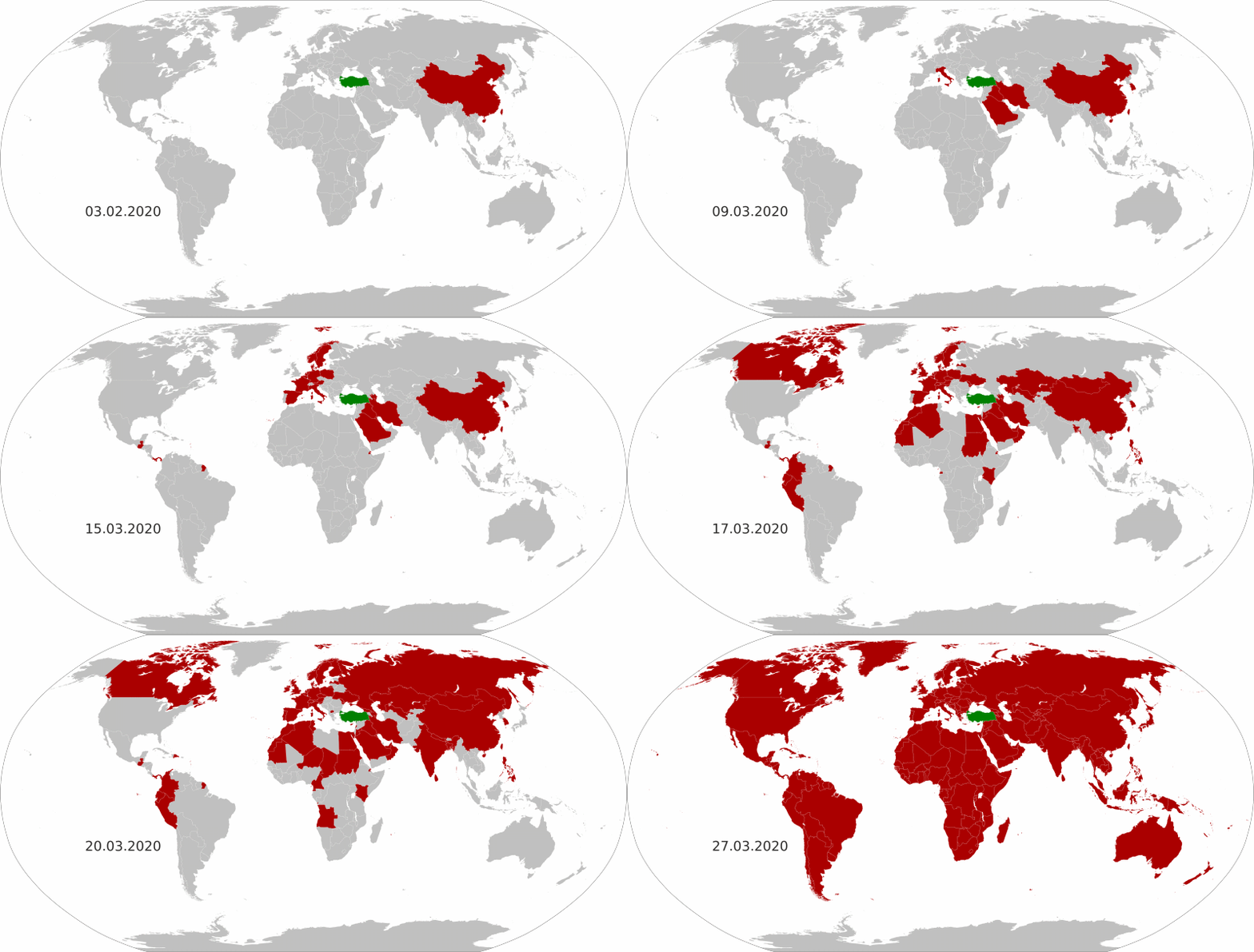
The first laboratory-confirmed case in Turkey was announced on 11 March 2020; the first reported death followed days later, on 15 March. By early April authorities reported that the virus had been detected in all provinces. Health officials later characterized mid-April 2020 as the period when transmission reached its initial peak and began to decline in response to control measures.
Public-health measures and healthcare response
The Turkish government implemented a sequence of interventions aimed at slowing transmission and preventing hospitals from being overwhelmed. Measures included school closures, suspension of mass gatherings, travel restrictions, and curfews targeted at older adults and younger people at different stages. Weekend and citywide lockdowns were imposed intermittently where case numbers rose.
Authorities rapidly expanded laboratory testing capacity and converted facilities to treat COVID-19 patients, while public and private hospitals increased intensive care and ventilator availability. The country also mobilized local production of personal protective equipment and medical supplies and introduced rationing and distribution systems for critical items.
Social and economic impacts
Like other nations, Turkey experienced significant social disruption: education moved online for extended periods, many businesses faced closures or reduced activity, and tourism declined sharply. The government announced multiple economic support packages aimed at protecting employment, supporting small and medium-size enterprises and stabilizing key sectors.
Data, testing and controversies
Turkey implemented a high-volume testing strategy in several phases and at times reported large daily testing numbers, which affected comparisons with neighbouring countries; authorities stated that testing helped detect cases earlier. Public debate occurred over statistical reporting, case definitions and data transparency—issues that were discussed by analysts, media and health professionals.
Vaccination and later phases
Mass vaccination campaigns began after vaccines became available internationally. Turkey rolled out vaccination programs and used multiple vaccine types to expand coverage among priority groups and the general population. Subsequent waves, variants of concern and evolving public-health guidance shaped later policy choices, as in many other countries.
Notable points
- First confirmed case: 11 March 2020; first reported death: 15 March 2020.
- Measures combined non-pharmaceutical interventions, testing expansion and healthcare surge capacity.
- Economic relief and remote education were significant elements of the national response.
- For contemporaneous official notices and situational updates see national sources and international health organizations; selected references: case announcements and regional context summaries such as Middle East trends.
The pandemic's course in Turkey reflects the interaction of public-health policy, healthcare capacity, social behaviour and global developments; assessments of outcomes consider both epidemiological results and broader social and economic consequences.
Related articles
Author
AlegsaOnline.com COVID-19 pandemic in Turkey Leandro Alegsa
URL: https://en.alegsaonline.com/art/23842
Sources
- covid19.saglik.gov.tr : "Türkiye'deki Güncel Durum"
- dailysabah.com : "Turkey confirms first coronavirus patient, recently returned from Europe"
- tr.euronews.com : "Sağlık Bakanı Koca: Son 24 saatte 7 kişi hayatını kaybetti, 293 yeni vaka görüldü"
- aa.com.tr : "Sağlık Bakanı Koca: Türkiye'de 4. haftada vaka artış hızı düşüşe geçti"
- aljazeera.com : "Turkey's coronavirus cases highest in Middle East: Live updates"
- indiatoday.in : "Turkey's coronavirus cases overtake Iran, highest in Middle East"
- foreignpolicy.com : "Turkey's Coronavirus Crisis Grows as Infections Exceed China's"
- dw.com : "Turkey's public health system faces coronavirus pandemic"
- coronavirus.jhu.edu : "Mortality Analyses"
- ourworldindata.org : "Coronavirus Pandemic (COVID-19)"
- institutmontaigne.org : "The Battle Over the Numbers: Turkey's Low Case Fatality Rate"
- tr.euronews.com : "Türkiye: Kişi başına düşen yoğun bakım yatağı 2012-2018 arasında yüzde 46 arttı; Avrupa'da durum ne?"