
Creutzfeldt–Jakob disease (CJD): causes, signs, diagnosis and prevention
Creutzfeldt–Jakob disease (CJD) is a rare, fatal neurodegenerative prion disorder. This article outlines its forms, pathology, symptoms, diagnosis, transmission risks, prevention and historical context.
Overview
Creutzfeldt–Jakob disease (CJD) is a rare, rapidly progressive neurological disorder caused by misfolded proteins known as prions. It is a degenerative disease of the central nervous system that currently has no cure and is usually fatal. Although CJD is sometimes associated in popular discussion with so-called "mad cow disease," the relationship is specific: one variant of human CJD is linked to bovine spongiform encephalopathy (BSE), but most CJD cases arise by other mechanisms.
Image gallery
6 Images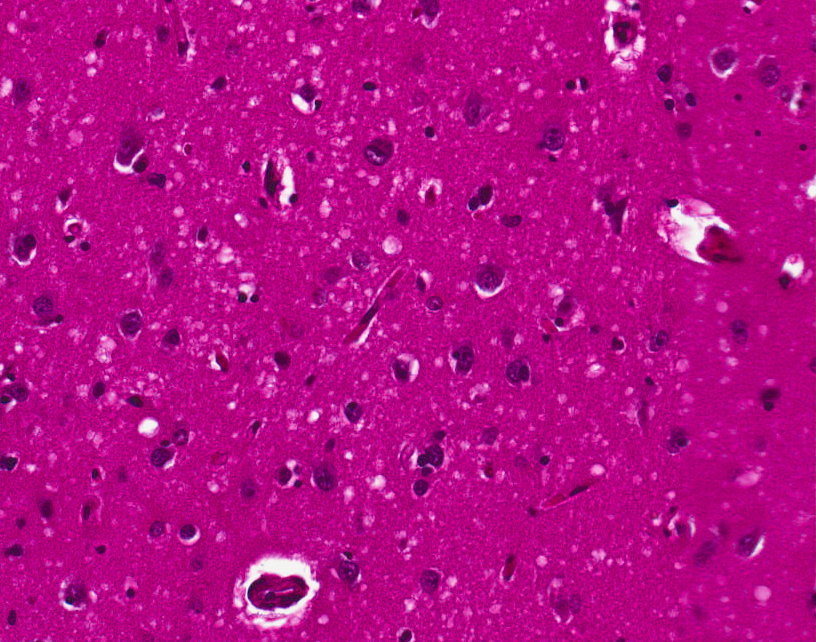



Cause and pathological features
CJD results from abnormal forms of the prion protein that induce normally folded proteins to adopt a pathological configuration. These misfolded proteins accumulate in brain tissue, producing neuronal loss, gliosis and the characteristic spongiform change—small vacuoles that give the brain a sponge-like appearance. Brain tissue damage progresses quickly, impairing cognition, coordination and basic bodily functions. Pathologists identify prion-associated protein deposits and the spongiform pattern at autopsy.
Clinical forms and epidemiology
Clinically, CJD is grouped into several types: sporadic (the most common), genetic or familial (caused by inherited PRNP gene variants), iatrogenic (acquired accidentally through medical procedures), and variant CJD (vCJD) linked to exposure to BSE-contaminated material. Sporadic CJD occurs worldwide and is rare—roughly a few cases per million people per year—while familial forms follow inherited patterns and iatrogenic cases are prevented by modern safety measures.
Symptoms, course and diagnosis
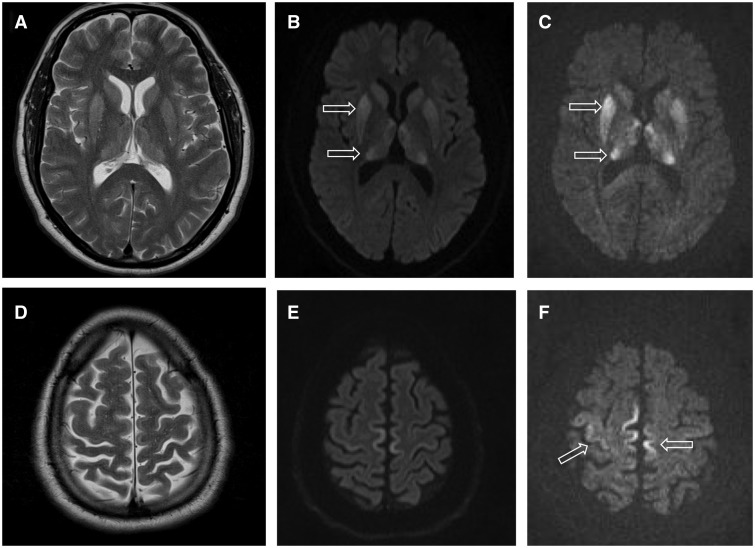
Typical early features include rapidly progressive dementia, memory loss, personality change, visual disturbances and impaired coordination. Myoclonus (sudden muscle jerks) and akinetic mutism can appear in advanced stages. Clinicians use clinical assessment plus tests—electroencephalography (EEG), magnetic resonance imaging (MRI), cerebrospinal fluid markers and specialized assays such as RT-QuIC—to support the diagnosis. Cerebrospinal fluid testing for surrogate proteins may assist but is not definitive without neuropathological confirmation.
- Common signs: rapid cognitive decline, ataxia, visual problems, myoclonus.
- Investigations: EEG patterns, MRI changes, CSF biomarkers and prion-specific assays.
Transmission, prevention and management
Prions resist standard sterilization, so strict infection-control protocols are essential where risk exists. Documented iatrogenic transmission has occurred via contaminated neurosurgical instruments, transplanted tissues and historically via cadaver-derived hormones; blood-borne transmission has been reported for variant CJD under rare circumstances. Preventive actions include single-use or validated decontamination of high-risk instruments, donor screening and restrictions designed to lower exposure risk. There is no proven disease-modifying treatment; care focuses on symptom control, supportive and palliative measures.
History and notable facts
The disorder is named after early 20th-century neurologists who described its clinical and pathological features. Public concern about CJD rose in the late 20th century when cases of vCJD were linked to BSE in cattle, prompting public health interventions and major changes in food safety and medical sterilization. Ongoing research aims to improve early detection, clarify mechanisms of prion propagation and develop therapies, but progress is cautious because prion biology and human safety impose significant scientific and ethical constraints.
For further overviews and clinical guidance, see resources on degenerative brain disease, prion biology at prion research pages, diagnostic methods at protein assay references, and public health guidance on containment and instrument sterilization at BSE and variant CJD summaries. Additional background and visual descriptions of tissue changes are available via educational pathology materials at spongiform encephalopathy resources and neuroanatomy references at brain tissue guides. Historical accounts and policy responses can be explored through archives linked from public health timelines and clinical case discussions at medical review pages. For patient support and caregiver information, consult curated help pages shown at support resources.
Questions and answers
Q: What is Creutzfeldt-Jakob disease?
A: Creutzfeldt-Jakob disease (CJD) is a neurological disease that is degenerative, incurable, and always fatal.
Q: Is there a cure for CJD?
A: No, there is no cure for CJD.
Q: Why is CJD sometimes referred to as a human form of "mad cow disease"?
A: CJD is sometimes called a human form of "mad cow disease" because bovine spongiform encephalopathy (BSE), which is a cause of one rare type of CJD, is commonly known as "mad cow disease".
Q: What is the cause of CJD?
A: CJD is caused by an infectious agent called a prion, which is a protein that is folded incorrectly and can make copies of itself by changing properly folded proteins into misfolded ones.
Q: What happens to the brain tissue in CJD?
A: CJD causes brain tissue to become unhealthy very quickly, resulting in the development of holes in the brain and a change in the texture of the brain to become like a kitchen sponge.
Q: Is BSE the same disease as CJD?
A: No, BSE is not the same disease as CJD; it is actually a cause of one rare type of CJD.
Q: How do prions cause CJD?
A: Prions cause CJD by folding incorrectly and making copies of themselves at the expense of correctly folded proteins in the brain. This results in the destruction of healthy brain tissue and the development of the holes characteristic of the disease.
Related articles
Author
AlegsaOnline.com Creutzfeldt–Jakob disease (CJD): causes, signs, diagnosis and prevention Leandro Alegsa
URL: https://en.alegsaonline.com/art/24152
Sources
- cdc.gov : "CJD (Creutzfeldt–Jakob Disease, Classic)"
- ncbi.nlm.nih.gov : "Creutzfeldt–Jakob disease: Transmissible spongiform encephalopathy; vCJD; CJD; Jacob-Creutzfeldt disease"
- bmj.com : "Bovine spongiform encephalopathy and variant Creutzfeldt–Jakob disease"
- doi.org : 10.1101/SQB.1996.061.01.052
- pubmed.ncbi.nlm.nih.gov : 9246478
- www3.interscience.wiley.com : "MM2-cortical-type sporadic Creutzfeldt–Jakob disease with early stage cerebral cortical pathology presenting with a rapidly progressive clinical course"
- doi.org : 10.1111/j.1440-1789.2008.00904.x
- pubmed.ncbi.nlm.nih.gov : 18410280
- who.int : who.int: "Fact sheets no 180: Variant Creutzfeldt-Jakob disease" Feb 2012 ed.
- prion.ucl.ac.uk : "Sporadic Prion Disease"
- doi.org : 10.1056/NEJM198610163151605
- pubmed.ncbi.nlm.nih.gov : 3762620
- prion.ucl.ac.uk : "Sporadic Prion Disease"
- merckmanuals.com : "Creutzfeldt–Jakob Disease (CJD)"
- ncbi.nlm.nih.gov : "Creutzfeldt-Jakob disease: Updated diagnostic criteria, treatment algorithm, and the utility of brain biopsy"