
Cremaster muscle
Thin skeletal muscle layer surrounding the testis and spermatic cord that elevates the testes for temperature regulation and protection; involved in the cremasteric reflex.
Overview
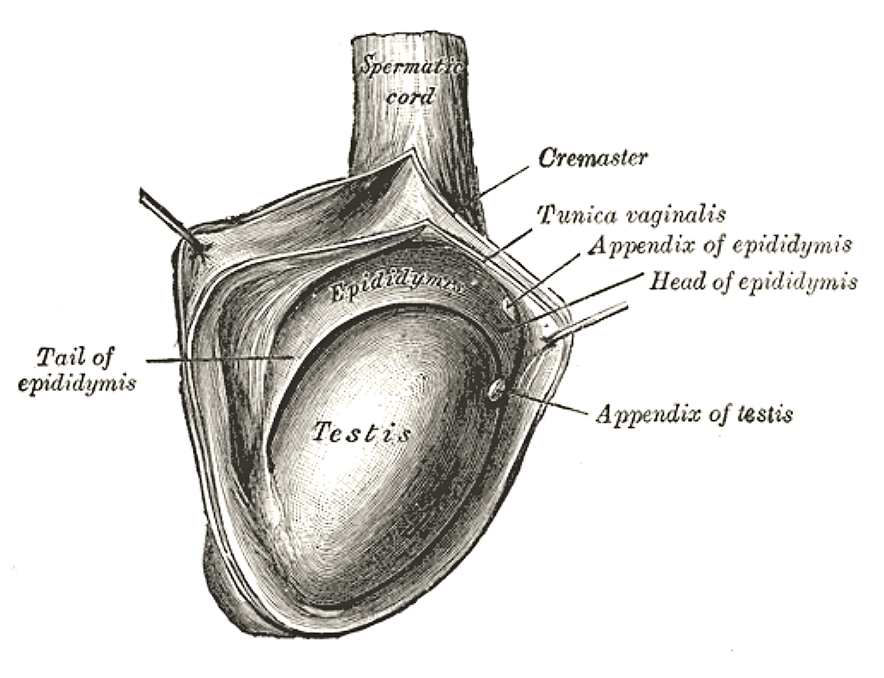
The cremaster is a thin sheet of skeletal muscle that covers the testis and the spermatic cord. It forms part of the wall of the inguinal canal and is continuous with the internal oblique of the abdominal wall. Its principal role is to raise and lower the testis within the scrotum in response to temperature changes and certain tactile stimuli.
Image gallery
3 Images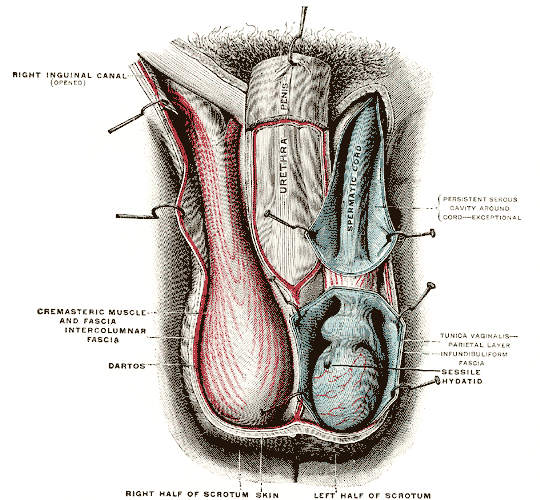

Anatomy and innervation
Fibres of the cremaster descend with the testis during fetal development, forming a sleeve around the cord and tunica vaginalis. Motor supply is provided mainly by the genital branch of the genitofemoral nerve; sensory input to the reflex pathway is typically carried by the ilioinguinal nerve. A small artery, often called the cremasteric artery, accompanies the muscle and contributes to the cord's blood supply.
Function and reflex
The muscle acts for thermoregulation—elevating the testes toward the body when cold and relaxing when warm—and for protective withdrawal. The cremasteric reflex, elicited by stroking the inner thigh, causes ipsilateral scrotal elevation and is used clinically to assess spinal segments and peripheral nerve integrity.
Clinical significance
- Absence or asymmetry of the reflex can indicate neurological injury at L1–L2 or conditions such as testicular torsion.
- Surgical procedures in the inguinal region, including hernia repair, must account for cremasteric fibers to avoid nerve or vascular injury.
- In females the equivalent tissue is often rudimentary and associated with the round ligament of the uterus.
The English name derives from Greek: from the transitive Greek verb meaning "to hang," originally κρεμάννυμι. This etymology reflects the muscle's role in suspending and positioning the testes within the scrotum.
Related articles
Author
AlegsaOnline.com Cremaster muscle Leandro Alegsa
URL: https://en.alegsaonline.com/art/24083
Sources
- radiopaedia.org : "Cremaster muscle - Radiology Reference Article"
- wikidata.org : wikidata.org/wiki/Q1724194
- tools.wmflabs.org : A04.5.01.018M