
Cosmic dust: origin, composition, observations and role in planetary systems
Tiny solid particles found throughout space. Covers composition, formation, locations (interstellar, interplanetary, circumplanetary), observational signatures, and importance for planet formation and chemistry.
Overview
Cosmic dust—often called stardust or space dust—refers to tiny solid particles that populate interplanetary and interstellar space. These grains range in size from molecules and nanometre-scale clusters to particles a few micrometres across. Although individually microscopic, dust grains collectively influence how light travels through space and how gas cools and forms new stars and planets. For a basic concept of tiny particles see microscopic particles.
Image gallery
10 Images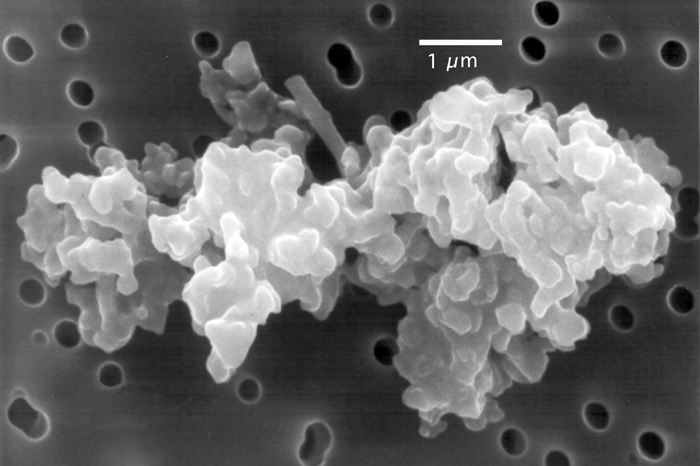





Composition and characteristics
Dust grains are chemically diverse. Common constituents include silicate minerals, carbon-rich compounds (amorphous carbon, polycyclic aromatic hydrocarbons), metallic iron or iron oxides, and volatile ices in cold regions. Their surfaces can host simple molecules and act as sites for chemical reactions, such as the formation of molecular hydrogen. Sizes and structure affect optical behavior; very small grains scatter and emit differently than larger aggregates — typical size references are given in nanometres.
Formation and processing
Grains are produced by several stellar processes. Evolved stars and supernovae eject heavy elements that cool and condense into solid particles in stellar winds and expanding ejecta. In dense clouds and protoplanetary disks grains can grow further by coagulation and mantle accretion. Atoms released from stars and the interstellar medium may be neutral or ionized, and chemical bonding (including ionic and covalent types) helps build stable solids when conditions allow; see general notes on atoms, ions, and bonding mechanisms. Stellar sources such as giant stars supply much of the raw material (stars and the Sun are examples familiar to readers).
Where dust is found
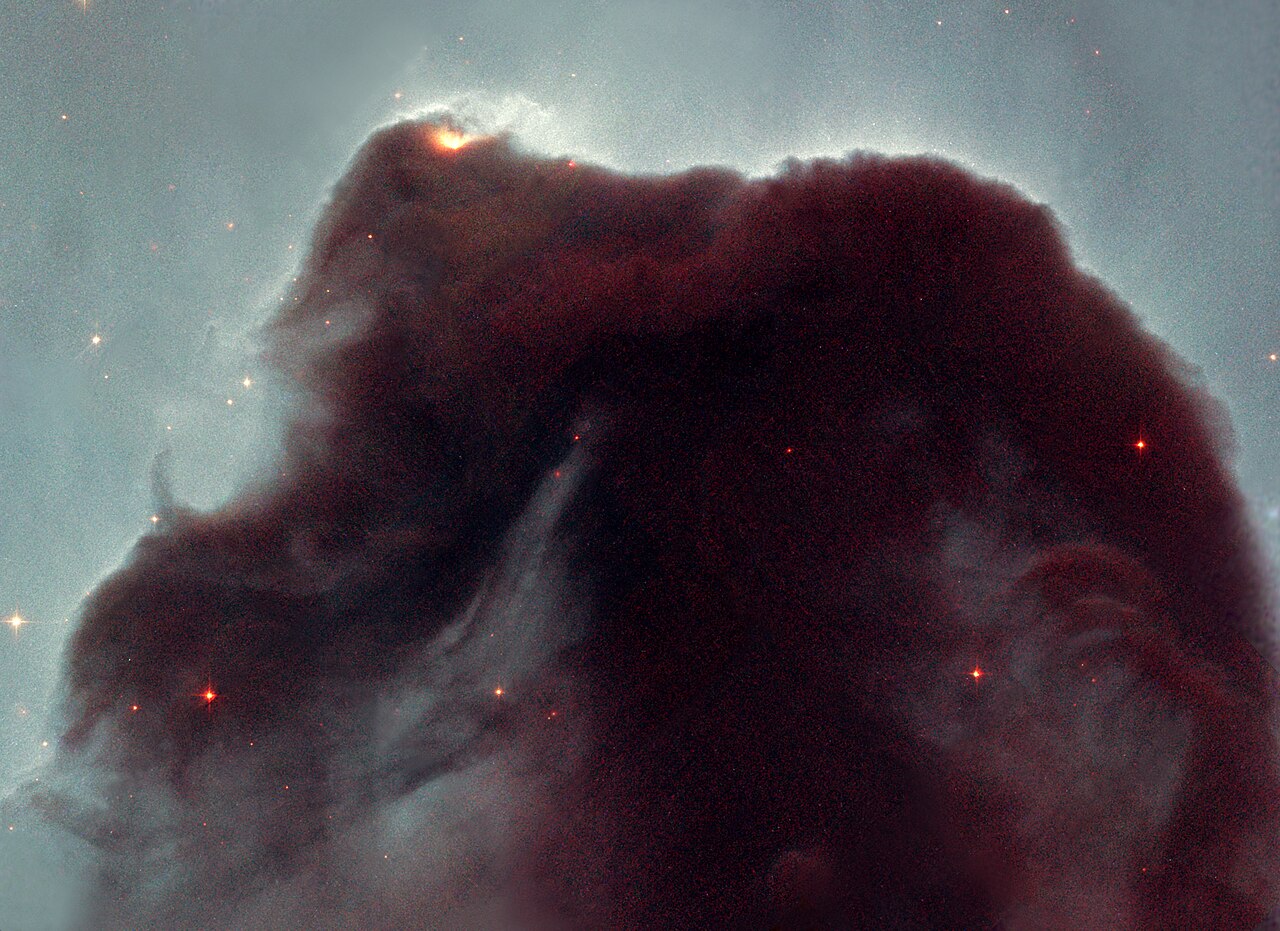
Dust is widespread and categorised by location. Interstellar dust resides between stars and shapes the appearance of nebulae. Interplanetary dust orbits the Sun and forms a diffuse cloud in the inner Solar System. Circumplanetary dust populates planetary rings and near-planet environments, while intergalactic dust is much rarer but can exist between galaxies. Examples of these environments include planetary rings (planetary rings), interplanetary space (interplanetary space), and larger scale distributions.
Observational signatures
Astronomers detect dust in several ways. Dust dims and reddens starlight (extinction and reddening), polarizes scattered light, and emits thermal radiation at infrared and submillimetre wavelengths; infrared studies are central to dust astronomy (infrared radiation). In the Solar System sunlight scattered from interplanetary dust produces visible phenomena such as zodiacal light and the faint antisolar glow known as the gegenschein. Remote spectroscopy identifies mineral features and organic bands that reveal composition.
Importance for planets and life
Dust is a building block of planets: in protoplanetary disks grains collide and stick, forming larger aggregates that evolve into planetesimals and, ultimately, planets — our own Earth is the result of such processes. Presolar grains embedded in some meteorites preserve isotopic signatures from ancestral stars and provide direct samples of stardust. Dust also influences chemistry in space by catalyzing molecule formation and transporting organic compounds relevant to prebiotic chemistry.
Quick facts and tools
- Common study methods: infrared and submillimetre telescopes, in situ detectors, and returned samples.
- Dust is both created and destroyed: shocks, sputtering, and grain-grain collisions modify lifetimes.
- Space missions and laboratory analysis of meteorites provide tangible samples and measurements.
For further introductory material and data, consult online summaries and mission pages for observational programs and sample-return missions that study cosmic dust and its role in cosmic evolution.
Related topics: particle physics basics, stellar evolution, solar studies, atomic processes, ionization, chemical bonding, size scales, infrared astronomy, ring systems, inner Solar System dust, zodiacal phenomena, planet formation.
Related articles
Author
AlegsaOnline.com Cosmic dust: origin, composition, observations and role in planetary systems Leandro Alegsa
URL: https://en.alegsaonline.com/art/23306
Sources
- historyoftheuniverse.com : "Cosmic Dust"
- wisegeek.com : "What is Cosmic Dust?"
- herschel.cf.ac.uk : "Cosmic dust"