
Coonskin cap
A fur hat made from a raccoon pelt, often with the tail attached, associated with Native American use and American frontier imagery and later popularized in mass culture.
The coonskin cap is a soft hat traditionally made from the pelt of a raccoon, typically worn with the animal's bushy tail hanging at the back. The basic form and materials are described in many sources as a fur hat or cap (hat) made from raccoon fur (fur) and originally derived from the animal itself (raccoon) with the tail commonly attached (tail). Over time the cap became a visual shorthand for life on the North American frontier and is often used as a symbol (symbol) of early United States history (early United States).
Form and construction: a typical coonskin cap uses the entire pelt stretched and sewn into a rounded shape to fit the head; the tail is left intact as a trailing ornament. Some modern reproductions substitute faux fur, machine stitching, or trim to produce a lighter or more durable souvenir. While the cap is closely associated with particular personalities, the practical origin lies in cold-weather headwear that provided warmth and water resistance.
Origins and early use: indigenous peoples of the eastern woodlands and river valleys wore a variety of fur garments and head coverings; European settlers who moved into regions such as Tennessee (Tennessee) and Kentucky (Kentucky) adopted similar styles for practical reasons. Native American traditions (Native Americans) influenced frontier clothing, and the cap was useful to trappers, hunters and pioneers (settlers).
Image gallery
6 Images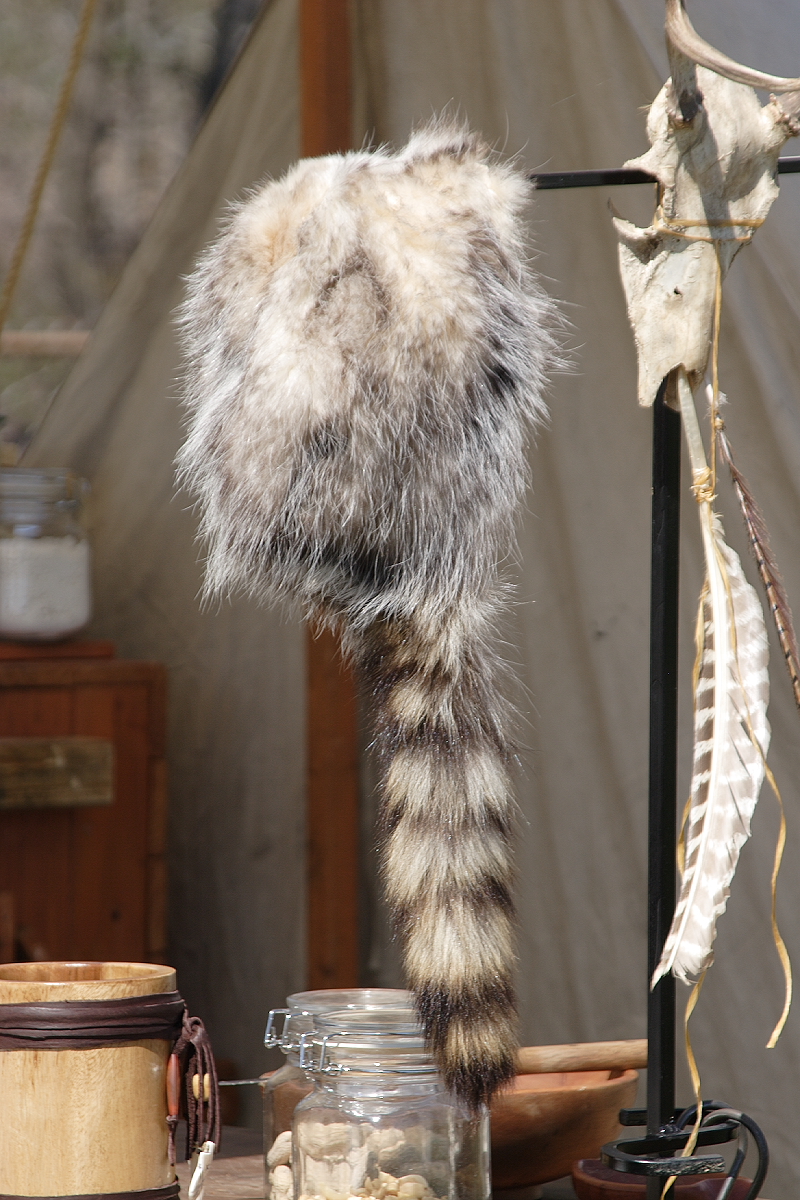




Historic and cultural associations
Famous frontier figures have been associated with the coonskin cap; among the best-known are Davy Crockett (Davy Crockett) and Daniel Boone (Daniel Boone). These associations were reinforced later by 20th-century popular culture — theatrical productions, films and television— which turned the cap into an emblem of rugged backwoods character rather than a precise historical detail about how every pioneer dressed.
Uses, variations and modern considerations
- Practical use: warmth and water resistance for hunters and trappers.
- Symbolic use: costume, historical reenactment, and children's play.
- Commercial versions: mass-produced souvenir caps and toy variations, often using synthetic materials.
Today the coonskin cap remains a recognizable piece of Americana. Collectors, reenactors and designers sometimes revive the style, while ethical concerns about fur have encouraged alternatives. The cap serves both as a functional garment in its origins and a cultural icon reflecting how clothing can come to signify a wider historical narrative.
Related articles
Author
AlegsaOnline.com Coonskin cap Leandro Alegsa
URL: https://en.alegsaonline.com/art/22899