
Congo Free State (1885–1908): Leopold II’s Private Colony in Central Africa
Private colony of King Leopold II (1885–1908) established as the Congo Free State. Rule relied on forced labor and coercion for rubber and ivory extraction and provoked international outrage and Belgian annexation.
Overview
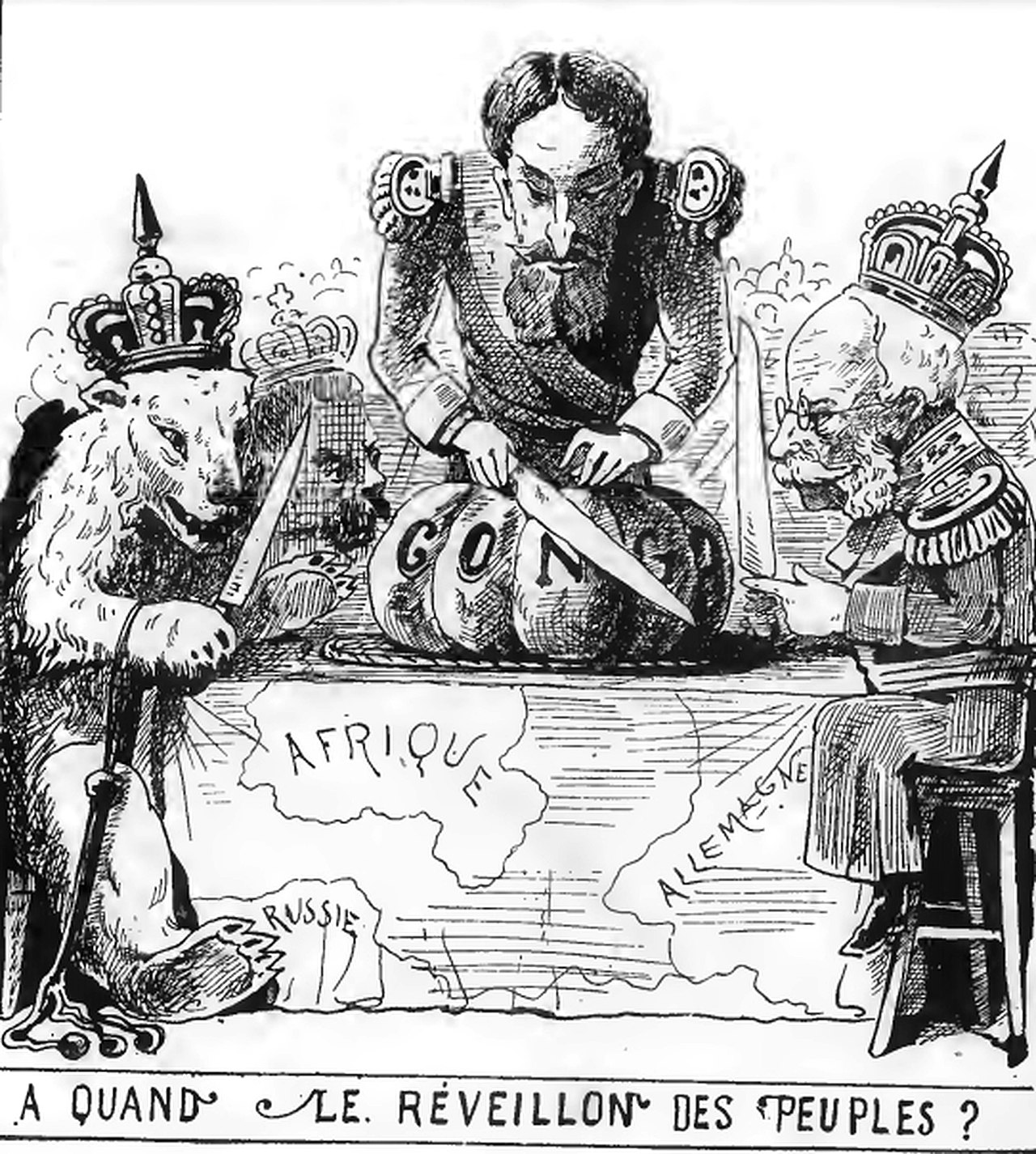
The Congo Free State, officially styled in French as the État indépendant du Congo, was a vast territory in Central Africa created in the late nineteenth century and operated as the personal possession of King Leopold II of Belgium. Presented publicly as an enterprise of exploration, scientific study and philanthropy, the project combined commercial exploitation with private rule. Leopold established organizations and used diplomatic channels to secure international recognition for his control over the basin.
Image gallery
10 Images




Foundation and legal recognition
Leopold organized and funded societies and committees that presented themselves as humanitarian and scientific. He converted these efforts into the International Association of the Congo and sought formal acceptance at the Berlin Conference of 1884–85. On 29 May 1885 he declared the Congo Free State and exercised sovereign authority in practice, an arrangement contemporaries sometimes described as the rule of a dictator. Leopold administered the territory remotely and, notably, never personally visited Africa.
Administration, economy and methods
The administration combined a small European bureaucracy, concession companies, and an armed force often identified as the Force Publique. Its economic model prioritized extraction of natural resources for export. The most valuable commodities for Leopold’s regime were rubber and ivory, produced under rigid quotas. To meet production targets local populations were subjected to coercive measures that included forced recruitment, hostage-taking and systems many historians describe as slave-labour practices. Punishments for perceived non-compliance were frequently harsh; reports of systematic mutilation and other atrocities circulated widely.
Humanitarian outcry and campaigns
Starting in the late 1890s and intensifying in the early 1900s, missionaries, diplomats, journalists and ex-administrators published testimony and documentary evidence of abuses. Activists such as campaigners associated with the Congo Reform movement publicized accounts of brutality and economic exploitation, prompting debate in European and North American public opinion. Investigations by independent observers helped turn these revelations into an international scandal that challenged the legitimacy of private colonial rule and Leopold’s claim to benevolent motives.
Consequences and transfer of sovereignty
The accumulating diplomatic pressure and domestic political controversy in Belgium made Leopold’s personal control increasingly untenable. In 1908 sovereignty over the territory was transferred from the king to the Belgian state; the area was reorganized as the Belgian Congo. The transfer ended the Congo Free State as a private domain, although many structures of colonial exploitation and paternalistic administration persisted under Belgian rule.
Demographic impact and historical assessment
The Congo Free State left a traumatic legacy. Precise demographic calculations remain debated: modern scholars offer a range of estimates and emphasize that mortality and population disruption resulted from a combination of violence, forced labor, famine, reduced birth rates and disease. While estimates vary, most historians agree that the human cost was very large and that the period reshaped social and economic life across much of the basin. The episode is frequently cited in studies of colonial violence, corporate and state responsibility, and the limits of humanitarian rhetoric used to justify territorial control.
Legacy, memory and historiography
The Congo Free State era has continued to attract historical research, public debate, and cultural reflection. It contributed to the development of modern human-rights campaigning and to critical reassessments of late nineteenth-century imperialism. Scholars examine administrative records, missionary accounts, diplomatic correspondence and oral history to reconstruct how coercion and commercial incentive structures operated together. Commemorations and critiques in Belgium and internationally explore the moral and legal responsibilities arising from this history.
Key facts
- Declared as the personal possession of King Leopold II in 1885; French title: État indépendant du Congo.
- Recognized at the Berlin Conference and administered without the king’s personal residency in Africa.
- Economic extraction prioritized rubber and ivory among other natural resources.
- Enforcement methods included coercion described as slave-labour practices and widely reported physical punishments, including mutilation.
- Profits and concessions benefited Leopold and business partners, criticized as personal profit-driven arrangements.
- International pressure led to annexation and reorganization as the Belgian Congo in 1908.
For summaries, archives and further reading consult specialized studies and primary-source collections that examine administrative correspondence, missionary reports and contemporary journalism about the Congo Free State. These sources provide the documentary basis for ongoing scholarly discussion and public remembrance of this period. Central Africa, the region most affected by these events, remains central to understanding the long-term consequences of the Congo Free State era.
Related articles
Author
AlegsaOnline.com Congo Free State (1885–1908): Leopold II’s Private Colony in Central Africa Leandro Alegsa
URL: https://en.alegsaonline.com/art/22500