
Congress of the Philippines
The national, bicameral legislature of the Philippines, composed of the Senate (upper chamber) and the House of Representatives (lower chamber). Roles include lawmaking, budget approval, oversight, and impeachment.
The Congress of the Philippines (Filipino: Kongreso ng Pilipinas) is the country's national legislature and the principal lawmaking body. In legal and constitutional usage it refers to the bicameral assembly formed by the Senate and the House of Representatives. In everyday speech, however, the word "congress" is sometimes used colloquially to mean the lower chamber alone, the House of Representatives.
Image gallery
5 Images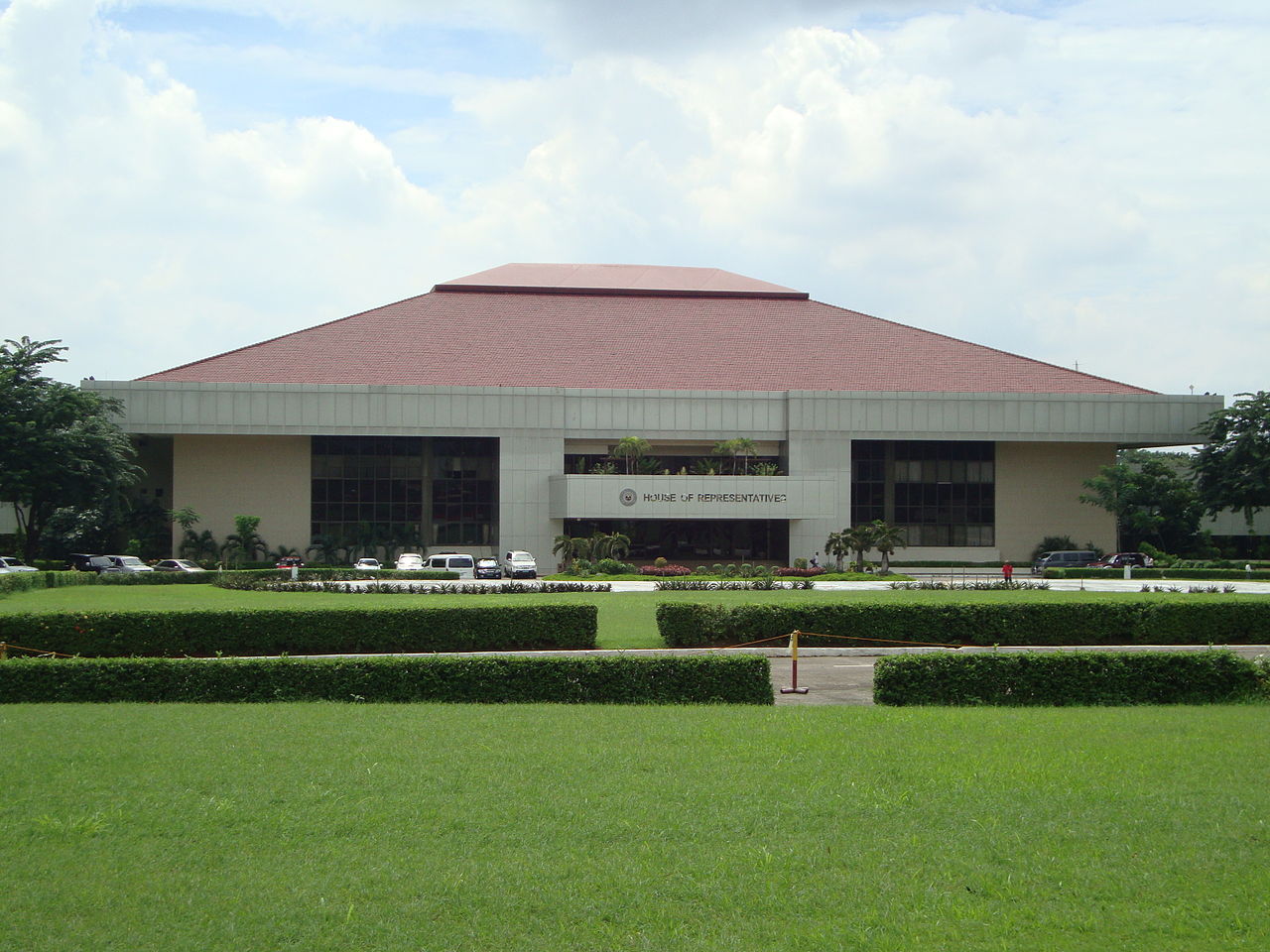


Structure and components
Congress is bicameral, consisting of two distinct chambers with different membership rules and functions. The upper chamber, the Senate, is a national body of senators elected at-large; there are 24 seats, with approximately half of the body elected every three years for staggered six-year terms. The lower chamber, the House of Representatives, is composed of district representatives elected by geographic constituencies and party-list members chosen by proportional representation. Membership in the House varies over time as new districts are created and party-list allocations change.
Functions and powers
As the country's legislature, Congress performs several key functions that shape national governance:
- Lawmaking — drafting, debating and enacting statutes that affect national policy, public services and civil rights.
- Budget and appropriations — approving the national budget and overseeing public expenditures.
- Oversight — monitoring executive agencies, holding hearings and investigating matters of public concern.
- Checks and balances — the House may initiate impeachment proceedings while the Senate conducts impeachment trials; the Senate also has exclusive powers such as ratifying treaties and confirming certain high-level executive appointments.
Terms, sessions and special sittings
Members of the House serve three-year terms and may run for re-election, subject to constitutional and statutory limits on consecutive terms. Senators serve six-year terms with staggered elections. Congress meets in regular sessions each year; the Constitution and rules of procedure set the timing and duration of those sessions. When urgent matters arise between regular sittings, the President may call special sessions to address emergencies, unfinished business or priority legislation.
Historical development
The Philippine legislature has evolved through several institutional arrangements. Representative bodies date back to the revolutionary Malolos Congress at the end of the 19th century and expanded under American colonial rule with a bicameral Philippine Legislature and later the Philippine Assembly. The Commonwealth and postwar Constitutions restored bicameralism, although the legislature was replaced by a unicameral parliament during the martial law era. The current bicameral Congress was reestablished by the 1987 Constitution after the restoration of democratic institutions.
Notable distinctions and contemporary context
Key distinctions within the Philippine system include the nationwide, at-large election of senators versus the geographically based election of most House members, and the presence of a party-list mechanism to give sectoral representation in the lower chamber. Congress plays an influential role in policy, national budgets and accountability, and it operates within the broader framework of Philippine law and the democratic separation of powers. For more on the institution and its procedures consult primary sources and official publications of the national legislature and information about the Philippines.
For introductions to the chambers themselves see the pages on the Senate and the House of Representatives, and for executive-legislative relations consult materials about the President. Further reading and official documents are available from government archives and legislative libraries.
Related articles
Author
AlegsaOnline.com Congress of the Philippines Leandro Alegsa
URL: https://en.alegsaonline.com/art/22511
Sources
- gov.ph : "Article VI: THE LEGISLATIVE DEPARTMENT"
- gov.ph : "The Legislative Branch"