
Cheddar cheese: origin, production, varieties and culinary uses
Cheddar is a firm cow's‑milk cheese originating in Somerset, England. This article covers its history, the cheddaring process, common varieties, culinary uses and legal status.
Overview
Cheddar is a firm to semi‑hard cheese traditionally made from cow's milk. It is known for a compact texture, a wide range of flavors from mild to sharp, and excellent melting properties. As a general category it is often described as a type of hard cheese and is most commonly produced from cow's milk. Cheddar's name comes from the village of Cheddar in Somerset, England, where the style developed.
Image gallery
10 Images


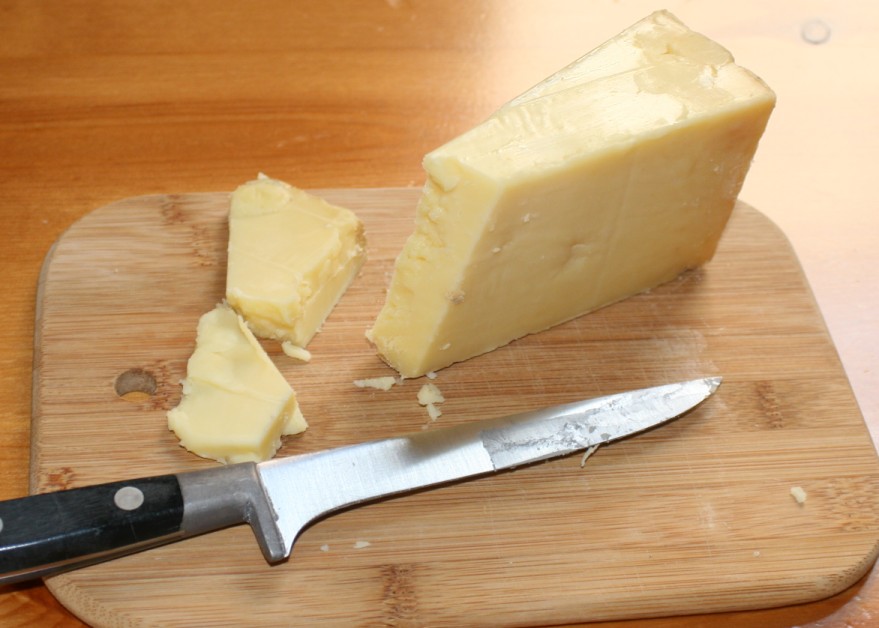


Production and key characteristics
What sets cheddar apart is its manufacturing step called cheddaring. After milk is curdled and the whey separated, curds are heated, cut into slabs, stacked, turned and restacked to expel whey and develop acidity. The curds are then milled or broken up, salted, pressed into blocks and aged. Traditional methods sometimes use cloth‑binding and long cave aging to build complexity.
- Texture: firm, slightly crumbly when mature.
- Flavor: ranges from mild and creamy to nutty, tangy or sharp with age.
- Color: naturally pale; some cheeses are colored with annatto for a deep yellow or orange hue.
- Melting: cheddar melts smoothly, making it popular for cooking.
History and geographic origins
Cheddar's roots are medieval. References to a hard English cheese date back to the 12th century, and some historical accounts link the style to influences from continental Europe. Romans are sometimes credited with introducing similar techniques to Britain from regions such as Cantal in France, and the earliest documented mentions place cheddar production in the High Middle Ages (12th century). Royal purchases are recorded in later periods: for example, King Henry II is known to have bought large quantities and other monarchs like Charles I acquired cheddar. Traditionally, cheddar for certain regional labels had to be produced within a set radius of landmarks such as Wells Cathedral.
Varieties, aging and notable styles
Cheddar is sold in a range of maturities: commonly labeled as mild, medium, mature, and extra mature (or vintage). Aging can be brief for a creamy, young cheddar or extended for a sharper, crumblier profile; some artisan cloth‑bound cheddars are aged in caves for extended periods (caves) and may be matured for many months up to and beyond typical commercial ranges (up to 30 months in some traditional cases). Regional and national variations—British, Irish, Canadian, American and farmhouse—reflect differences in milk, starter cultures and ageing practice.
Uses and culinary importance
Cheddar's balance of flavor and melting ability makes it a kitchen workhorse. It is widely used in sandwiches, gratins, sauces, burgers and casseroles, and is a classic choice for comfort dishes such as cheese on toast. In many countries it is second only to softer cheeses like mozzarella in popularity, prized both as a table cheese and an ingredient.
- Cooking: gratins, soups, sauces, grilled sandwiches.
- Cheese boards: aged cheddars pair well with fruit, nuts and ales.
- Industrial: block cheddar is widely produced for slicing, grating and foodservice.
Legal status and notable distinctions
The name "cheddar" is used worldwide and is not generally protected across the European Union; however, a specific traditional product, West Country Farmhouse Cheddar, holds protected status and must meet defined local production rules. Distinctions to keep in mind: cheddar describes a production style rather than a single recipe—so commercial, industrial and artisan cheddars can vary widely in fat content, age, texture and flavor. For further reading on manufacturing steps, regional history and recipes see sources and guides referenced here and in specialist texts (Cantal origin, historical prices, aging notes, classification, early records).
Cheddar remains one of the world’s most adaptable and widely consumed cheeses. Its variety of styles—from soft, mild blocks to sharp, aged farmhouse wheels—helps explain its enduring global appeal.
Related historical and cultural references: Roman links, royal purchases, and production traditions tied to English locales are part of cheddar’s long story and continuing evolution in contemporary cheese making.
Related articles
Author
AlegsaOnline.com Cheddar cheese: origin, production, varieties and culinary uses Leandro Alegsa
URL: https://en.alegsaonline.com/art/19096
Sources
- news.bbc.co.uk : "Separating the curds from the whey"
- cheddargorgecheeseco.co.uk : "History"
- independent.co.uk : "The Big Question: If cheddar cheese is British, why is so much of it coming from abroad?"
- grocerytrader.co.uk : "The Interview – Lactalis McLelland's 'Seriously': driving the Cheddar market"
- idfa.org : "Cheese Sales and Trends"
- future.aae.wisc.edu : "Cheddar Cheese Production"