
Charles I (1600–1649), King of England, Scotland and Ireland
King of England, Scotland and Ireland (1625–1649) whose disputes with Parliament and religious policy precipitated the English Civil War; tried and executed in 1649. Patron of the arts and father of Charles II and James II.
Overview
Charles I (19 November 1600 – 30 January 1649) reigned as king of England, Scotland and Ireland from 1625 until his execution (30 January 1649). He was the second son of James VI and I and succeeded to the thrones following the death of his father. His marriage to Henrietta Maria of France and his belief in the authority of the monarchy helped shape his reign and the controversies that followed.
Image gallery
10 Images




Character and government
Charles is commonly associated with a firm belief in the doctrine often called the "divine right of kings," a view that royal authority was granted directly by God and therefore not easily constrained by Parliament. He favored ceremonial religion and high-church practices within the Church of England, which alarmed Puritans and many members of Parliament. Financial pressure, disputes over taxation and the use of prerogative measures to raise revenue deepened tensions between court and legislature.
Major conflicts and the road to war
During his reign Charles engaged in persistent struggles with Parliament over taxation, law and the control of the church. From 1629 to 1640 he conducted a period of personal rule without calling Parliament, an interval that critics later called the "Eleven Years' Tyranny." Attempts to impose religious forms in Scotland provoked the Bishops' Wars and forced him to reconvene Parliament. These disputes culminated in the outbreak of the English Civil War between royalist and parliamentary forces in 1642.
Conflict, trial and execution
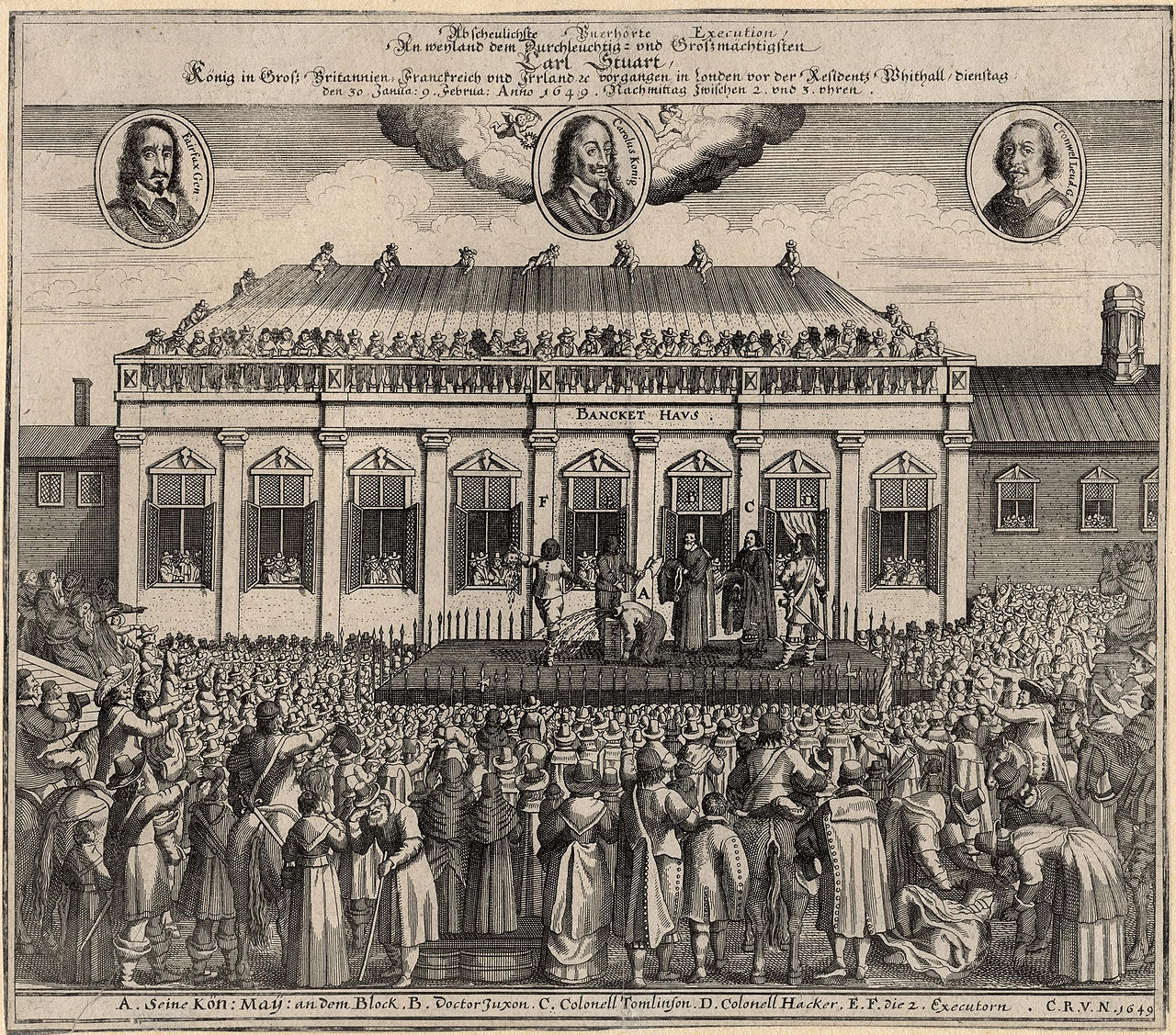
The fighting of the 1640s saw alternating fortunes for the king and Parliament. After key military defeats, Charles was captured and, following political upheaval, brought before a specially convened court. He was tried by the Rump Parliament's High Court of Justice and executed in January 1649. His death marked the temporary abolition of the monarchy and the establishment of the Commonwealth under parliamentary rule.
Notable events and family
- Accession to the throne: 1625.
- Personal rule (1629–1640) and tensions over taxation.
- Bishops' Wars with Scotland; recall of Parliament.
- Outbreak of civil war in 1642 and execution in 1649 (see execution).
Legacy and cultural contributions
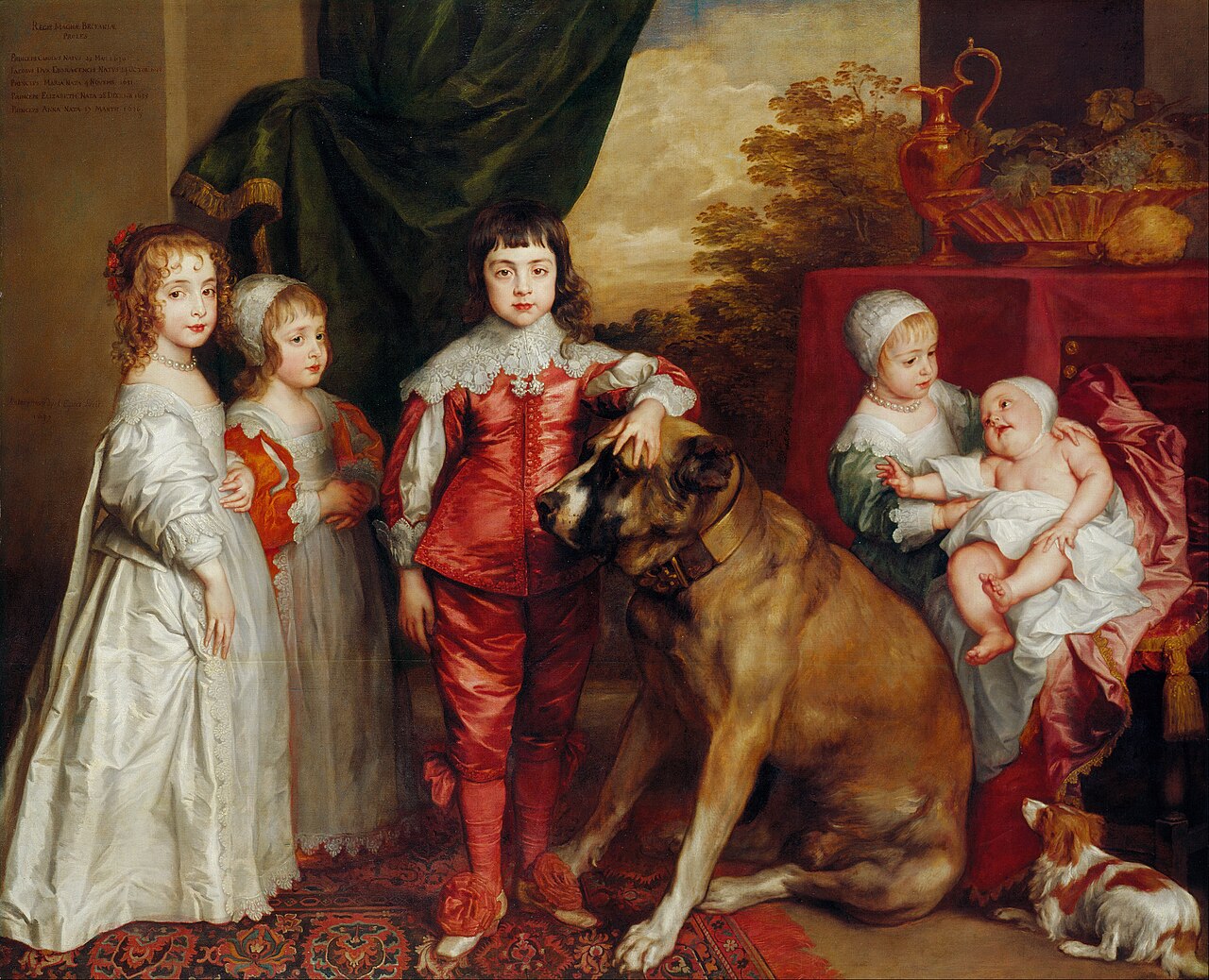
Charles left a mixed legacy. He was a patron of the arts and collected paintings and architecture in the continental taste; his court supported artists and musicians. Politically and constitutionally, his conflicts with Parliament reshaped British governance: the events of his reign led to prolonged debate about the limits of royal power and the rights of representative institutions. He was the father of the future kings Charles II and James II. Historians continue to assess whether his policies reflected principled conviction, political misjudgment, or both.
For further study, see contemporary accounts of his trial and the political developments that followed his execution, and consult specialized biographies and constitutional histories for detailed analysis.
Related: England, Scotland, Ireland, James VI and I, Henrietta Maria, English Civil War, execution.
Questions and answers
Q: Who was Charles I of England?
A: Charles I of England was the king of England, Scotland, and Ireland from 1625 until his execution in 1649.
Q: When was Charles I of England born?
A: Charles I of England was born on November 19, 1600.
Q: Who was Charles I of England's father?
A: Charles I of England's father was James VI and I.
Q: Who was Charles I of England married to?
A: Charles I of England was married to Henrietta Maria of France.
Q: How did Charles I of England die?
A: Charles I of England was beheaded during the English Civil War.
Q: When did Charles I of England become king?
A: Charles I of England became king on March 27, 1625.
Q: How long was Charles I of England's reign?
A: Charles I of England's reign lasted from March 27, 1625, until his execution in 1649.
Related articles
Author
AlegsaOnline.com Charles I (1600–1649), King of England, Scotland and Ireland Leandro Alegsa
URL: https://en.alegsaonline.com/art/116210
Sources
- bbc.co.uk : "Charles I of England"
- information-britain.co.uk : information Britain