
Farthing (English coin)
A small historic British coin equal to one quarter of a penny, issued from medieval times through the mid-20th century; notable for changing metals, distinctive designs and its place in idiom and daily commerce.
Overview
The farthing was a small denomination coin used in England and later Britain for many centuries. Valued at one quarter of a penny (equivalently 1/960 of a pound sterling), it paid for very low-value purchases and everyday small change. It survived as a unit of currency from the medieval period into the twentieth century, and its name entered common speech as in expressions such as "not worth a farthing." The coin is associated with both the Kingdom of England and the later British state that succeeded it.
Image gallery
4 Images

Name and early history
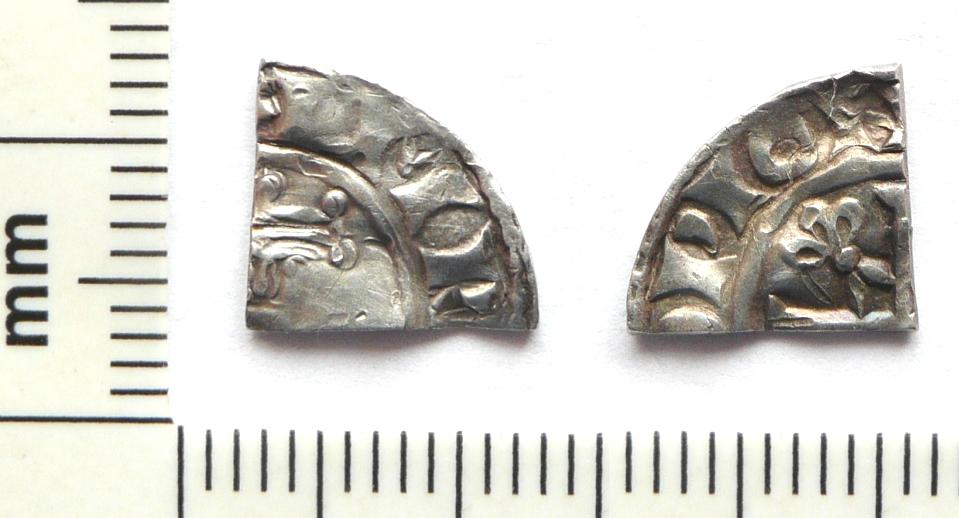
The word "farthing" derives from the Old English or Anglo-Saxon term feorthing, meaning a fourth part. The concept likely reflects related Old Norse vocabulary for a quarter unit. Farthings first appear in the English coinage record in the later Middle Ages: early examples were struck in silver and were very small pieces intended to extend the range of small change available for market transactions.
Materials, size and designs
Over time the farthing was produced in several metals as minting technology and economics changed. Medieval and later small silver farthings are known to collectors; by the early modern period copper was used and, in some periods, other metals such as silver, copper and even tin or bronze appear in the material history of the denomination. Typical farthings were tiny and lightweight, which made earlier silver examples scarce survivors in collections. Designs evolved from simple long-cross or pellet motifs to later issues that showed the reigning monarch's portrait on the obverse and a variety of reverses: in the twentieth century a small bird (the wren) became a familiar reverse motif on many issues.
Political and numismatic development
The farthing continued in use through changes in the English and British state: it was issued both before and after the dynastic unions and the 1707 formation of the Kingdom of Great Britain. Different monarchs and government policies affected how and when farthings were produced. From the seventeenth century onward the coin passed through a series of reforms in metal content and mass production that reflected broader changes in coinage.
Uses, decline and legacy
Because the farthing represented a very small value it was useful in everyday low-value commerce, wages and accounting where fractional pennies mattered. The coin gradually became less practical as prices rose and inflation reduced its purchasing power. Production declined in the mid-20th century and the farthing was eventually withdrawn from circulation and ceased to be legal tender early in the 1960s. Today farthings are of interest to historians and collectors: they illustrate shifts in metal use, design trends and the changing scale of monetary values. Notable cultural traces include idioms and literary references that preserve the coin's name long after it left circulation.
Notable facts
- Value: one quarter of a penny, or 1/960 of a pound sterling.
- Etymology: from Anglo-Saxon feorthing (a fourth part).
- Materials: issued in silver, copper, tin and later bronze.
- Survivors of early silver farthings are comparatively rare and sought after by collectors.
Questions and answers
Q: What is a farthing?
A: A farthing was a coin of the Kingdom of England worth one quarter of a penny or 1/960 of a pound sterling.
Q: Where did the word "farthing" come from?
A: The word "farthing" comes from the Anglo-Saxon word "feorthing", which means a fourthling or fourth part. It was probably derived from the Old Norse word "fjorthungr", meaning a "quarter".
Q: When were farthings first minted in England?
A: Farthings were first minted in England in silver in the 13th century.
Q: When did the use of farthings end?
A: The use of farthings in England ended in 1953 when the coin's low value forced its last minting. The coin ceased to be legal tender on 1 January 1961.
Q: What were early farthings made of?
A: Early farthings were made of silver.
Q: What were later farthings made of?
A: Later farthings were made of copper and tin.
Q: Why did the British farthing's last minting occur in 1953?
A: The British farthing's low value forced its last minting in 1953. A Londoner complained of abusive vendors when he tried to offer the coin for purchases.
Related articles
Author
AlegsaOnline.com Farthing (English coin) Leandro Alegsa
URL: https://en.alegsaonline.com/art/33579
Sources
- cbc.ca : "Save the penny or leave the penny?"