
Ceratopsidae: the horned dinosaurs of the Late Cretaceous
Ceratopsidae is the family of horned, frilled, quadrupedal herbivorous dinosaurs from the Late Cretaceous, best known from Triceratops and related genera, primarily in western North America and parts of Asia.
Ceratopsidae is the group of herbivorous, beaked dinosaurs commonly called the horned dinosaurs. These animals were quadrupedal, bore a rostral (beak) bone and dental batteries suited to chewing plants, and typically carried enlarged horns and a bony frill at the rear of the skull. Well known examples include Triceratops, Torosaurus and Styracosaurus, which illustrate the family's diversity of horn arrangements and frill shapes.
Image gallery
10 Images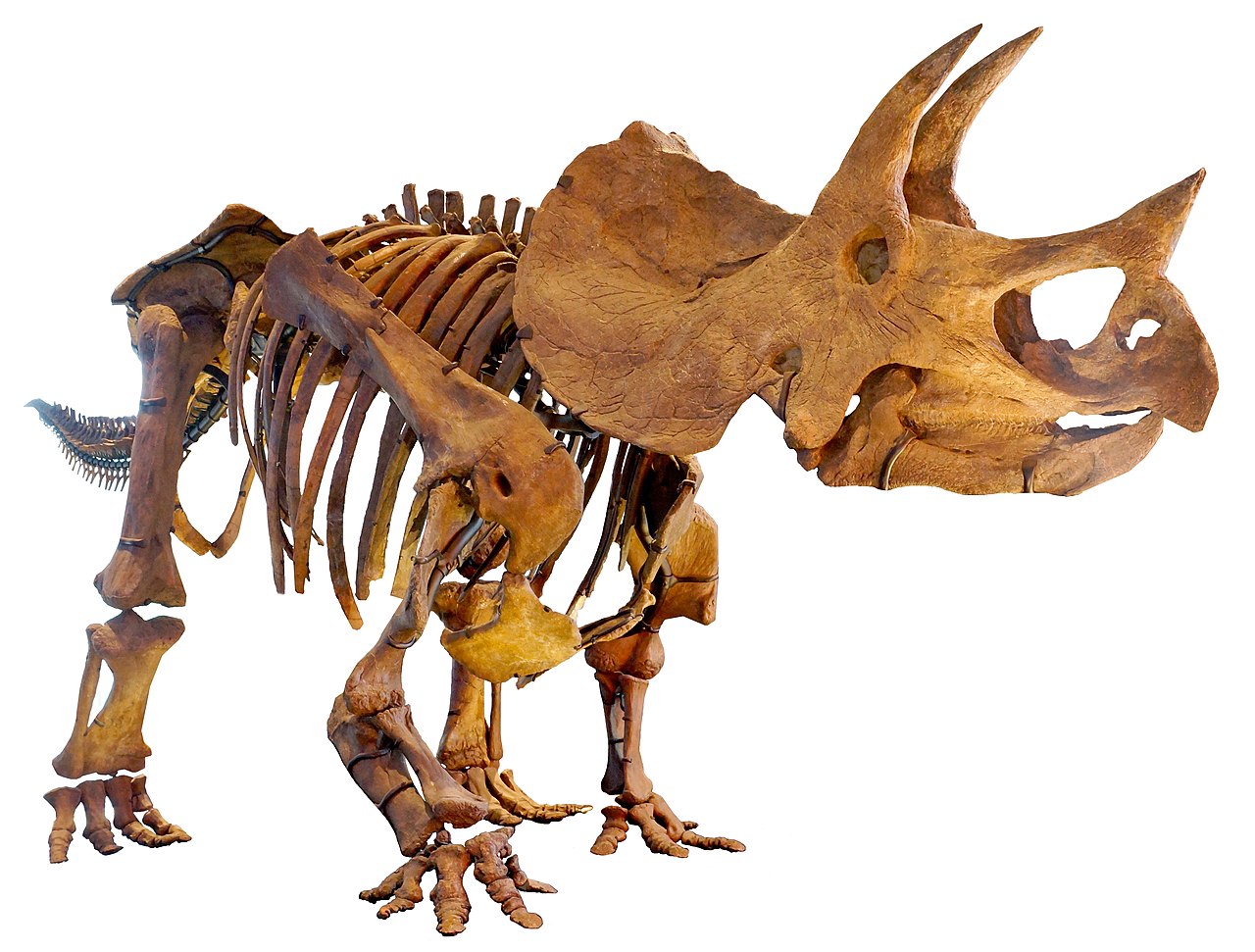


Anatomy and distinguishing features
Ceratopsids share a set of skull specializations: a sharp keratinous beak at the front of the jaws, a rostral bone unique to ceratopsians, rows of replacement teeth forming grinding batteries, and enlarged cheekbones that support the frill. Horns could appear above the nose, over the eyes, or as smaller projections along the frill. The frill itself is formed from expanded parietal and squamosal bones and varies from short and ornamented to long and open.
Subfamilies and variation
Two major subgroups are commonly recognized: Centrosaurinae, which often have short frills and elaborate nasal or frill ornamentation, and Chasmosaurinae, which tend to have longer frills and prominent brow horns. These subfamilies differ in skull proportions, horn placement and the pattern of frill openings, reflecting ecological and perhaps social differences within the family.
Age, distribution and discovery
Ceratopsids lived during the Upper (Late) Cretaceous, roughly in the last tens of millions of years before the end-Cretaceous extinction. Fossils are most abundant from western North America—part of the ancient landmass known as Laramidia—and many classic specimens come from formations on that continent (Western North America). A growing fossil record in Asia includes taxa such as Sinoceratops, and fragmentary remains or reports have come from regions as far afield as Asia, Japan and Kazakhstan, expanding our view of their geographic reach.
Paleobiology and significance
Ceratopsids were important herbivores in their ecosystems, likely feeding on low-growing vegetation and using their shearing teeth to process tough plant material. Horns and frills have been interpreted variously as defensive tools, visual displays for species recognition or mating, and structures influenced by sexual selection. Their striking anatomy makes ceratopsids frequent subjects in studies of dinosaur behavior, growth and taxonomy, as well as popular icons in museums and media.
Notable genera
- Triceratops — large, three-horned chasmosaurine known from the latest Cretaceous.
- Torosaurus — similar to Triceratops; its relationship to that genus has been debated among researchers.
- Styracosaurus — centrosaurine with long spikes projecting from its frill.
- Sinoceratops — one of the few ceratopsids described from Asia, showing provincial variation in the group.
Ongoing fieldwork and new techniques in bone histology and computer-based analysis continue to refine ceratopsid classification and life-history interpretations, so our understanding of this distinctive dinosaur family keeps evolving.
Related articles
Author
AlegsaOnline.com Ceratopsidae: the horned dinosaurs of the Late Cretaceous Leandro Alegsa
URL: https://en.alegsaonline.com/art/18158
Sources
- doi.org : 10.1007/s11434-009-3614-5