
Cavalleria rusticana — Mascagni's One‑Act Verismo Opera
One-act Italian opera by Pietro Mascagni (premiered 1890) that helped establish verismo; noted for its Intermezzo and intense rural drama. Frequently paired with Leoncavallo’s Pagliacci for a full evening.
Overview
Italian opera Cavalleria rusticana is a compact, dramatic work in one act composed by Pietro Mascagni. The words and dramatic structure—the libretto—were written by Giovanni Targioni-Tozzetti and Guido Menasci, adapting a stage piece by Giovanni Verga. The action is set in a Sicilian village and unfolds with the quick, concentrated intensity typical of the verismo movement.
Image gallery
7 Images


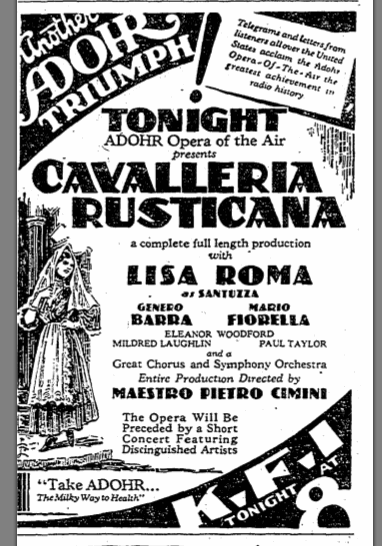
Music and structure
The score is tightly constructed for small cast and orchestra, and the orchestral Intermezzo between the scenes has become a widely performed concert piece. The music links folk‑like melodies and raw emotional expression, using brief arias and ensemble passages rather than extended, formal scenes. The work lasts a little over one hour in typical performances.
Plot and characters
The plot centers on love, betrayal and honor among villagers during Easter-tide. Principal roles include:
- Turiddu — a young man who returns from military service
- Santuzza — a woman who loves Turiddu and confronts his infidelity
- Lola — Turiddu's former lover, now married
- Alfio — Lola's husband, whose sense of honor drives the climax
- Mamma Lucia — Turiddu's mother
History and premiere
Cavalleria rusticana premiered in Rome on May 17, 1890. Its immediate popularity and realistic subject matter are often cited as a catalyst for the verismo style in Italian opera: composers and audiences were drawn to stories of ordinary people and unvarnished passions.
Performance and legacy
Because it is short and dramatic, Cavalleria rusticana is commonly paired with Ruggero Leoncavallo’s one‑act Pagliacci to create a full evening. Both works are roughly similar in duration and complement each other in mood and dramatic thrust. The opera’s title, often translated as "rustic chivalry", points to its concern with rural codes of honor rather than aristocratic manners.
Notable facts
Despite its brevity, Cavalleria rusticana has maintained a secure place in the repertory through its vivid characters, memorable tunes and the famous Intermezzo. It is frequently recorded and staged worldwide and continues to introduce audiences to the directness and emotional immediacy that characterize verismo opera.
Questions and answers
Q: What is Cavalleria rusticana?
A: Cavalleria rusticana is an Italian opera in one act.
Q: Who wrote the music for Cavalleria rusticana?
A: Pietro Mascagni wrote the music for Cavalleria rusticana.
Q: Who wrote the story and words (libretto) for Cavalleria rusticana?
A: Giovanni Targioni-Tozzetti and Guido Menasci wrote the story and words (libretto) for Cavalleria rusticana.
Q: What is the origin of the opera Cavalleria rusticana?
A: The opera Cavalleria rusticana was based on a play by Giovanni Verga.
Q: When was Cavalleria rusticana first performed?
A: Cavalleria rusticana was first performed in Rome on May 17, 1890.
Q: What is the meaning of the name Cavalleria rusticana?
A: The name Cavalleria rusticana means 'rustic chivalry' or 'chivalry of (people in) the countryside'.
Q: What is the importance of Cavalleria rusticana in the history of Italian opera?
A: Cavalleria rusticana marked the start of the verismo style in Italian opera.
Related articles
Author
AlegsaOnline.com Cavalleria rusticana — Mascagni's One‑Act Verismo Opera Leandro Alegsa
URL: https://en.alegsaonline.com/art/17723