
Pagliacci — Leoncavallo's verismo opera
Pagliacci is a short two-act verismo opera by Ruggero Leoncavallo, premiered in Milan in 1892. Famous for the aria "Vesti la giubba," it remains a staple of the operatic repertory and is often paired with Cavalleria rusticana.
Overview
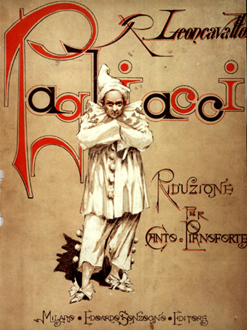
Pagliacci (Italian for "The Clowns" or "The Players") is a concise two-act opera with both libretto and score by Ruggero Leoncavallo. First staged on May 21, 1892 at the Teatro Dal Verme in Milan, it exemplifies the late 19th-century verismo movement in Italian opera: dramatic, realistic stories about ordinary people and violent passions presented in direct musical language. The work is best known for the tenor aria "Vesti la giubba," sung by the protagonist Canio as he collapses between public performance and private anguish.
Image gallery
4 Images

Composition and premiere
Leoncavallo wrote both the words and music for Pagliacci, shaping a compact drama that unfolds with theatrical immediacy. The first performance at the Teatro Dal Verme in Italy was conducted by the young Arturo Toscanini, and the opera quickly entered the repertoire. Over time Pagliacci became the best-known surviving work by Leoncavallo and a frequent companion piece to Pietro Mascagni's Cavalleria rusticana, itself a leading example of Mascagni's verismo style.
Story and themes
The drama follows a travelling commedia dell'arte troupe and centers on Canio, the troupe's leader, whose wife Nedda has an affair with a local villager, Silvio. Tensions between public role and private feeling are central: performers who must laugh and jest onstage are consumed by jealousy and rage offstage. The plot culminates in a fatal confrontation in which performance and reality collide. A short prologue — often staged in productions — sets the tone by having a character directly address the audience, collapsing the distance between theatre and life.
Structure and principal roles
Pagliacci is brief but tightly constructed, typically lasting about an hour. Its main characters and usual voice types include:
- Canio — tenor (the lead, who sings "Vesti la giubba")
- Nedda — soprano (Canio's wife)
- Tonio — baritone (a jealous fellow actor who often delivers the prologue)
- Silvio — baritone (Nedda's lover)
- Beppe — tenor (a troupe member)
Reception and legacy
Pagliacci won quick popular acclaim and has remained a staple in opera houses worldwide. The role of Canio was closely associated with Enrico Caruso, whose performances helped cement the work's fame. Its vivid mix of theatrical spectacle and raw human emotion makes it an enduring example of verismo, and it is commonly programmed in a double bill with Cavalleria rusticana to form a full evening. Performances and recordings continue to explore its stark contrasts between performance and reality, and productions range from conventional period stagings to contemporary reinterpretations.
For further reading about the score and libretto, see the composer and text references: Ruggero Leoncavallo and the Pagliacci libretto. Historical pages on the premiere and notable interpreters may be found via resources about the premiere venue (Teatro Dal Verme) and artists such as conductor Arturo Toscanini and tenor Enrico Caruso. General entries on the opera form are linked as the opera article.
Related articles
Author
AlegsaOnline.com Pagliacci — Leoncavallo's verismo opera Leandro Alegsa
URL: https://en.alegsaonline.com/art/74000