
Cello (violoncello): overview, construction, history and uses
The cello, or violoncello, is a bowed string instrument with a rich tenor and bass range. Played by a cellist, it appears as a solo instrument, in chamber ensembles and in orchestras across musical styles.
Overview
The cello, formally the violoncello, is a bowed string instrument widely used to perform music from many periods. Its common name is pronounced “chello”, derived from Italian. A professional or amateur who plays the cello is called a cellist. The instrument is prized for a warm, voice-like timbre that sits between the double bass and the viola.
Image gallery
10 Images


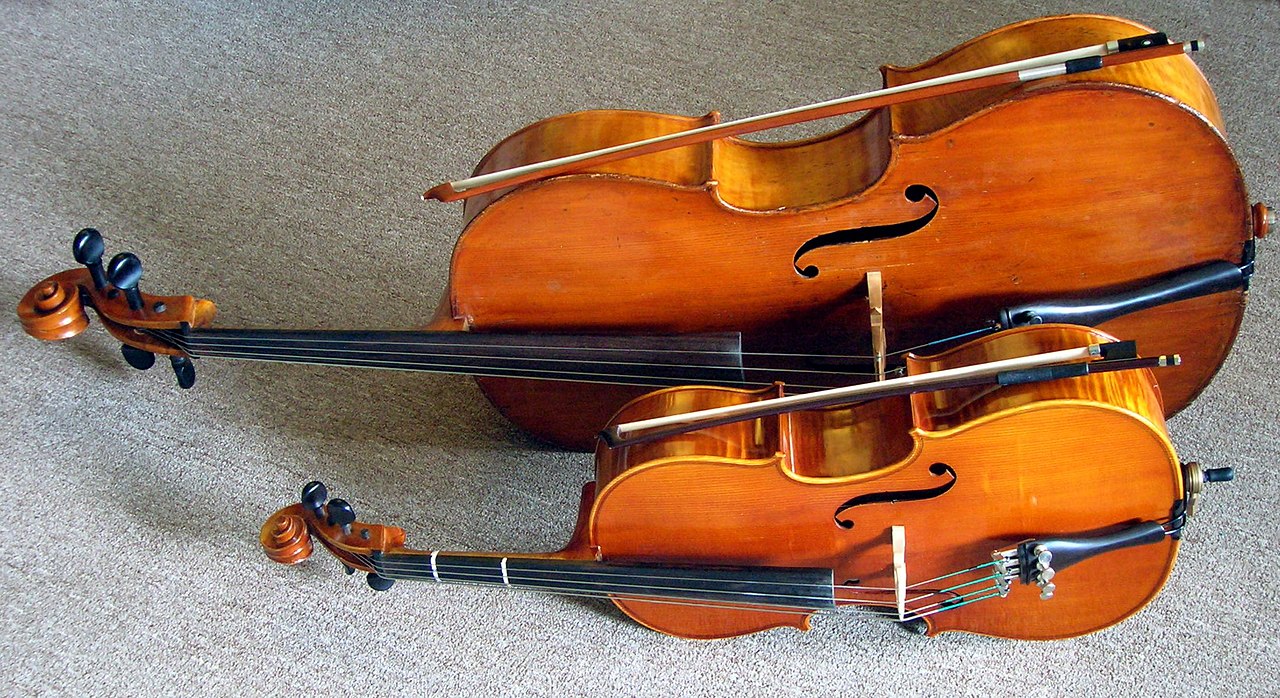


Construction and main parts
A modern cello consists of a hollow wooden body, neck and fingerboard, a bridge and tailpiece, four strings, and an endpin that rests on the floor. The strings are tuned in fifths—C, G, D and A—and are sounded either with a horsehair bow or by plucking (pizzicato). The instrument’s shape, arching and varnish all influence tone quality.
Playing technique and range
Cellists usually play seated, holding the instrument upright between the knees with the endpin supporting its weight. The left hand stops the strings on the fingerboard to change pitch while the right hand controls the bow for dynamics and articulation. The instrument covers a wide range of pitches and expressive possibilities, allowing both lyrical lines and deep, resonant bass support.
History and repertoire
The cello developed in Italy during the 16th and 17th centuries as part of the violin family. It moved from a continuo and bass role into a prominent solo instrument; Johann Sebastian Bach’s six unaccompanied suites are cornerstones of the solo cello repertory. From the Classical period through the Romantic and modern eras, composers such as Haydn, Beethoven, Dvořák, Elgar and Shostakovich expanded its concerto and chamber music literature.
Uses, genres and examples
The cello is extremely versatile. Typical contexts include:
- Solo performance: unaccompanied works and concertos for a soloist with orchestra or ensemble — see examples of solo repertoire.
- Chamber music: string quartets, piano trios and mixed ensembles where the cello provides bass lines and melodic counterpoint — often heard in chamber music.
- Orchestral role: a core member of the string section providing harmonic foundation, melodic solos and textural variety within orchestras.
- Popular and crossover use: the instrument appears in pop, rock and electronic contexts as well; notable acts that have incorporated cello include The Beatles, Björk and Jamiroquai.
Distinctive facts
Although related to earlier bowed instruments, the cello developed its own identity and repertoire. Its ability to suggest the human voice makes it especially effective for expressive solo lines and dramatic chamber interactions. Beginners often start on smaller instruments or use endpin adjustments; advanced players explore extended techniques such as harmonics, sul ponticello (bowing near the bridge) and col legno (striking strings with the wood of the bow).
Questions and answers
Q: What is a cello?
A: A cello is an instrument used to play music that belongs to the string family.
Q: Where does the name for the cello come from?
A: The name for cello comes from the Italian language and is pronounced “chello”. It is short for violoncello.
Q: What do people typically call the cello?
A: When speaking, people normally call the cello the “cello”.
Q: What is a person who plays the cello called?
A: A person who plays the cello is called a “cellist”.
Q: What are some uses for the cello in music?
A: The cello is used as a solo instrument, in chamber music, and also in orchestras.
Q: Is the cello used by pop musicians?
A: Yes, The Beatles, Björk, and Jamiroquai are a few examples of pop musicians who have used the cello in their music.
Q: Is the cello a popular instrument?
A: Yes, the cello is a very popular instrument.
Related articles
Author
AlegsaOnline.com Cello (violoncello): overview, construction, history and uses Leandro Alegsa
URL: https://en.alegsaonline.com/art/17905