
Bach: Six Suites for Unaccompanied Cello
An expanded encyclopedia entry on Johann Sebastian Bach's six unaccompanied cello suites: history, structure, manuscripts, performance practice, notable recordings and their lasting significance in cello repertoire.
Overview
The Six Suites for unaccompanied cello are landmark works by Johann Sebastian Bach and among the most frequently performed and recorded compositions for solo cello. Composed most likely during Bach's tenure as Kapellmeister at Köthen, they present a sequence of dance movements written for a single instrument without continuo. The original title in Anna Magdalena Bach's manuscript reads Suites á Violoncello Solo senza Basso, which reflects the solo, self-contained character of the music. The suites combine dance-based forms with contrapuntal writing that allows a single melodic instrument to imply multiple voices.
Image gallery
5 Images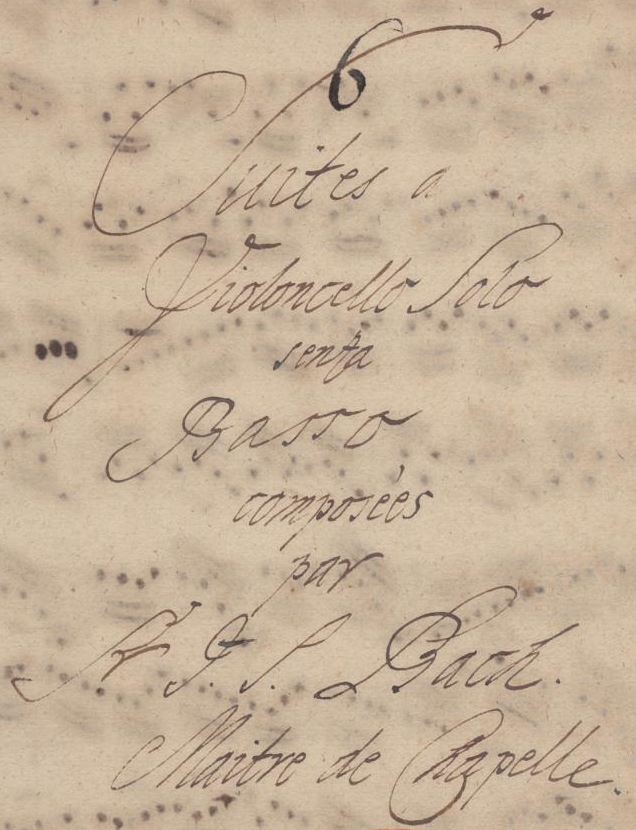



Structure and musical features
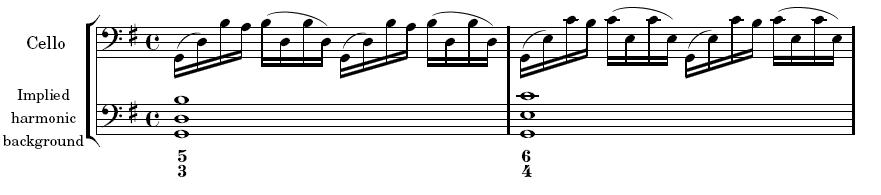
Each suite generally follows a consistent plan derived from Baroque dance practice: a Prelude that establishes character and technical landscape, followed by an Allemande, Courante, Sarabande, a pair of shorter dances (such as Minuets, Bourrées or Gavottes) and a concluding Gigue. The preludes range from the lyrical and arpeggiated Prelude of Suite No. 1 to more intricate, polyphonic textures in later preludes. The inner dances emphasize different rhythmic and expressive qualities, and many passages require the cellist to suggest polyphony through double stops, implied counterpoint and careful shaping of lines.
- Suite No. 1 in G major, BWV 1007
- Suite No. 2 in D minor, BWV 1008
- Suite No. 3 in C major, BWV 1009
- Suite No. 4 in E-flat major, BWV 1010
- Suite No. 5 in C minor, BWV 1011
- Suite No. 6 in D major, BWV 1012
History and manuscripts
No autograph score by Bach of the suites has survived; the principal early source is the manuscript copied by Anna Magdalena Bach. Because the primary sources are copies rather than an autograph, questions about phrasing, articulation and even some notes have long been debated by editors and performers. The most widely accepted dating places the composition in the Köthen period (approximately 1717–1723), when Bach concentrated on instrumental music for a court that favored secular chamber works.
Performance practice and editions
Interpretations of the suites span a spectrum between historically informed and modern approaches. Performers aiming for Baroque authenticity may use gut strings, a period bow and articulation consistent with 18th-century practice; modern performances typically use steel-core strings and contemporary bows, applying modern vibrato and portamento selectively. Editorial choices about ornamentation, bowings and even continuo implications vary between editions. One recurring technical question concerns Suite No. 5: some passages have prompted speculation about whether Bach envisioned an instrument with a different range or tuning, leading modern players to adopt varied fingerings and thumb-position strategies rather than altering the standard four-string cello.
Reception, revival and notable recordings
The suites were not continuously central to cello repertory after Bach's lifetime; they were brought to renewed public attention in the early 20th century, notably through the efforts of Pablo Casals, who championed and recorded them and made them a cornerstone of cello pedagogy and concert repertoire. Since that revival, the suites have been interpreted and recorded by many leading cellists, offering contrasting conceptions of tempo, tone and expressive detail. Famous interpreters include Mstislav Rostropovich, Emanuel Feuermann, Jacqueline du Pré, Mischa Maisky and Yo-Yo Ma; the latter's complete recording won a widely publicized Grammy and helped bring the suites to a broad modern audience.
Notable performers and approaches
- Mstislav Rostropovich — known for powerful tone and expressive breadth; his interpretations often emphasize line and modern sonority (Rostropovich).
- Emanuel Feuermann — admired for clarity of technique and musical elegance (Feuermann).
- Jacqueline du Pré — brought passionate immediacy to mid-20th-century performances (du Pré).
- Mischa Maisky — noted for expressive, Romantic-inflected readings (Maisky).
Legacy and pedagogical role
The suites are central to cello teaching and repertoire. Prelude No. 1 is widely taught to beginners and remains one of the most recognizable pieces of classical music; the full cycle is a frequent recital and recording project that demonstrates a player's stylistic range and technical command. Beyond pedagogy, the suites are valued as masterful examples of polyphonic writing for a single melodic instrument, offering insight into Baroque form, counterpoint and rhetorical expression.
Further reading and resources
Scholars, performers and students consult critical editions, historical treatises and recorded performances to inform their approach. Useful starting points include biographical and musicological materials on Bach, instrument-specific resources about the violoncello, and historical context provided by references to Köthen. Listening to a range of interpretations—from historic masters to contemporary artists—helps reveal how editorial choices and performance practice affect the music; recommended names to explore include Rostropovich, Feuermann, du Pré and Maisky. For specific editions and scholarly commentary consult library catalogues and music publisher listings indicated in specialist bibliographies and institutional archives.
Related articles
Author
AlegsaOnline.com Bach: Six Suites for Unaccompanied Cello Leandro Alegsa
URL: https://en.alegsaonline.com/art/17904