
Canadian Pacific Air Lines (CP Air): origins, expansion and legacy
Comprehensive overview of Canadian Pacific Air Lines (CP Air), the independent Canadian carrier (1942–1987): founding, international routes, fleet evolution, deregulation, financial troubles and merger history.
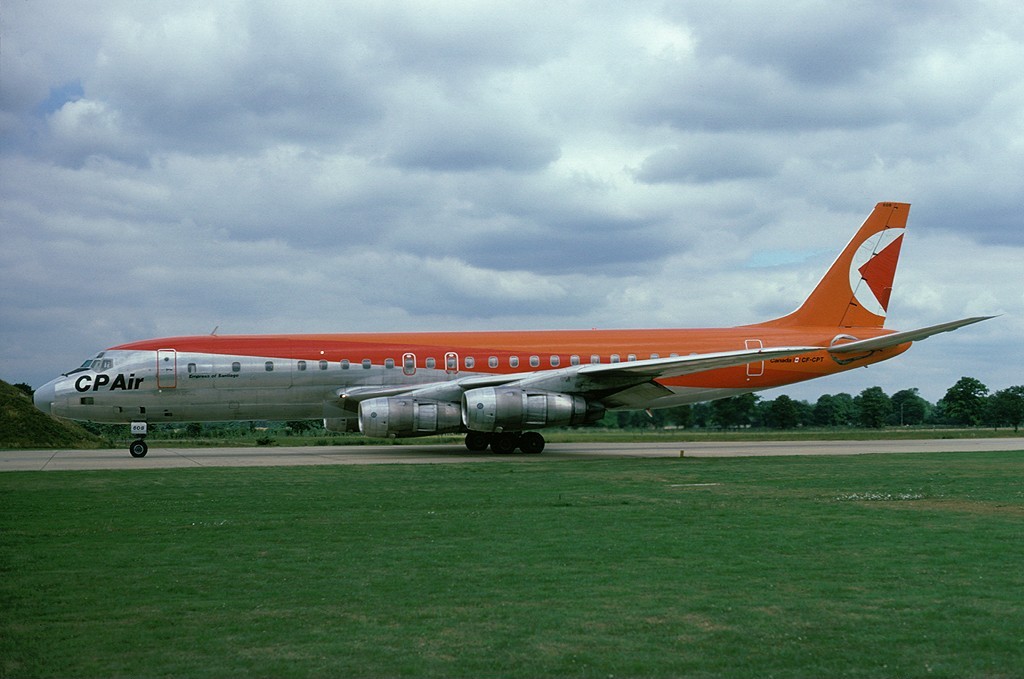
Canadian Pacific Air Lines, commonly called CP Air, was a major Canadian scheduled carrier that operated from 1942 until 1987. Formed by consolidating several smaller regional operators during World War II, CP Air became the country’s principal independent international airline, developing long‑range routes that complemented the government‑owned national carrier. It is remembered for pioneering overseas services from Canada and for its role in the restructuring of the Canadian aviation industry in the late 20th century. Overview carrier profile
Image gallery
10 Images


Origins and early development
The airline grew out of mergers of regional services in the early 1940s and established a nationwide network of connections for passengers and cargo. Restricted from competing on certain domestic trunk routes dominated by the government airline, CP Air sought markets abroad and began developing international services in the late 1940s. These overseas links allowed the company to reach destinations not then served by the government carrier and to build a reputation for long‑haul operations. See historical background: company history and ownership.
Expansion of routes and fleet
From 1949 CP Air established scheduled flights to countries such as Australia, China, Fiji and the Netherlands, gradually extending a network that by the 1960s connected cities on five continents: Asia, Australia, Europe, North America and South America. The airline began transitioning to jet equipment in 1961 with the acquisition of a Douglas DC‑8 and later added other jet and wide‑body types as international demand grew. The fleet changes reflected the global expansion of air travel and CP Air’s ambition to offer intercontinental services. For notes on equipment and routes consult: jet introduction aircraft type network.
Deregulation, rapid growth and financial strain
Policy changes in the early 1980s loosened controls on where Canadian carriers could fly, and CP Air moved quickly to add aircraft and new destinations. Rapid expansion increased capacity and competition but also exposed the company to higher costs and greater financial risk. By the mid‑1980s the carrier had accumulated substantial debt and faced restructuring pressures. Government actions affecting the national aviation framework, including the National Transportation Act era reforms, altered competitive dynamics and ownership opportunities: regulation financial issues policy change.
Acquisition and legacy
Facing mounting liabilities, Canadian Pacific Air Lines was acquired in 1987 by a consortium led by Pacific Western Airlines and the operation was reorganized and renamed Canadian Airlines. The merged carrier later became part of Air Canada in 2001. CP Air’s legacy includes the development of Canadian international air links, the expansion of transpacific and transatlantic services from Canada, and its influence on subsequent industry consolidation. Further context: acquisition rebranding.
Notable characteristics and distinctions
CP Air was distinguished by its international focus at a time when the domestic market was shaped by a government carrier. It earned the informal name "CP Air" in publicity and in the public mind and became a symbol of privately operated intercontinental Canadian aviation. The airline’s period of fastest growth illustrated both the opportunities and risks of deregulation in the global airline industry. Additional topics and reference points: international services Australia routes China services Pacific operations market niches Asia connections European links North America routes South America services.
Further reading and resources
- General overview of CP Air
- Carrier profile and timeline
- Origins and early history
- Corporate ownership and structure
- Regulatory environment
- International route development
- Services to Australia
- Connections with China
- Pacific and South Pacific destinations
- Market strategy and competition
- Jet era and fleet transition
- Douglas DC-8 introduction
- Network across five continents
- Asian operations overview
- European route history
- North American services
- South American connections
- Financial challenges and debt
- Privatization and policy shifts
- Acquisition by Pacific Western Airlines
- Transformation into Canadian Airlines
Questions and answers
Q: What was the name of the Canadian airline that existed from 1942 to 1987?
A: The Canadian airline was called Canadian Pacific Air Lines, also known as CP Air.
Q: How did CP Air differ from Air Canada in the 1940s?
A: CP Air could not fly the same routes that Air Canada flew, so in 1949, it started international flights to countries that were not serviced by Air Canada.
Q: When did CP Air buy its first jet aircraft?
A: In 1961, CP Air bought its first jet aircraft - a Douglas DC-8.
Q: Where did CP air fly to in the 1960s?
A: In the 1960s, CP air flew to several cities across 5 continents—Asia, Australia, Europe, North America and South America.
Q: What happened to CP air in the early 1980s?
A: In the early 1980s, CP air was allowed to fly wherever it wanted and rapidly increased their number of planes and opened several new routes.
Q: Why did Canadian Pacific Airlines cease operations in 1987?
A: By 1987, the airline had accumulated a debt of $1 billion and was purchased by Pacific Western Airlines who renamed it Canadian Airlines.
Q: When did Canadian Airlines merge with Air Canada?
A:Canadian Airlines merged with Air Canada in 2001.
Related articles
Author
AlegsaOnline.com Canadian Pacific Air Lines (CP Air): origins, expansion and legacy Leandro Alegsa
URL: https://en.alegsaonline.com/art/16474
Sources
- books.google.com : "Wings Across Canada"
- cpair.blogspot.com : "CP Air: The Airline"
- books.google.com : "Freedom in the Air"
- streamlinermemories.info : "Canadian Pacific All Services Map"
- cbc.ca : "'Ultra-low cost airline' NewLeaf Travel takes flight amid Canada's turbulent airline history"
- 75.aircanada.com : "1942: Canadian Pacific Airlines is born - Air Canada's 75th Anniversary"