
Douglas DC-8
Four‑engine jet airliner built by Douglas (1958–1972). A contemporary of the Boeing 707, later re-engined and widely converted to freighters and research aircraft.
Overview
The Douglas DC-8 is a four‑engine, long‑range narrow‑body jet airliner introduced in the late 1950s. It was the first jet airliner produced by the Douglas Aircraft Company and was intended to compete with other early jet transports. Production ran from 1958 until 1972, with a total of 556 examples built. Although Douglas entered the jetliner market after some rivals, the DC-8 became a mainstay on transcontinental and transatlantic routes and later found a long second life in freight and special‑mission roles.
Image gallery
10 Images



Design and variants
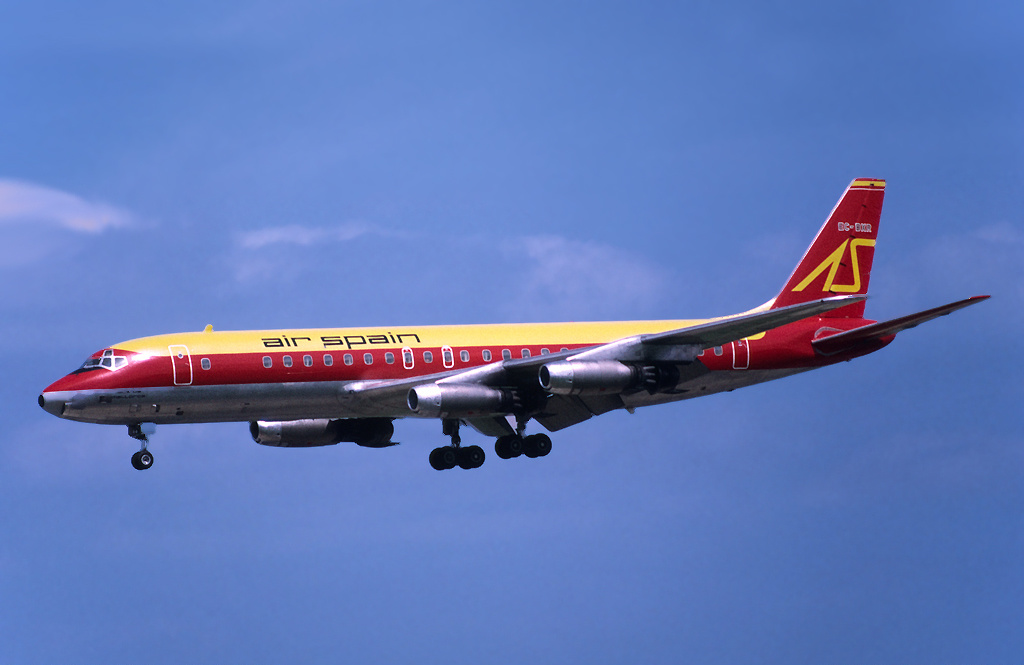
The DC-8 has a conventional low‑wing monoplane layout with podded jet engines mounted under the wings. Over its production life the basic airframe was offered in a series of variants that differed in fuselage length, range and engines. Stretch versions provided greater capacity for longer routes, while later retrofit programs replaced older engines with modern high‑bypass turbofans to reduce fuel consumption and noise.
History and development
Developed during the early years of the jet age, the DC-8 entered airline service shortly after its first flights and established Douglas as a jetliner manufacturer. The program continued through the 1960s, a period that included the merger of Douglas with McDonnell to form McDonnell Douglas. The DC-8 competed directly with models such as the Boeing 707 but followed it into commercial service by a short margin.
Uses and operators
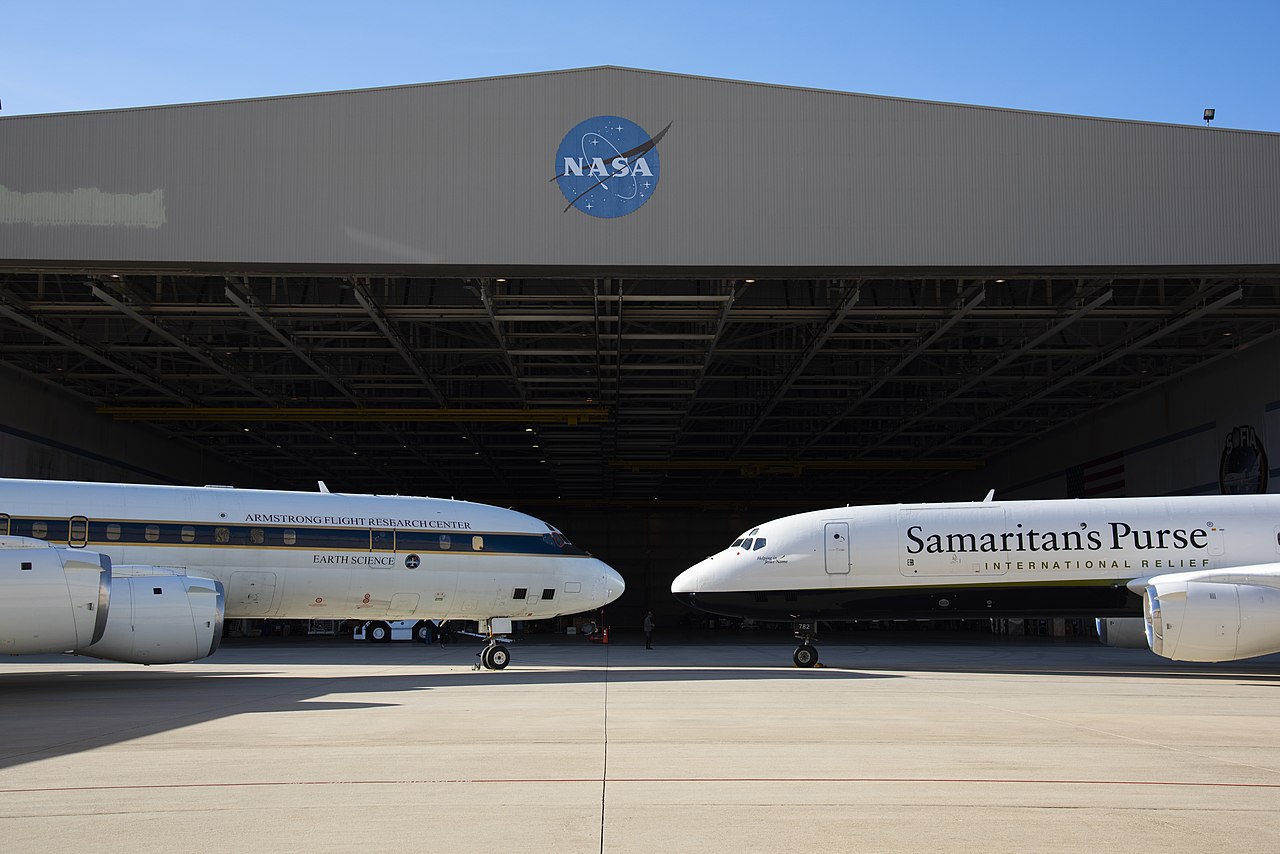
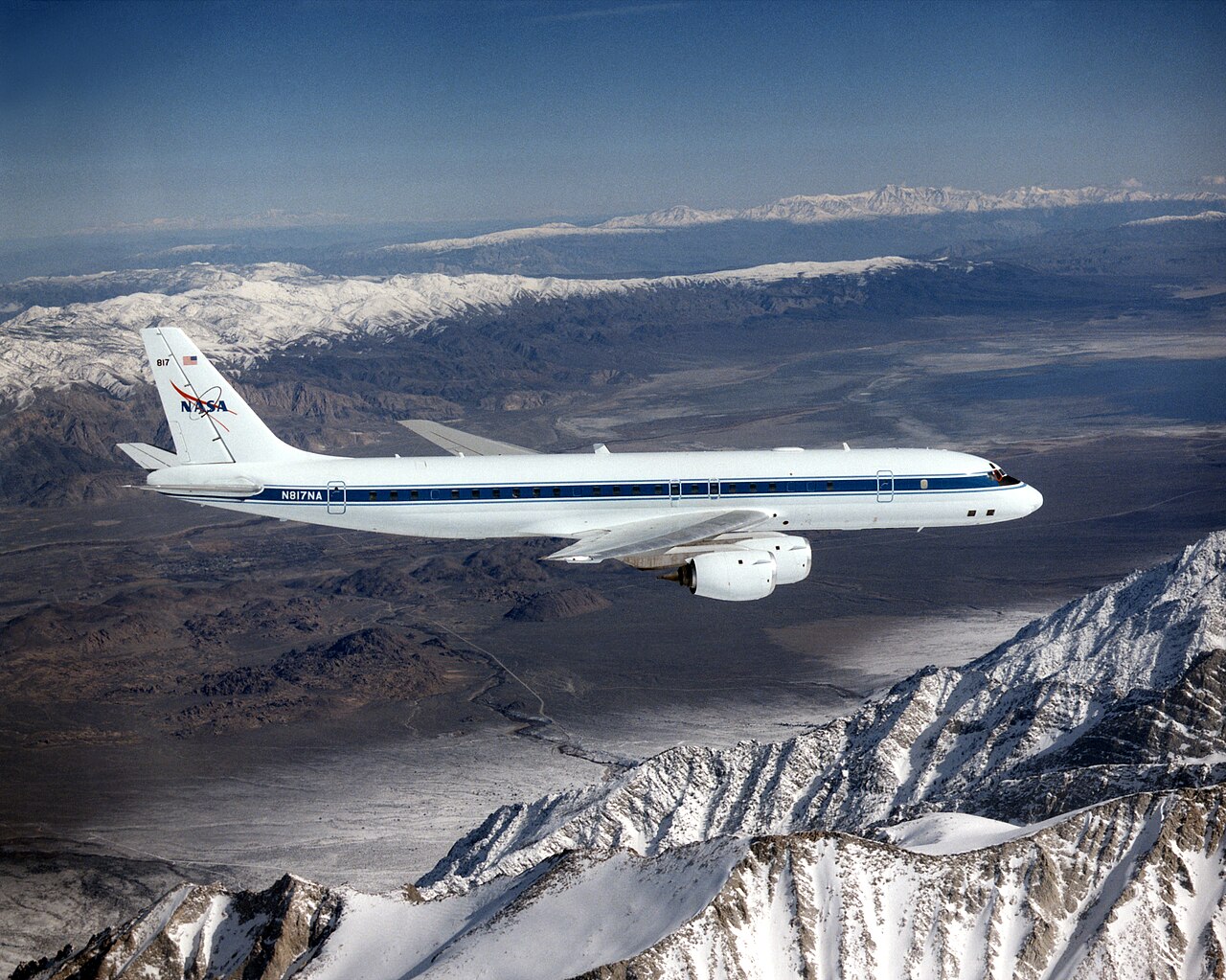
From the outset the DC-8 served on passenger schedules with major carriers; as jets evolved, many airframes were converted to freighters or assigned to charter, cargo and government roles. Operators in later decades included specialist cargo companies and research organizations; for example, some airframes were adapted as airborne laboratories by research institutions.
Legacy and notable facts
- Total production: 556 aircraft.
- First jet airliner from Douglas and an important contributor to the expansion of jet travel.
- Several aircraft were re-engined in later programs to meet noise and fuel efficiency standards.
- The DC-8 has been kept flying longer in freight and special missions than many contemporaries.
The DC-8 remains an important chapter in commercial aviation history: a four‑engine jet that helped define early jet transport operations and whose adaptable airframe served airlines, freighters and research users for decades. For broader technical context see general articles on jet airliners and mid‑20th century civil aircraft developments.
Related articles
Author
AlegsaOnline.com Douglas DC-8 Leandro Alegsa
URL: https://en.alegsaonline.com/art/28698