
Bolt-action firearm
A manual repeating firearm action in which the shooter operates a bolt to chamber and extract cartridges. Known for mechanical simplicity, reliability and precision use in hunting, sport and military history.
Overview
A bolt-action firearm is a repeating small arm whose breech (the rear part of the barrel and chamber) is opened and closed by hand using a sliding bolt with an attached handle. Each shot requires the shooter to operate the bolt to extract the spent cartridge and chamber a fresh one. Bolt actions form the core design of many classic military rifles from the late 19th and early 20th centuries and remain popular today for hunting, target shooting and precision roles.
Image gallery
10 Images



Operation and mechanics
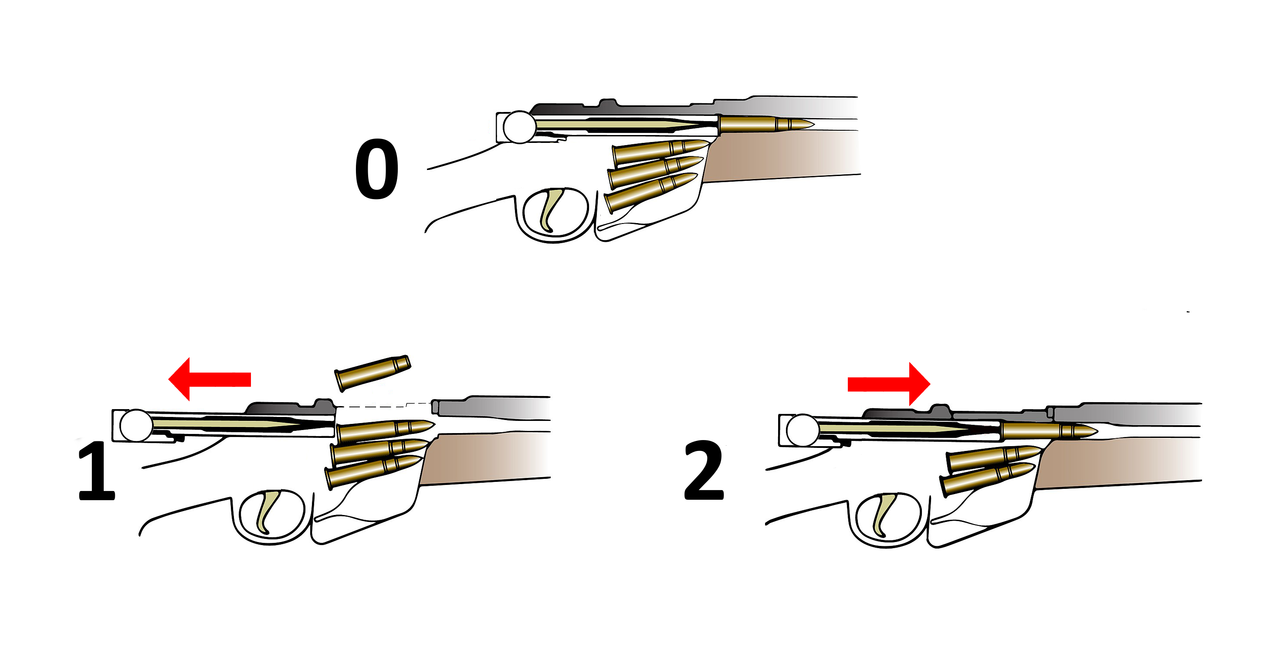
The essential motion of a bolt action is linear: the shooter lifts and pulls the bolt back, which unlocks the breech and extracts the spent case; pushing the bolt forward feeds a new cartridge from the magazine into the chamber; and finally the bolt is closed and locked down so the rifle is ready to fire. A new cartridge is seated into the chamber when the bolt is closed and locked (new round). Because this cycle is manual, bolt guns do not rely on gas or recoil operation to cycle, unlike a semi-automatic or automatic rifle, which use some of the firing energy to cycle the action.
Main components
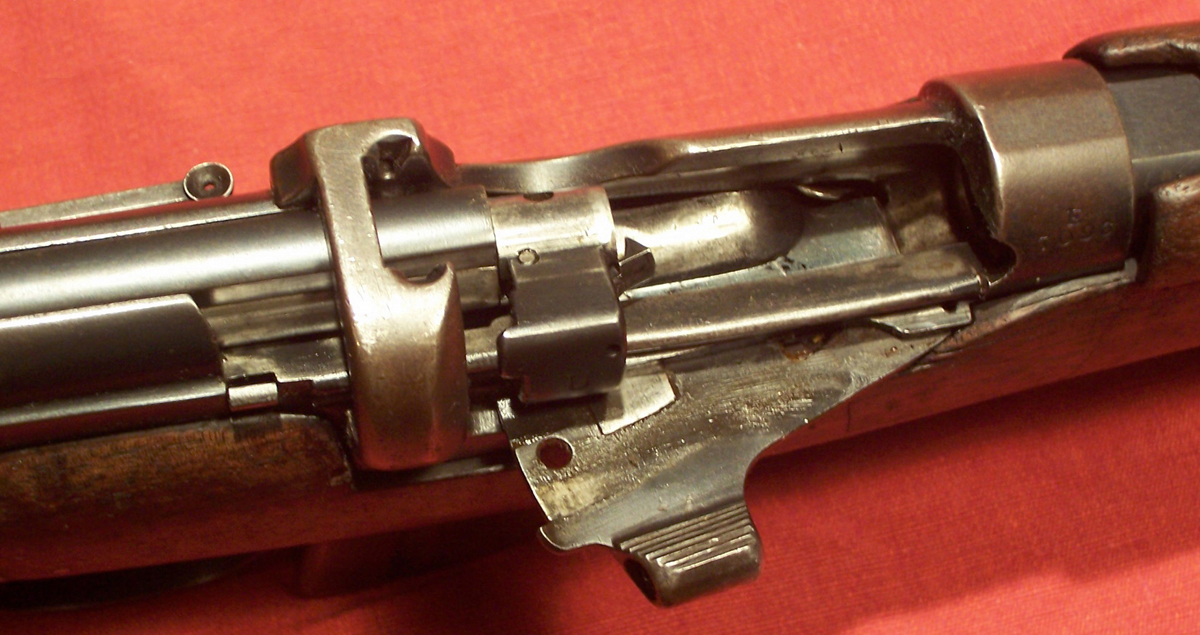
Typical bolt-action rifles share a common set of parts: the bolt assembly (including locking lugs and extractor), the receiver, the barrel, the chamber, a magazine or single-shot feed, and a stock. A detachable or integral magazine supplies cartridges; some older designs are single-shot or fed by a fixed internal magazine. The simplicity of these parts often makes bolt actions easy to maintain and to customize for precision shooting.
History and military adoption
Bolt actions emerged as a dominant military service rifle type in the late 19th century, replacing earlier single-shot and muzzle-loading arms such as muzzleloaders and earlier muskets. Contemporary repeating alternatives included lever-action designs, but most armies preferred bolt actions because they could be loaded and operated effectively from the prone position. Loading a bolt action could be done over the top of the barrel, whereas many lever-action mechanisms required a different orientation that made reloading while prone or from cover less practical.
Advantages, limitations and typical uses
Bolt-action rifles are widely regarded for mechanical simplicity, consistent lockup between bolt and chamber, and the potential for high accuracy; fewer moving parts during the instant of firing tends to reduce disturbances that can affect shot placement. These characteristics explain their continued use as hunting rifles and as precision arms for marksmen and sniper rifles. The manual cycle reduces rate of fire compared with automatic or some repeating systems, and in some circumstances the lack of an action that moves during recoil can make felt recoil more noticeable compared with certain semi-automatic designs.
Notable examples and legacy
- Springfield M1903 — an influential U.S. service rifle model derived from bolt-action practice rifles.
- Gewehr 98 (G98) — a German military pattern that shaped many later bolt designs.
- Lee-Enfield — noted for its smooth action and high practical rate of fire among bolt rifles.
- Mosin–Nagant — a rugged and widely used bolt-action military rifle from the same era.
Today bolt actions coexist with semi-automatic platforms: they are chosen when maximum mechanical precision, simple maintenance, or specific hunting regulations favor a manually operated action. Their long service life and straightforward construction continue to make them a common subject in discussions of firearm design and historical development.
Related articles
Author
AlegsaOnline.com Bolt-action firearm Leandro Alegsa
URL: https://en.alegsaonline.com/art/12806