
M1903 Springfield rifle
The M1903 Springfield is an early 20th-century American bolt-action service rifle in .30-06, widely used as an infantry and sniper weapon through two world wars and later conflicts.
The M1903 Springfield is a bolt-action service rifle developed in the United States and officially adopted in 1903. Designed for accuracy and reliability, it served as a principal longarm of the United States military through World War I (WWI), continued in front-line and secondary roles in World War II (WWII), and remained in limited use in the Korean War (Korea) and the early stages of the Vietnam conflict (Vietnam War). The rifle combined proven bolt-action mechanics with the then-new .30-06 cartridge to give infantry comparable long-range performance and stopping power.
Image gallery
10 Images


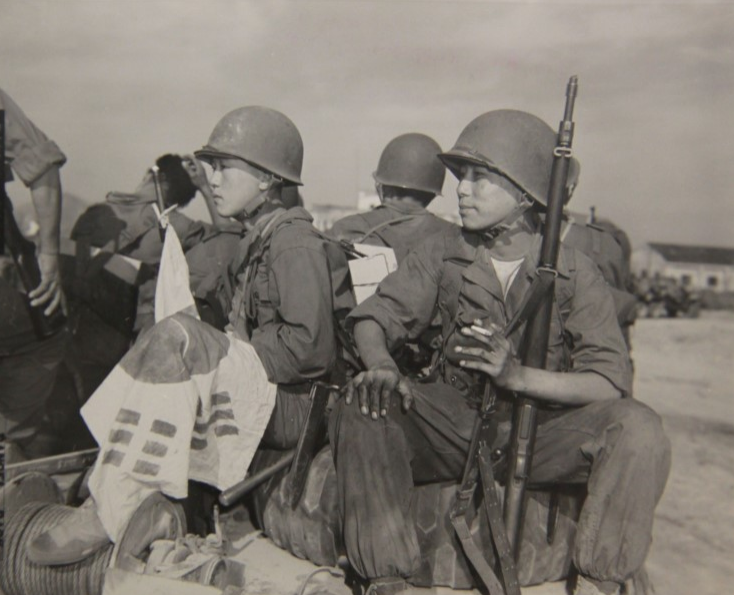
Design and characteristics
The M1903 follows a traditional bolt-action layout with a five-round internal magazine fed by stripper clips. It fires the .30-06 Springfield cartridge (.30-06), a high-energy round introduced at the same time. Typical features include a full-length wooden stock, iron sights adjustable for elevation and windage, and a cock-on-open bolt operation. Its construction drew heavily on contemporary European bolt designs, especially the German G98 Mauser, while incorporating American manufacturing standards and safety changes.
Development and service history
Adopted in the early 20th century to replace older single-shot and smaller-caliber rifles, the M1903 became the United States' primary rifle during trench and positional warfare of WWI. By the 1930s, military doctrine and technology had shifted toward faster-firing weapons. The semi-automatic M1 Garand—a semi-automatic rifle—was standardized and began to replace bolt-action rifles by 1936, offering higher sustained rates of fire more suitable to modern combat and the close-quarter demands of trench warfare experienced during earlier conflicts.
Roles and adaptations
Although superseded as the standard infantry arm, the M1903 remained in service in multiple roles. It was retained for training, reserve units, and specific combat tasks where precision was more important than volume of fire. Most notably, it was converted and used as a dedicated sniper rifle with scope mounts and match-quality barrels; these sniper variants gave U.S. marksmen a highly accurate platform until newer systems replaced it in the postwar era.
Variants and notable changes
- Early M1903: original pattern with certain Mauser-inspired features.
- Service conversions: many rifles were equipped with scopes, upgraded sights, or altered stocks for sniping or ceremonial use.
- Later production runs: wartime simplifications and incremental improvements aimed at speed of manufacture and ease of maintenance.
Legacy and significance
The M1903 Springfield is remembered for its combination of accuracy and ruggedness. It bridged 19th- and 20th-century small-arms design by applying established bolt-action principles to a powerful modern cartridge. Collectors, historians, and military analysts study the rifle both for its technical qualities and for the role it played in training and combat across multiple major conflicts. For additional technical details and historical sourcing, consult specialized references and museum collections bolt-action resources or armory archives rifle records, military histories (WWI, WWII), and ordnance reports (Korea, Vietnam).
Further reading and external catalogs are often indexed under terms like Mauser influence, .30-06 ammunition, and replacement by the M1 Garand. For focused discussions on tactical employment, see works that compare bolt-action and semi-automatic service rifles, analyses of trench era combat, and dedicated studies of wartime sniper equipment (sniper rifles).
Questions and answers
Q: What is the M1903 Springfield rifle?
A: It is a bolt-action rifle used by the Military of the United States during both World War I, World War II, the Korean War, and the early part of the Vietnam War.
Q: What was the Springfield based on?
A: It was based on the German G98 Mauser rifle.
Q: How many .30-06 Springfield bullets can the Springfield hold?
A: It can hold up to five .30-06 Springfield bullets.
Q: What was the US's main rifle during World War I?
A: The Springfield was the US's main rifle during World War I.
Q: Why was the Springfield replaced by the M1 Garand in 1936?
A: This was because semi-automatic rifles like M1 Garand could fire bullets more quickly than bolt-action rifles like Springfield. In tight spaces like those in trench warfare, it is very important to be able to shoot quickly.
Q: Was the Springfield still commonly used during World War II?
A: Yes, it was still commonly used during World War II, and it became the main sniper rifle for the US.
Q: Until when was the Springfield the main sniper rifle for the US?
A: It was the main sniper rifle of the US until the early part of the Vietnam War.
Related articles
Author
AlegsaOnline.com M1903 Springfield rifle Leandro Alegsa
URL: https://en.alegsaonline.com/art/60208