
Bren light machine gun — British LMG derived from the ZB vz. 26
The Bren light machine gun was the British Army’s principal LMG from 1938. Derived from the Czechoslovak ZB vz. 26, it combined accuracy, portability and a top-mounted curved magazine; it served across WWII and beyond.
Overview
The Bren is a British-designed light machine gun introduced in 1938 and widely used by the United Kingdom and Commonwealth forces. Its name comes from a combination of Brno, the Czechoslovak city where the original design was produced, and Enfield, the British factory that manufactured it. The Bren gained a reputation for reliable performance, accurate fire, and relative portability for a crew-served automatic weapon. For source summaries and technical references see further reading.
Image gallery
10 Images






Design and key characteristics
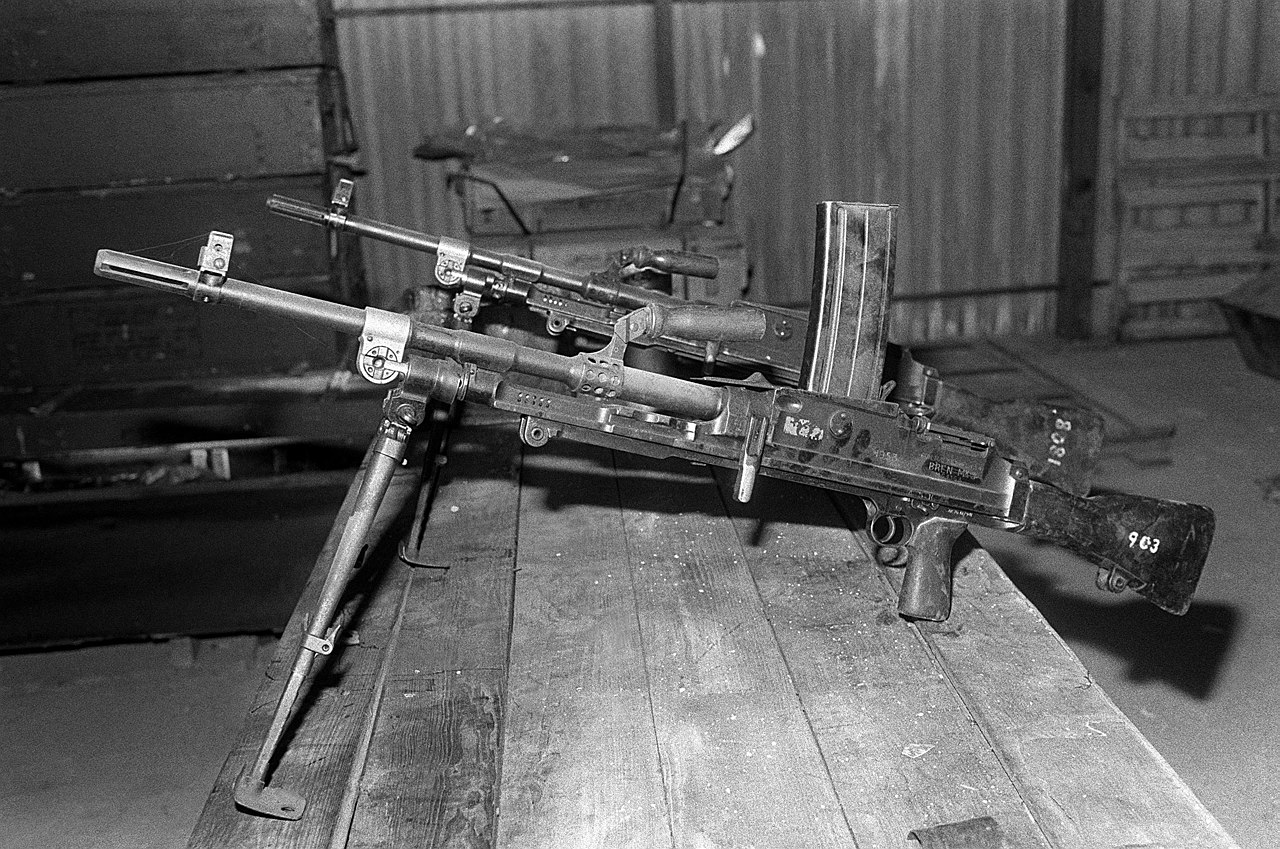
Built around a proven locking and feed mechanism derived from the ZB vz. 26, the Bren is recognisable by a number of distinctive features. It feeds from a single-column, curved magazine that mounts on top of the receiver and permits gravity-assisted feeding. A prominent carrying handle above the barrel and a quick-change barrel system made it practical for infantry use. The wooden butt and stock, bipod mounting, and relatively balanced weight allowed a single soldier to aim and fire from static positions or move with the squad.
- Feed system: top-mounted curved box magazine for 0.303 in (.303) or later 7.62 mm rounds (depending on variant).
- Barrel: quick-change design to avoid overheating under sustained fire.
- Operation: gas-operated with tilting breechblock derived from earlier Czech designs.
- Ergonomics: carrying handle and bipod for rapid deployment and repositioning.
Technical details and comparisons between marks are available at technical sources and historical summaries at reference sites.
Origins and development
The Bren evolved from the Czechoslovak ZB series, particularly the ZB vz. 26, whose action impressed British ordnance officers during the interwar years. After licensing and trials, Royal Small Arms Factory at Enfield adapted the design to British service requirements, resulting in the Bren. Production spread across several factories and the gun underwent incremental improvements—known as Marks—addressing ergonomics, materials and chambering as ammunition standards changed in the postwar era. For background on the original Czech model see ZB family history and on the Enfield adaptation see Enfield records.
Service, uses and combat record
Issued as the primary squad automatic weapon, the Bren was employed in a wide range of theatres during World War II, from the deserts of North Africa to the hedgerows of northwest Europe. Its accuracy at range made it effective for both defensive and support roles, including deliberate aimed fire and suppressive bursts. Postwar, the Bren remained in British and Commonwealth inventories for decades, being adapted to fire 7.62×51mm NATO in later Marks; it was gradually replaced by more compact general-purpose machine guns but stayed in secondary roles into the late 20th century. Analysts and veterans often note its balance of portability and sustained-fire capability; see service summaries at service records and comparative evaluations at weapon comparisons.
Variants, notable facts and legacy
Several Marks and national variants exist. The basic layout remained constant while features such as the calibre, sighting arrangements, and mounting options changed. The Bren influenced other designs worldwide—elements of its layout can be seen in contemporary and later light machine guns—and some nations produced derivative weapons or weapon concepts inspired by it. One of the more unusual historical notes is that opponents and allies alike respected its performance; for example, some captured examples were copied or studied by other countries. For catalogues of variants and surviving examples consult museum and archive listings.
Related articles
Author
AlegsaOnline.com Bren light machine gun — British LMG derived from the ZB vz. 26 Leandro Alegsa
URL: https://en.alegsaonline.com/art/13922