
Musket: muzzleloading shoulder firearm and its historical evolution
A musket is a muzzleloading, shoulder-fired smoothbore firearm that dominated infantry warfare from the 16th to the mid-19th century before being superseded by rifles and cartridge breechloaders.
A musket is a large, muzzle-loading, shoulder-fired firearm that for several centuries served as the primary weapon of massed infantry. By design it is typically a muzzleloading, smoothbore long gun meant to be braced against the shooter's shoulder rather than fired from the hip or the hand (shoulder-fired). In common usage the term "musket" covers a variety of weapons that share general form and battlefield role rather than a single standardized pattern.
Image gallery
10 Images



Characteristics and mechanisms
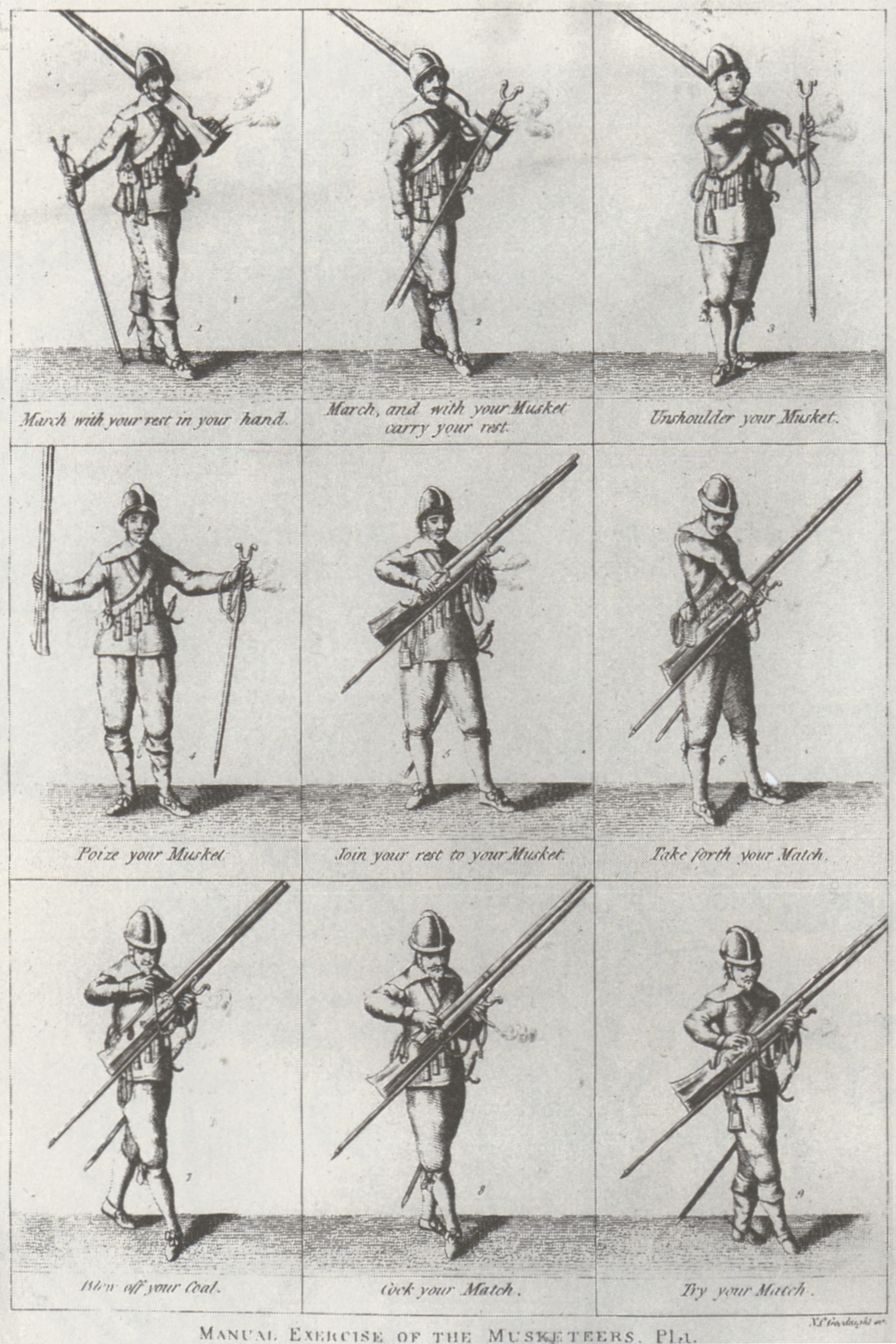
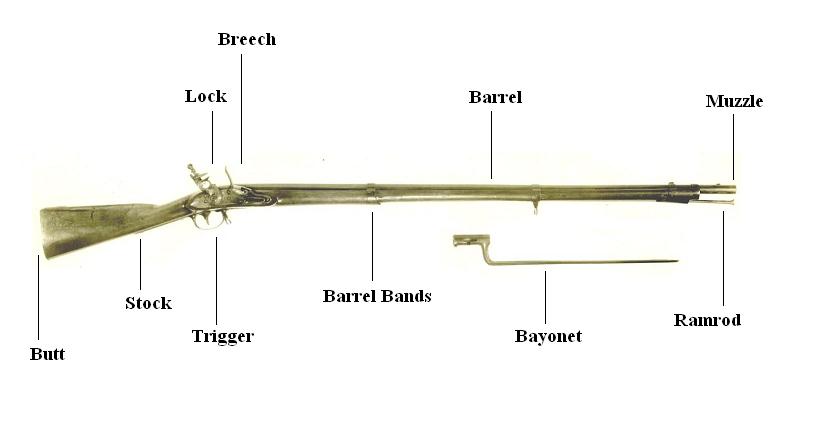
Muskets were built around a long barrel, a wooden stock, and a lock mechanism used to ignite the powder charge. Early heavy models used matchlock or wheellock mechanisms and often required rests or supports because of weight and recoil; these are sometimes described as the heavier class of musket used alongside lighter firearms (matchlock/wheellock heavy musket). During the 17th and 18th centuries the flintlock became the dominant ignition system for muskets (flintlock), and in the 19th century percussion caps improved reliability.
Another defining feature was the frequent use of a blade fixed to the muzzle, the bayonet, which allowed a musket to function as a spear in close combat and removed the need for separate pikemen on the battlefield (bayonet). Muskets were typically issued to infantry formations and were the standard arm of line troops; soldiers carrying muskets were known as musketeers or musketmen (infantry).
History and development
The musket evolved from earlier handguns such as the arquebus and ultimately gave way to rifles. In the 16th century the term began to be applied to larger, heavier firearms that supported battlefield volleys and worked in combined arms with pikemen. Over time lighter, more maneuverable muskets replaced these heavy models, and by the 18th century the typical infantry musket was intended for volley fire and bayonet use.
In the United States the first government-produced service musket was the Springfield Model 1795, an early example of an American military long gun (United States; Springfield Model 1795). By the mid-19th century rifling and improved ammunition produced the rifled musket, exemplified by models such as the Springfield Model 1855 (Springfield Model 1855), which blurred the line between a musket and a rifle.
Tactics, accuracy, and technological change
Traditional smoothbore muskets had large calibres and relatively poor accuracy at long range: typical bore sizes ranged from about half an inch up to around three-quarters of an inch (calibres). Practical aimed fire with an unrifled musket was limited to short distances; doctrine therefore emphasized massed volley fire, close-order formations, and shock action with the bayonet.
Technical improvements in ammunition, propellants and ignition (ammunition and priming), together with rifling, significantly extended effective range, accuracy and lethality. The adoption of metallic cartridges, breechloading mechanisms and repeating systems (cartridges) in the latter half of the 19th century completed the shift from the muzzle-loading musket toward the modern rifle (rifle).
Uses, legacy, and notable distinctions
For more than two centuries muskets were central to training, tactics and logistics in armies worldwide. Their simplicity and volume of fire made them decisive in set-piece battles; their shortcomings prompted innovations in marksmanship, formation tactics and weapon design. Even after rifled arms became widespread, the term "musket" persisted in describing older patterns, short muskets and ceremonial arms.
- Common lock types: matchlock, wheellock, flintlock, percussion (matchlock/wheellock, flintlock).
- Typical role: massed infantry fire, bayonet charge, defensive volleys (infantry, bayonet).
- Notable models: Springfield Model 1795 and Springfield Model 1855 (M1795, M1855).
For focused study, consult technical histories of early firearms and museum collections that preserve surviving pieces; these sources explore calibres, manufacturing methods and the social impact of musket-armed armies in the early modern and industrial eras. Additional resources are available through military history outlines and reference collections (muzzleloading, smoothbore, shoulder-fired, rifle, ammunition, cartridges, calibres).
Further reading and online references: muzzleloader overview, smoothbore arms, shoulder-fired weapons, history of the rifle, heavy musket types, flintlock mechanism, bayonet development, infantry tactics, United States arms, Springfield M1795, ammunition evolution, cartridge technology, calibre variations, Springfield M1855.
Related articles
Author
AlegsaOnline.com Musket: muzzleloading shoulder firearm and its historical evolution Leandro Alegsa
URL: https://en.alegsaonline.com/art/67784
Sources
- militaryfactory.com : "Harpers Ferry / Springfield Model 1795 Musket (1795)"