
Bow (weapon): overview, history, types, and uses
A bow is a ranged weapon that launches arrows. This article surveys its parts and operation, historical development, main types, uses in hunting and sport, and how societies defended against arrow fire.
Overview
A bow is a handheld ranged weapon that propels a projectile, typically an arrow, by storing and releasing elastic energy in a bent limb or limbs. Using a bow is called archery; a practitioner is an archer and a maker of bows is a bowyer. Bows have been employed for hunting, sport, and historically in war. Their basic function—draw, aim, and release—remains the same across cultures, but designs vary widely to meet different needs.
Image gallery
5 Images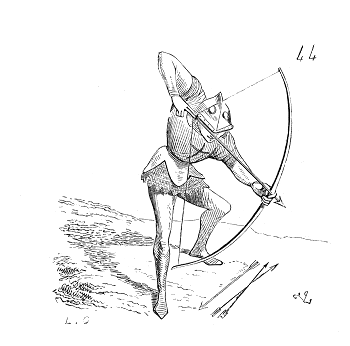


Basic components and materials
Most bows share a few common parts: a central handle or riser, two flexible limbs that bend when drawn, and a string connecting the limb tips. Additional features on modern designs include an arrow rest, sight, and stabilizers. Traditional bows were often fashioned as a single piece of wood (a "self bow") or as a composite of materials such as horn, bone, and sinew glued together to combine tension and compression properties. Contemporary bows frequently use synthetic laminates, fiberglass, carbon, and sometimes plastic components to improve strength, consistency, and weather resistance.
Types and notable forms
- Longbow: A tall, relatively simple bow with little or no recurved tips; notable for its use in several medieval cultures and for straightforward construction. Longbow designs emphasize draw length and smooth power delivery.
- Recurve bow: Limbs curve away from the archer at the tips, storing more energy and delivering it more efficiently than a simple curve.
- Compound bow: Uses a system of pulleys or cams to provide mechanical advantage, making a heavy draw easier to hold; widely used in modern sport and hunting.
- Crossbow: Mounted on a stock and fired from a horizontal position; it functions differently from vertical bows and was an influential battlefield weapon. Some modern variations include mechanically assisted or automatic mechanisms; see the entry on crossbow.
Historical development and cultural importance
Bows appear in the archaeological record across many regions and eras, adapting to available materials and tactical needs. Composite construction allowed relatively short but powerful bows suitable for mounted archery, while long, self-made bows favored massed infantry use. In many societies the bow shaped hunting practices, warfare, and social status. Over time, firearms displaced bows as primary military weapons, but archery persisted for hunting, sport, and cultural traditions.
Uses, techniques, and safety
Archery techniques vary according to bow type and cultural practice: instinctive shooting, gap shooting, and sighted aiming are common approaches. Equipment—arrows, points, fletching, and protective gear like arm guards—influence accuracy and safety. Modern archery includes target competition, field archery, and hunting disciplines, each governed by rules and safety standards. Bow makers and archers continue to innovate while respecting long-established craftsmanship.
Defense against arrows and battlefield context
Throughout history people developed measures to reduce the effects of arrow fire: shields, defensive formations, and body armor shaped tactics on the battlefield. For example, coordinated shield formations could present a protective surface against incoming volleys; armor types such as layered textile, mail, or plate reduced penetration from certain arrowheads. The interaction of offensive arrow technology and defensive measures influenced the evolution of both weaponry and armor.
Further reading and related topics: bow construction, arrow design, archery practice, and the cultural role of bows in hunting and sport. For specialized information on competitive forms and equipment standards, consult dedicated resources or governing bodies in archery.
Weapon overview • Arrows and points • Hunting uses • Sport archery • Warfare history • Archery practice • Wood types • Traditional materials • Modern materials • Longbow • Crossbow and variants
Related articles
Author
AlegsaOnline.com Bow (weapon): overview, history, types, and uses Leandro Alegsa
URL: https://en.alegsaonline.com/art/13446