
Lever-action firearms: design, history, and uses
An accessible overview of lever-action firearms covering their mechanism, development from the 19th century, notable models, practical uses, and strengths and limits.
Overview
Lever-action firearms are repeating long guns that feed cartridges into the chamber by the manual motion of a lever, typically located below the receiver. This mechanical cycle extracts a spent case, cocks the action, and loads a fresh round from a magazine—allowing multiple shots without reloading a single cartridge at a time. Early examples and later civilian hunting rifles share the same basic operating principle, which distinguishes them from bolt, pump, and semi-automatic systems. For more on the basic concept see lever-action firearms.
Image gallery
10 Images


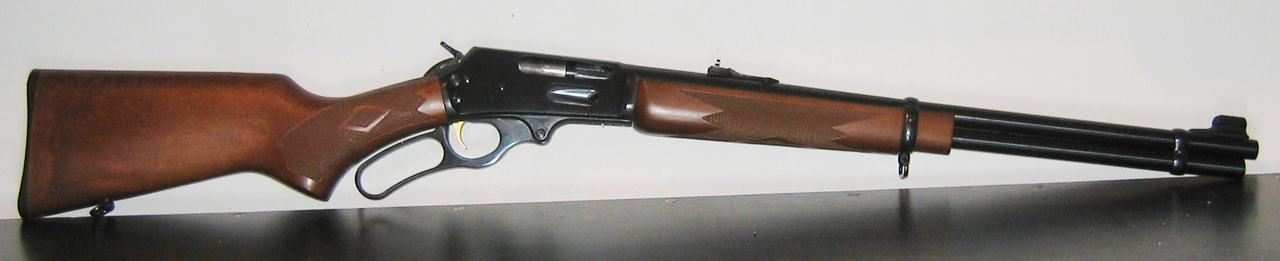


Design and principal components
A typical lever-action rifle has several recognizable parts: a lever that pivots beneath the receiver, a tubular or box magazine that stores rounds, a bolt or breechblock that opens and closes the chamber, and an extractor/ejector mechanism. Most classic designs use a tubular magazine beneath the barrel; this arrangement influences ammunition choice because point‑forward bullets in a tube can present safety issues. Some modern lever-actions use side-loading gates or detachable magazines to address capacity and ammunition compatibility. The mechanism is praised for its smooth, rapid manual cycling and compact profile.
History and early development
Lever-actions became prominent in the mid‑19th century as inventors adapted metallic cartridges and new manufacturing techniques. They found notable use during the American Civil War, where repeating rifles such as the Henry and Spencer increased the number of rounds a single soldier could carry into action compared with earlier muzzleloading arms. Despite their faster rate of sustained fire—sometimes criticized as encouraging less disciplined shooting—these rifles showed the tactical potential of repeaters. After the war, lever-actions saw wide adoption by settlers, sportsmen, and law enforcement; the Winchester Model 1873 became particularly famous in American popular memory.
Notable models and adoption
- Henry Model rifles and Spencer repeaters were influential in the 1860s (Henry, Spencer).
- Winchester designs, including the Model 1873, popularized privately owned lever-actions for hunting and general use.
- Lever-action shotguns also appeared; for example, the Winchester Model 1887 is a well-known early repeating shotgun.
Both the military of the United States and the Russian Empire experimented with lever-repeaters through the late 19th century, but many armies ultimately favored bolt-action rifles for standard infantry service by the turn of the 20th century. Bolt-actions offered advantages firing from prone positions and simpler long-range accuracy under military doctrine, even though lever-actions could often be cycled faster than contemporary bolt rifles (a rapid shooter might cycle multiple rounds per second in practice).
Uses, ammunition, and variations
Lever-actions have been chambered for a wide range of cartridges: small pistol calibers, full-power rifle rounds, and even specialized loads for shotguns. Models have been built for pistol cartridges and rifle cartridges alike. Hunters and sportsmen value their quick handling and repeating capability, while collectors and historical shooters appreciate their mechanical simplicity. Civilians and frontier users historically relied on lever-actions for defense and everyday hunting (civilians). Their practical advantages made them common among soldiers and armed civilians in some contexts.
Distinctive features and limitations
Lever-actions are known for fast follow-up shots, compact receivers, and an iconic silhouette. However, typical tubular magazines restrict the use of pointed bullets unless the design safely isolates the primer, and the lever stroke can be awkward when firing from certain positions—supporting why many militaries preferred bolt-action rifles for standard infantry use. Modern manufacturers have produced variations addressing these limits—side ejection, box magazines, and stronger actions for high-pressure rounds—so contemporary lever-actions remain practical for sport shooting, hunting, and historical reproduction.
For further reading about historical models, operation, and ballistic considerations see resources on early repeaters, military trials, and modern reproductions; introductory material is available through general references on 19th‑century firearms and collector guides (rate of fire and doctrine, United States historical use). For those interested in repeating shotguns and specialty designs see dedicated works on shotgun development (lever-action shotguns).
Whether regarded as a technological breakthrough of its era or an enduring classic, the lever-action remains an important and recognizable class of firearm with a distinct place in both military history and civilian sporting culture.
Questions and answers
Q: What are lever-action firearms?
A: Lever-action firearms are guns that hold multiple bullets and are loaded by pulling and pushing a lever at the bottom of the gun.
Q: When did lever-action rifles become important weapons?
A: Lever-action rifles first became important weapons during the American Civil War.
Q: Why were their use limited during the Civil War?
A: Their use was limited because many generals felt that the ability to shoot many bullets without reloading would cause soldiers to shoot with less accuracy.
Q: What made them popular after the Civil War?
A: After the Civil War, lever-action guns became much more popular due to their popularity with not just soldiers, but also hunters and civilians. The most famous lever-action rifle, the Winchester Model 1873, was even called "the gun that won the West".
Q: How long were they used by militaries until?
A: Both the militaries of the United States and Russian Empire used lever-action guns often until beginning of 20th century.
Q: How do bolt action rifles compare to lever action ones in terms of firing speed?
A: Lever action guns can fire much faster than bolt-action rifles (lever actions can fire 2 rounds a second in skilled hands).
Q: Are there any other types of lever action firearms besides rifles?
A: Yes, there are also lever-action shotguns as well. The most famous of these is Winchester Model 1887.
Related articles
Author
AlegsaOnline.com Lever-action firearms: design, history, and uses Leandro Alegsa
URL: https://en.alegsaonline.com/art/57564