
Henry VI of England (1421–1471): Lancastrian king and college founder
King of England twice (1422–1461, 1470–1471) and claimant to France. His minority, bouts of incapacity and the Wars of the Roses ended most English rule in France; he founded Eton and King's College, Cambridge.
Overview
Henry VI (6 December 1421 – 21 May 1471) succeeded as King of England in 1422 while an infant and was proclaimed by the English claim king of France. His long reign spanned the closing phase of the Hundred Years' War, the collapse of most English continental possessions, and the dynastic struggle known as the Wars of the Roses. He ruled from 1422 until his deposition in 1461 and was briefly restored in 1470–1471 before his final capture and death.
Image gallery
10 Images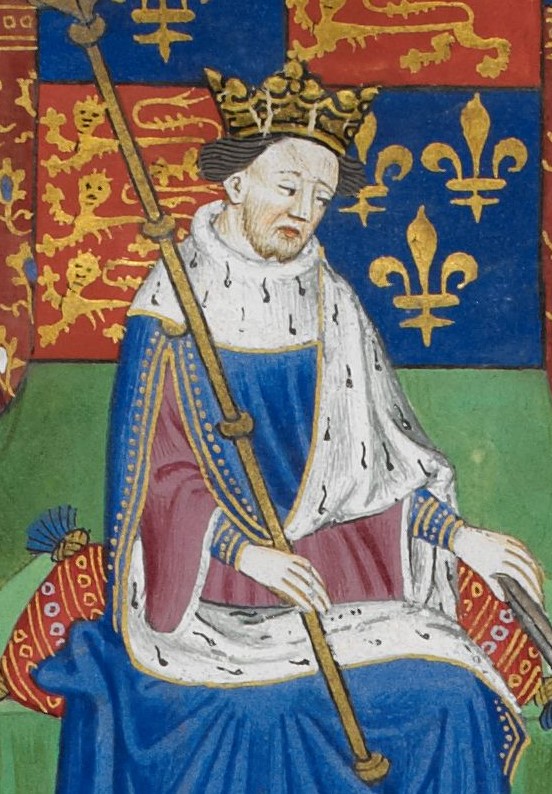


Early life and regency
As a child-king Henry's government was managed by regents and councils. The political framework established during his minority concentrated power in leading nobles and royal officials and left unresolved military and financial strains. The English claim to the French throne derived from his grandfather Henry V's marriage to Catherine of Valois and the arrangements of the Treaty of Troyes, but in practice English control in France weakened during Henry's reign.
Losses in France and government challenges
During the 1430s and 1440s English authority in Normandy, Maine and other territories declined under pressure from French resurgence. By 1453 most continental possessions had been lost, ending the major phase of the Hundred Years' War. Financial burdens, local rivalries and disputed royal patronage added to domestic instability.
Incapacity, factional rivalry and civil war
From the early 1450s Henry suffered extended periods of incapacity. Contemporary witnesses described episodes of mental and physical collapse; during these times the Duke of York acted as Protector. Political rivalry between the houses of Lancaster (Henry's supporters) and York escalated into open conflict in the mid-1450s. Key engagements included the battles of St Albans, Wakefield and Towton, and the shifting fortunes of leading figures such as Richard, Duke of York, and Richard Neville, Earl of Warwick.
Margaret of Anjou and Lancastrian leadership
Henry's queen, Margaret of Anjou, played a central political and military role after their marriage in 1445. She energetically led Lancastrian efforts to retain the throne for her son, Edward of Westminster, and became the most visible Lancastrian leader when Henry was unable to rule effectively.
Deposition, restoration and death
Edward IV deposed Henry in 1461 after decisive Yorkist victories and established the Yorkist dynasty. A brief Lancastrian restoration in 1470 was engineered by Warwick, but Edward returned in 1471. After the Yorkist successes at Barnet and Tewkesbury, Henry was captured and imprisoned in the Tower of London where he died on 21 May 1471. Contemporary accounts and later historians have debated the circumstances of his death; many conclude he was killed while in custody, though some details remain uncertain.
Patronage, foundations and legacy
Henry is often remembered for his personal piety and support for education and religion rather than for forceful political leadership. He founded Eton College (chartered 1440) and King's College, Cambridge (founded 1441), and provided endowments for chapels and monasteries. After the Lancastrian line fell, his body was reinterred at St George's Chapel, Windsor, following the accession of Henry VII. His life has been dramatized in literature, notably in the plays of William Shakespeare, and he remains a subject of study for medieval kingship, regency government and the social causes of civil war.
Notable facts
- Reigned twice and spent much of his life under the influence of regents, nobles and his queen, Margaret of Anjou.
- Under his rule England lost nearly all territorial possessions in France by 1453, marking the effective end of the Hundred Years' War.
- Remembered as devout and melancholic; his periods of incapacity had major political consequences.
- Founder of enduring educational institutions: Eton College and King's College, Cambridge.
Timeline — key events
- 1422: Becomes king of England as an infant on the death of Henry V.
- 1440–1441: Foundations of Eton College and King's College, Cambridge.
- 1453: Loss of most English territories in France and the effective end of the Hundred Years' War.
- 1450s: Recurrent periods of incapacity and the rise of the Duke of York as Protector; outbreak of the Wars of the Roses.
- 1461: Deposed by Edward IV after Yorkist victories.
- 1470–1471: Brief restoration arranged by Warwick; final defeat, capture and death in the Tower of London.
Historians study Henry VI both for the events of his reign and for what his life reveals about governance when a monarch is a minor or incapacitated, the limits of medieval state power abroad, and the social and political dynamics that produced a dynastic civil war in fifteenth-century England.
Related articles
Author
AlegsaOnline.com Henry VI of England (1421–1471): Lancastrian king and college founder Leandro Alegsa
URL: https://en.alegsaonline.com/art/120570