
Geothermal energy: heat from the Earth — uses, methods, and prospects
Geothermal energy is heat from beneath the Earth's surface used for electricity, heating and cooling. This article explains resources, plant types, direct uses, heat pumps, history, impacts and future directions.
Overview
Geothermal energy is the thermal energy stored in the Earth. It is a renewable resource produced by the planet's internal heat and is distinct from surface warmth created by the Sun. That internal heat resides in and below the Earth's crust and is produced by a mixture of heat left over from planetary formation and ongoing processes such as the radioactive decay of minerals. Temperatures increase with depth toward the planet's core, and in some locations that gradient brings usable heat near the surface. Where very high temperatures exist, this heat can be associated with molten rock or magma.
Image gallery
10 Images




Types of geothermal resources and characteristics
Geothermal resources are commonly classified by temperature and accessibility. Near-surface ground maintains a nearly constant temperature a few metres below grade and is the basis for ground-source heat pumps. Hydrothermal resources consist of naturally occurring hot water and steam trapped in permeable rock; these feed most conventional geothermal power stations. Deep, hot but dry rock — sometimes called hot dry rock or enhanced reservoirs — contains heat but lacks sufficient fluid and permeability; such sites may require engineering to be practical. At the most extreme end, magma contains very large amounts of heat but is currently inaccessible for routine energy production.
- Low-temperature and shallow: ground-source heat and direct heating.
- Hydrothermal: hot water and steam used for electricity and industrial heat.
- Enhanced geothermal systems (EGS): engineered circulation through hot rock; still in development and demonstration phases — see EGS.
- Magma-derived heat: a potential but largely untapped source.
How geothermal electricity is produced
Electricity generation uses high-temperature fluids to drive turbines, but technologies differ according to resource temperature and fluid state. Three common commercial approaches are:
- Dry steam plants that use steam directly to spin turbines (historical, site-limited).
- Flash steam plants that depressurize hot water to produce steam for turbines.
- Binary cycle plants that transfer heat from geothermal water to a secondary working fluid with a lower boiling point; the secondary fluid vaporizes and drives the turbine, allowing efficient use of moderate-temperature resources.
All types typically involve drilling into subsurface reservoirs, extracting hot fluid or steam, using it to produce power or heat, and reinjecting cooled fluid to sustain the resource and manage pressure. Geothermal plants can provide stable, baseload electricity because subsurface temperatures and flows are steady compared with some intermittent sources.
Direct uses, heat pumps and examples
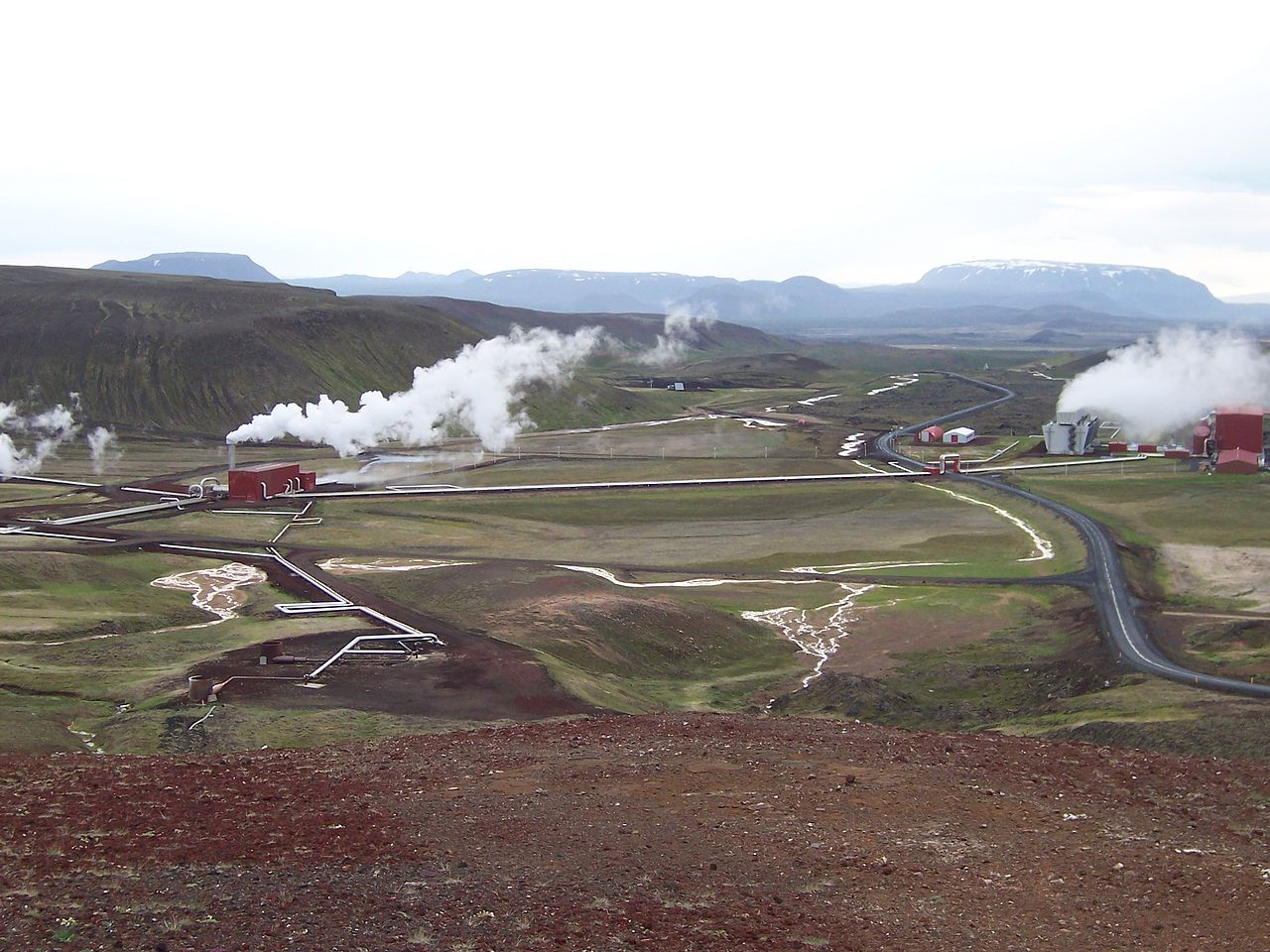
Geothermal heat is valuable beyond large-scale power generation. Direct-use applications exploit hot water or steam for district heating, agricultural greenhouses, aquaculture, industrial processes, and bathing. Many communities exploit near-surface or shallow hydrothermal resources; for example, buildings and municipal heating networks in Iceland rely heavily on geothermal heat. Natural features such as hot springs and geysers are visible expressions of geothermal activity and have long been used for bathing and leisure (historically and today).
Ground-source heat pump systems use the stable temperature of the shallow subsurface to heat and cool buildings. A typical system comprises a heat pump, indoor air distribution, and a buried piping network acting as a heat exchanger. In winter the system extracts heat from the ground and concentrates it indoors; in summer it reverses and moves heat from the building into the ground, lowering cooling costs and sometimes providing a free source of domestic hot water.
History, distribution and technological development
People have used geothermal heat since prehistoric times for bathing and cooking, and industrial-scale use for electricity began in the early 20th century. Global geothermal development is concentrated where high-temperature resources are accessible near the surface: examples include parts of the western United States, Central America, East Africa, Italy, the Philippines, New Zealand, and Iceland. Installed geothermal capacity grew slowly compared with wind and solar, but it supplies steady power and heat in many regions. Most commercial geothermal technology—power plants, district heating, heat pumps—is mature, while enhanced geothermal systems and deeper exploitation of heat remain active areas of research and demonstration projects.
Benefits, limits and environmental considerations
Geothermal energy offers several advantages: it produces low greenhouse gas emissions in operation, provides reliable baseload electricity, reduces fossil fuel dependence when used for heat, and can offer high energy efficiency for heating and cooling. Limitations and impacts include the site-specific nature of exploitable resources, the upfront cost and risk of drilling, potential for induced seismicity when reservoirs are stimulated, the need to manage fluid chemistry and scaling, and local environmental concerns such as land use and water consumption. Careful site selection, reservoir management, and regulatory oversight help mitigate many problems.
Outlook
Future prospects include broader deployment of heat pumps for buildings, expanded direct-use systems in urban heating, and progress on engineered reservoirs and deep drilling to unlock widely distributed hot dry rock. Research aims to lower costs, reduce drilling risk, manage induced seismicity, and integrate geothermal into flexible power systems alongside variable renewables. Because geothermal heat is stored within the planet and available day and night, it is likely to remain a key part of diversified, low-carbon energy strategies where geology and investment conditions permit the development of resources.
Further reading: introductory summaries often cover basic terminology and technology classes; technical reviews examine reservoir engineering and environmental management. For succinct primers and policy overviews see general references and regional studies on geothermal resource potential and applications.
renewable • Earth's crust • Sun • radioactive decay • core • magma • bathing • electricity • Iceland • EGS • heat pump • heat exchanger • hot springs • geysers
Questions and answers
Q: What is geothermal energy?
A: Geothermal energy is a renewable energy made by heat inside the Earth's crust. It comes from the original formation of the planet and radioactive decay of minerals, and can be used to generate electricity, provide district heating, or other heating and cooling applications.
Q: How much of the world's electricity was generated by geothermal in 2007?
A: In 2007, about 10 gigawatts of electricity (or 0.3%) was generated by geothermal around the world.
Q: What temperature does the ground maintain at a depth of 10 feet below Earth's surface?
A: The ground at a depth of 10 feet below Earth's surface typically maintains a nearly constant temperature between 50° and 60°F (10° and 16°C).
Q: How can geothermal heat pumps be used to heat buildings?
A: Geothermal heat pumps can tap into this resource to heat buildings by using power to remove heat from a system of pipes buried in shallow ground near the building in winter, and reversing this process in summer. This removed heat can also be used for hot water.
Q: Are enhanced geothermal systems projects mature technologies?
A: No, enhanced geothermal systems projects are not mature technologies yet.
Q: Where are most geothermal reservoirs located in the US? A: Most geothermal reservoirs in the US are located in western states, Alaska, and Hawaii.
Q: How deep do hot dry rock resources occur beneath Earth's surface? A Hot dry rock resources occur at depths of 3 to 5 miles (5–8 km) everywhere beneath Earth's surface and at lesser depths in certain areas.
Related articles
Author
AlegsaOnline.com Geothermal energy: heat from the Earth — uses, methods, and prospects Leandro Alegsa
URL: https://en.alegsaonline.com/art/38377
Sources
- ucsusa.org : How Geothermal energy works
- srren.ipcc-wg3.de : "Special report: renewable energy sources"