
Fumarole: volcanic gas vents and their geology
A fumarole is an opening in the Earth's crust that emits steam and volcanic gases. This article explains composition, formation, hazards, uses, and how fumaroles differ from related features.
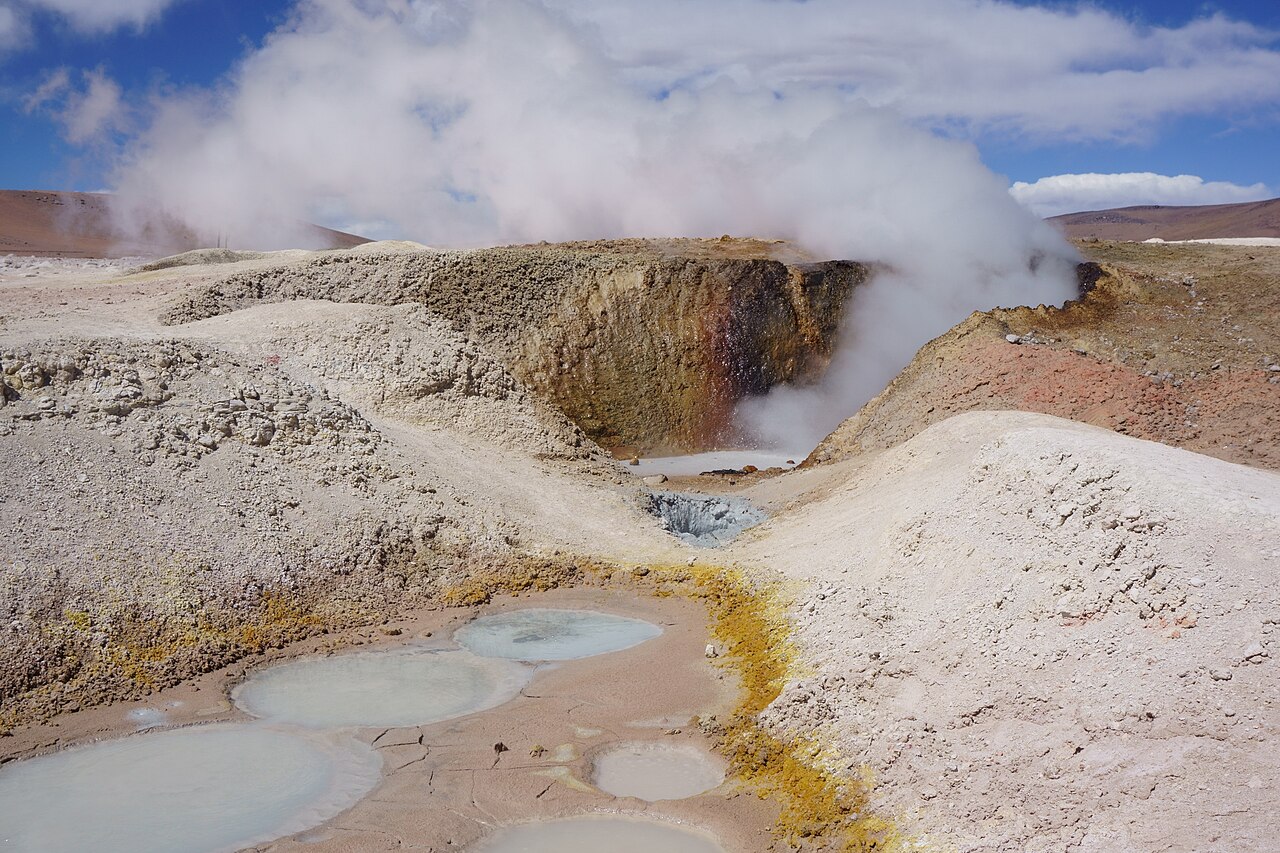
A fumarole is a natural vent in the Earth's crust that emits steam and volcanic gases. The word traces to the Latin fumus, meaning smoke. Fumaroles commonly occur near volcanoes, including active, dormant and eroded systems; they may persist long after eruptions have ceased and appear around hydrothermal fields and calderas. The vents release steam together with a complex mixture of gases, and can be small fissures or large, fumarolic fields.
Image gallery
7 Images




Characteristics and gas composition
Temperatures at fumaroles range from warm to several hundred degrees Celsius. Common constituents include:
- Carbon dioxide (CO2), a major, often invisible component.
- Sulfur dioxide (SO2), responsible for acid formation and atmospheric effects.
- Hydrogen sulfide (H2S), which smells of rotten eggs and can form elemental sulfur.
- Hydrochloric acid and other acid gases in dilute form after condensation.
Formation, types and distinctions
Fumaroles form where magma or hot rock heats groundwater or when hydrothermal fluids rise along fractures. Related vents include solfataras (sulfur-rich fumaroles) and mofettes (cool, CO2-dominated emissions). Over time fumarolic activity alters host rock chemically, depositing minerals such as native sulfur and sulfates.
Fumaroles are monitored because changes in gas flux or composition can signal shifts in volcanic activity. They also host specialized microbial communities adapted to high temperatures and acidic conditions, making them important natural laboratories for extremophile research.
Hazards include toxic or asphyxiating gases, corrosive condensation, and unstable ground near vents. Economic uses have included historical sulfur extraction and modern geothermal prospecting. Scientific study of fumaroles contributes to understanding volcanic systems, gas chemistry, and geothermal energy potential.
Further reading and resources: etymology, tectonics, dormant volcanoes, volcanism, steam, gas emissions, CO2, SO2, HCl, H2S.
Related articles
Author
AlegsaOnline.com Fumarole: volcanic gas vents and their geology Leandro Alegsa
URL: https://en.alegsaonline.com/art/37002