
Blue Lias: Jurassic limestone–shale sequence of southern Britain
Blue Lias is a layered limestone and shale formation of late Triassic–early Jurassic age in southwest England and south Wales, noted for its fossils, coastal exposures and use as building stone.
The Blue Lias is a distinctive sedimentary rock sequence exposed around the coasts and lowlands of southern Britain. It forms part of the wider Lias Group and is best known from south‑west England and parts of south Wales. Well exposed along stretches of the Jurassic Coast, the Blue Lias contributes to the region's designation as a World Heritage Site. The name refers to the typical blue‑grey colour and the repeated layering of hard and softer beds.
Image gallery
10 Images




Composition and physical characteristics
The formation is a rhythmic alternation of fine‑grained limestone and clay‑rich shale or mudstone. Individual beds can be only a few centimetres thick, producing a banded appearance in cliffs and quarries. Many beds contain small lenses or nodules of carbonate and pockets of iron sulphide; the blue/grey tint is commonly associated with iron sulphides such as pyrite. In some parts the alternations grade into more continuous clay-dominated members, reflecting subtle changes in sediment supply and water depth.
Age and how it formed
The Blue Lias was deposited at the end of the late Triassic and during the early Jurassic periods, a time of global sea‑level change and climatic fluctuations roughly 195–200 million years ago. The repeating limestone–shale pattern is interpreted as the result of short‑term environmental cycles — likely orbital forcing — that controlled productivity, sediment input and oxygenation of bottom waters. Thicker clay members indicate intervals of deeper, quieter water or increased terrigenous supply, consistent with deposition in a shallow to deeper marine environment.
Fossils and palaeontological importance
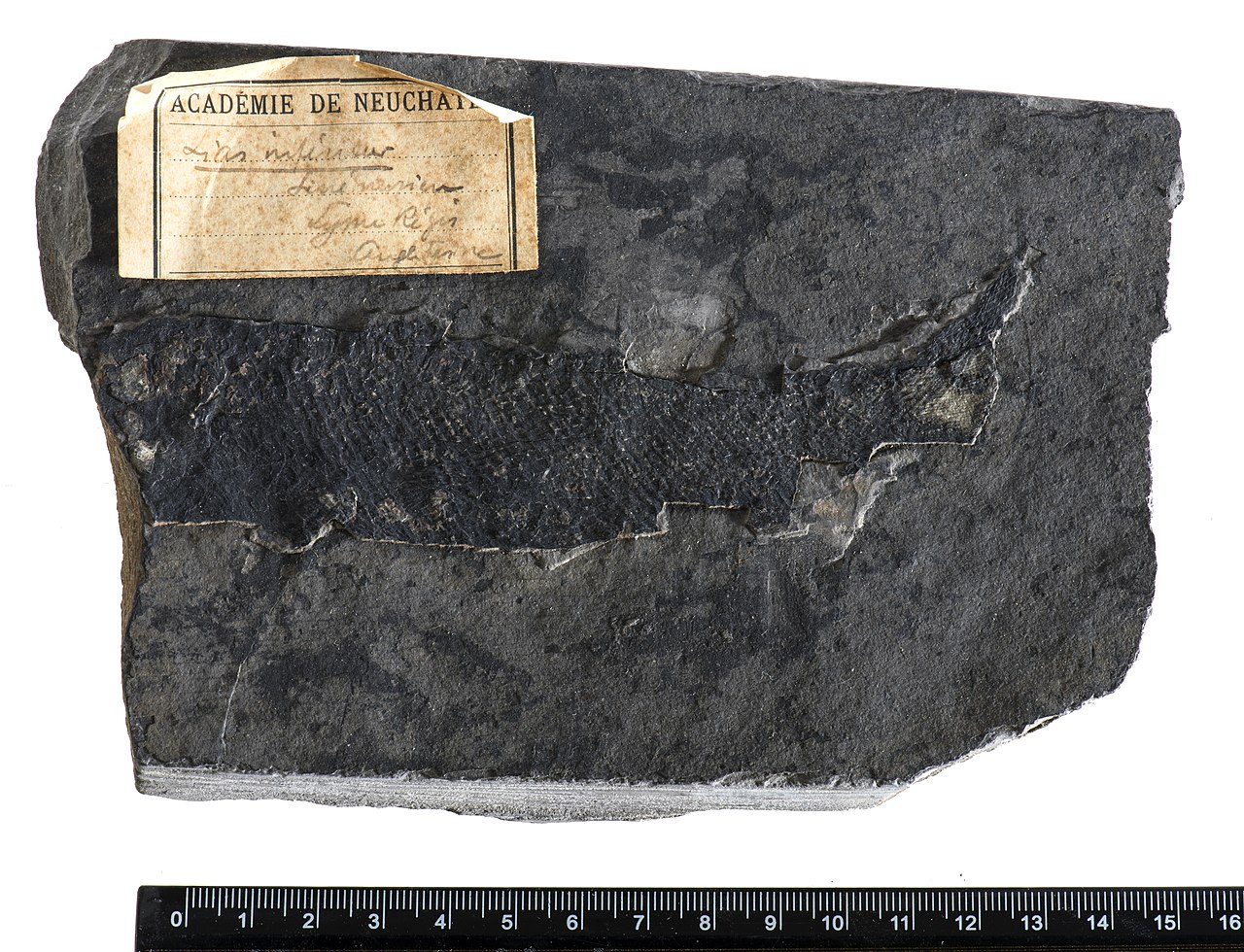
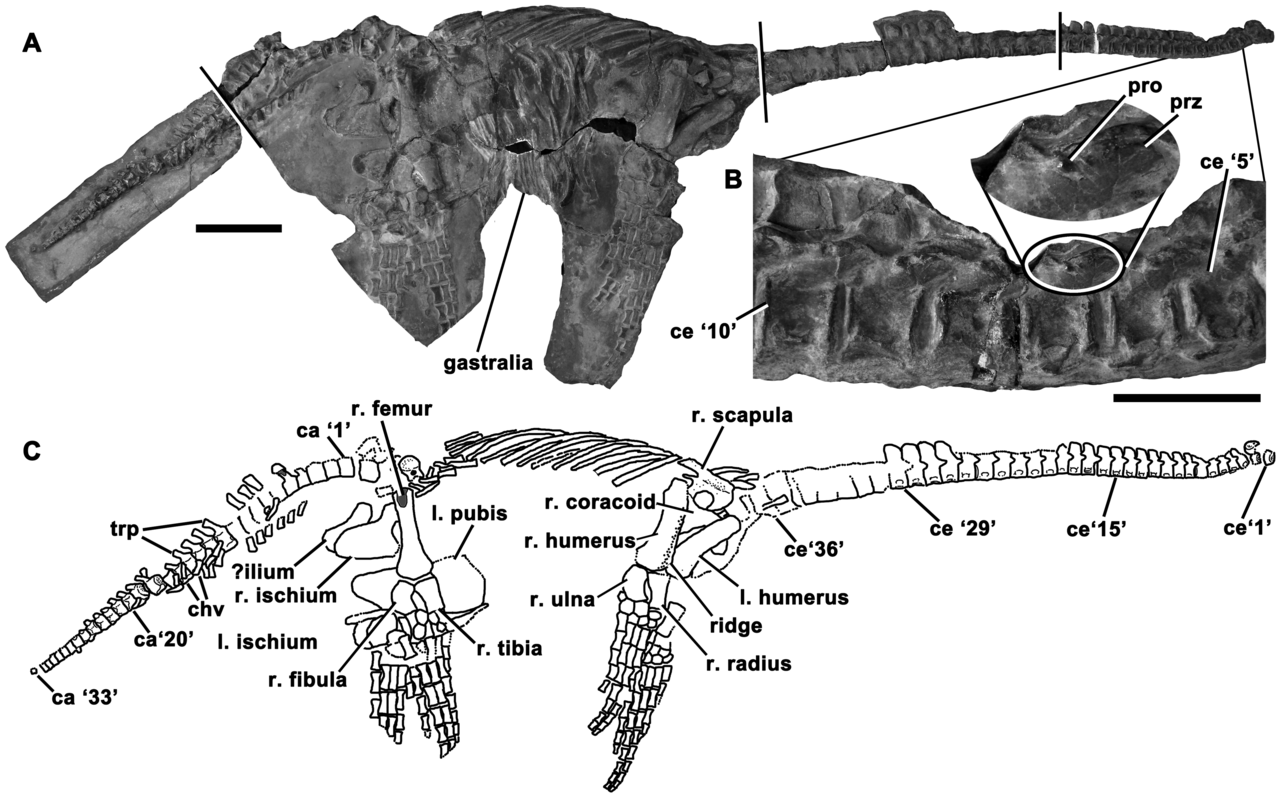
Blue Lias beds are fossiliferous and have yielded diverse marine fauna. Ammonites are especially abundant and useful for biostratigraphic dating; many field guides highlight the discovery of ammonites in these layers. The sequence has also produced remains of marine reptiles (for example ichthyosaurs and plesiosaurs), fragmentary dinosaurs washed into marine settings, and the early pterosaur Dimorphodon from some British localities. Because the beds are relatively continuous and datable, they are important for studies of extinction events and early Jurassic recovery.
Distribution, notable exposures and access
Classic exposures occur on the Dorset and Somerset coasts, including well‑visited fossil‑hunting beaches, and in parts of south Wales where Blue Lias outcrops inland and at the coast. Many of the best sections are accessible to the public, but collecting rules and safety considerations apply: tides and cliff stability can be hazardous, and some sites are protected for their scientific value. Visitors often consult local museums and visitor centres for guidance before searching for fossils.
Uses, quarrying and conservation
Historically the Blue Lias has been quarried for building stone, roadstone and lime burning; its durability and attractive bands make it a common material in regional vernacular architecture. Modern quarrying supplies aggregate and specialist masonry stone, but extraction is balanced against conservation because of the formation's palaeontological and geomorphological importance. Many coastal exposures are managed as part of protected landscapes and the fossil‑rich beds are valuable for education, research and geotourism.
Summary and notable facts
In summary, the Blue Lias is a compact but internationally significant sequence that records a dynamic interval at the Triassic–Jurassic boundary. Its characteristic blue‑grey, bedded appearance, rich fossil content and wide occurrence across southern Britain make it both a subject of scientific study and a familiar feature of the British coastline. For further reading and local guidance consult regional geological trusts and museum resources (limestone and mudstone descriptions, conservation advice and visitor information are commonly available through such organisations).
Questions and answers
Q: What is the Blue Lias?
A: The Blue Lias is a formation of rocks mostly found in south west England and parts of south Wales. It is part of the Jurassic Coast World Heritage Site and is part of the Lias Group.
Q: When was the Blue Lias laid down?
A: The Blue Lias was laid down between 195 and 200 million years ago in late Triassic and early Jurassic times.
Q: What types of rocks make up the Blue Lias?
A: The Blue Lias consists of a sequence of limestone and shale layers.
Q: What is the Blue Lias famous for?
A: The Blue Lias is famous for its fossils, especially ammonites. Remains of a number of dinosaurs and the pterosaur Dimorphodon have also been found.
Q: What causes the alternations of limestone and mudstone in the Blue Lias?
A: Short-term climatic variations, thought to be caused by Milankovitch cycles, cause the alternations of limestone and mudstone in the Blue Lias.
Q: What gives the Blue Lias its blue/grey color?
A: Iron pyrite gives the Blue Lias its blue/grey color.
Q: What does the clay-rich mudstone member in the Blue Lias indicate?
A: The deposition of a clay-rich mudstone member shows that it was laid down in a deeper marine environment.
Related articles
Author
AlegsaOnline.com Blue Lias: Jurassic limestone–shale sequence of southern Britain Leandro Alegsa
URL: https://en.alegsaonline.com/art/12352