
Aesculus glabra (Ohio buckeye): description, range, and significance
Aesculus glabra, the Ohio buckeye, is a medium deciduous tree of eastern North America known for palmate leaves, spring flower spikes and glossy brown buckeye seeds; culturally important in Ohio.
Aesculus glabra, commonly called the Ohio buckeye, is a medium-sized deciduous tree in the soapberry family. It is native to parts of eastern North America and typically reaches a modest canopy height, frequently planted or found in mixed hardwood stands, riverine woodlands, and older urban lots.
Image gallery
7 Images

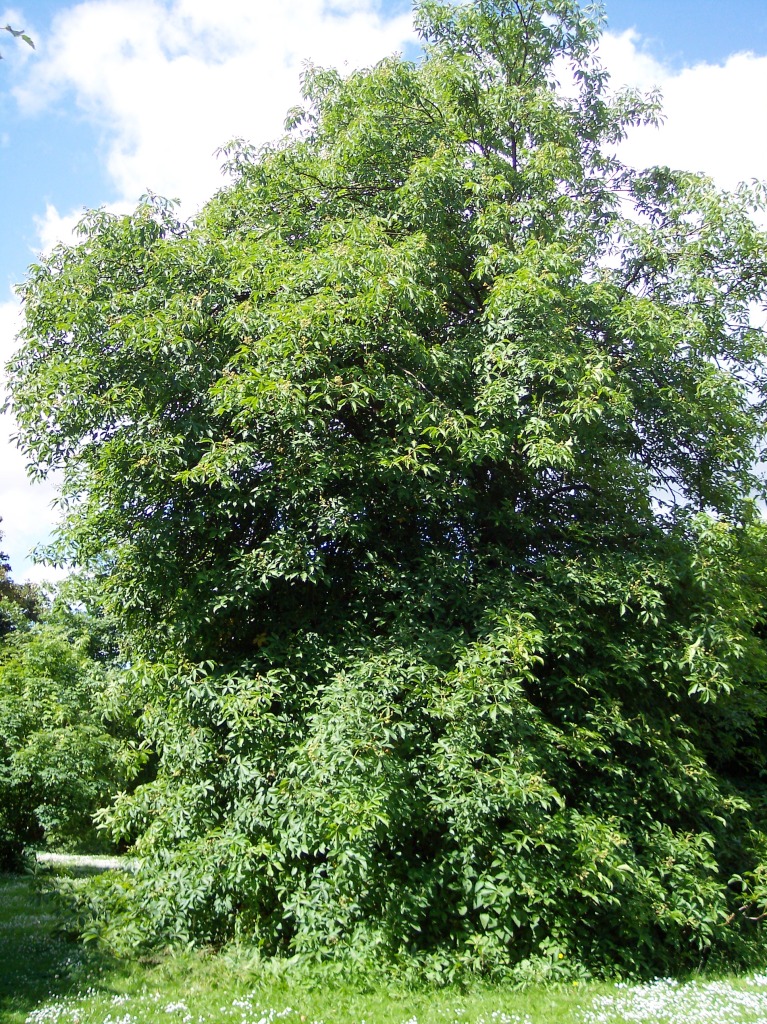


Identification and morphology
The Ohio buckeye is recognized by its palmately compound leaves, usually composed of five (sometimes seven) leaflets. Each leaflet is several centimetres long with a serrated margin and a pointed tip. In spring, the tree produces upright clusters of showy, often yellow flowers that attract bees and other pollinators. After flowering, the plant forms a spiny or smooth capsule as fruit which contains one to three glossy, brown nuts—the familiar "buckeyes." The nuts display a light-coloured patch that some compare to an eye.
Range and habitat
Wild populations occur across a swath of North America. State and regional records note presence in places such as Pennsylvania, Ohio, parts of Nebraska, sections of Texas, and locations in Georgia, with occurrences extending into the far southwest of Ontario, Canada (Ontario). It favors rich, well-drained soils but tolerates a range of conditions in temperate climates.
Ecology, toxicity and uses
Seeds and other tissues of Aesculus glabra contain bitter and biologically active compounds that make them inedible when raw. Historically and ethnobotanically, some Native Americans and later users processed seeds to reduce toxins for limited traditional uses; processed extracts were employed as soap-like substances or for other utilitarian purposes. The tree provides food and shelter for wildlife, and its early-season flowers are a resource for pollinators.
Cultural and practical significance
The buckeye is strongly associated with the U.S. state of Ohio, where it is a regional emblem and state symbol. The name "buckeye" comes from a resemblance the nut bears to the eye of a deer, specifically a male or buck. Cultural ties extend to institutions: for example, the nickname of The Ohio State University and its mascot draw on this local association.
Key features at a glance
- Palmate leaves with 5–7 leaflets
- Upright clusters of yellowish spring flowers
- Round, glossy brown seeds (buckeyes) inside a capsule
- Medium tree suited to mixed woodlands and yards
- Contains compounds that render raw seeds toxic to humans
As an ornamental and native species, Aesculus glabra is valued for seasonal interest and wildlife support but should be handled with awareness of seed toxicity. For further botanical details, regional occurrence records and cultivation advice, consult specialist references and local conservation resources.
Questions and answers
Q: What is Aesculus glabra?
A: Aesculus glabra, also known as Ohio buckeye, is a type of tree.
Q: How tall does an Ohio buckeye tree grow?
A: An Ohio buckeye tree grows to be 15 metres (49 ft) to 25 metres (82 ft) tall.
Q: In which states in North America can Ohio buckeye be found?
A: Ohio buckeye can be found in several states in eastern North America including Pennsylvania, Ohio, Nebraska, Texas, and Georgia. It also grows in the far southwest of Ontario.
Q: What do the leaves of an Ohio buckeye tree look like?
A: The leaves of an Ohio buckeye tree have 5 or 7 leaflets and are 8 centimetres (3 in) to 16 centimetres (6 in) big.
Q: When does an Ohio buckeye tree bloom?
A: An Ohio buckeye tree blooms with yellow flowers in spring.
Q: What is the fruit produced by an Ohio buckeye tree and what is it called?
A: The fruit produced by an Ohio buckeye tree is a small shell which has 1-3 nuts inside of it called buckeyes.
Q: Can buckeyes be eaten by humans?
A: Buckeyes can't be eaten by humans as they have acid in them.
Related articles
Author
AlegsaOnline.com Aesculus glabra (Ohio buckeye): description, range, and significance Leandro Alegsa
URL: https://en.alegsaonline.com/art/1191
Sources
- digir.agr.gc.ca : digir.agr.gc.ca/pls/pp/ppack.info?p_sci=sci&p_type=all&p_psn=205