
Agave deserti — the desert agave
Agave deserti, the desert agave, is a rosette-forming succulent native to the deserts of southern California, Arizona and Baja California, valued for its drought adaptations and traditional uses.
Overview
Agave deserti, commonly called the desert agave, is a succulent plant adapted to arid environments. It grows wild in North American deserts and is part of the broader agave group (agave) known for thick, fleshy leaves and dramatic flowering stalks. Its natural distribution includes dry regions and scrublands in the southern California area, parts of Arizona, and the peninsular Baja California, often occupying rocky slopes and open washes in deserts.
Image gallery
3 Images

Description and adaptations
Desert agave forms compact, low rosettes of rigid, lance-shaped leaves with sharp terminal spines and marginal teeth. The leaves store water and have a thick cuticle to reduce evaporation. Like many agaves, it uses specialized metabolism to conserve water and thrives in full sun and well-drained soils. Plants may produce secondary rosettes or "pups" as well as a tall flowering stalk when mature.
Life cycle and reproduction
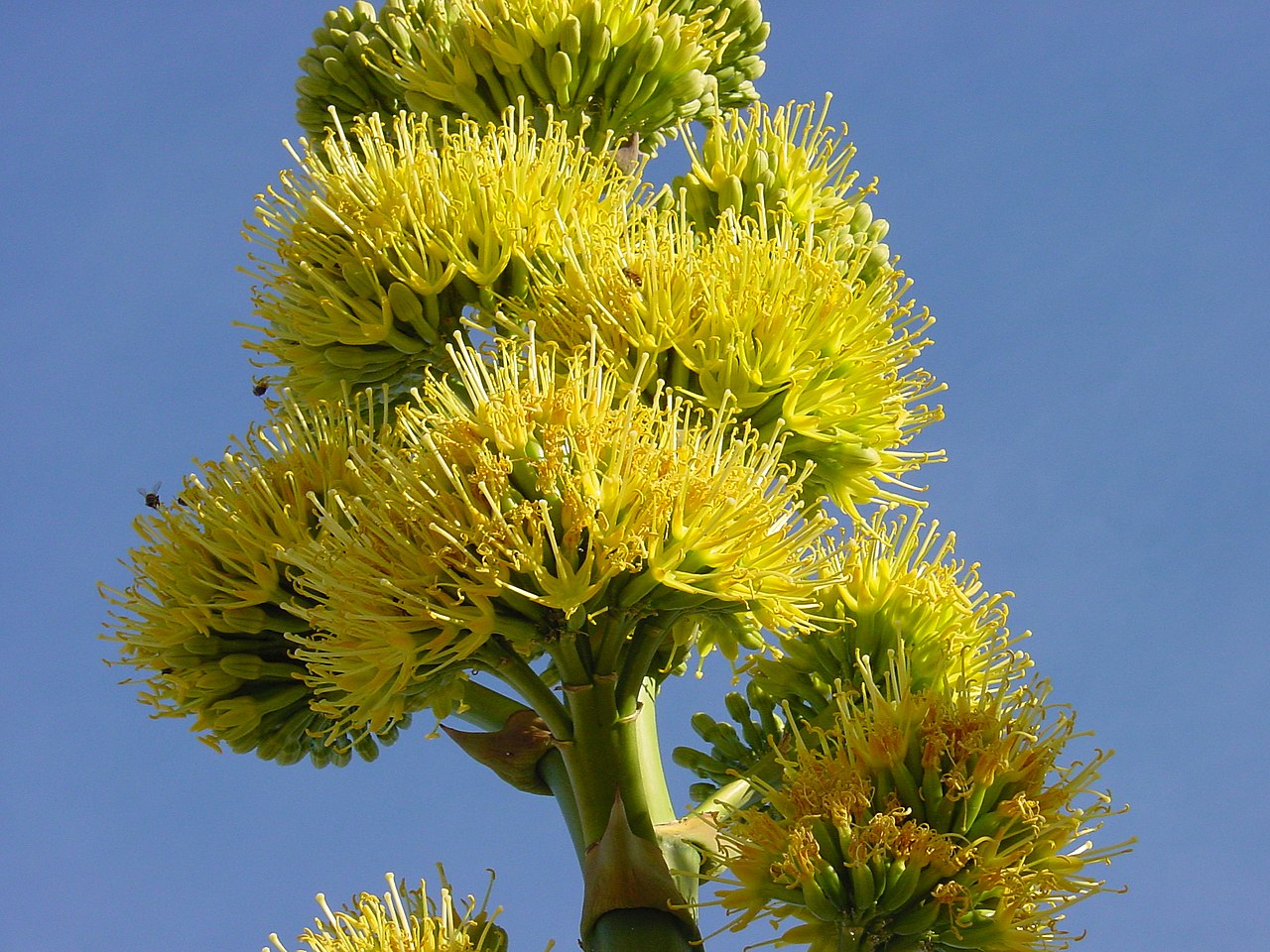
Agave deserti is a long-lived perennial. It allocates resources to vegetative growth for many years and then sends up a conspicuous flowering inflorescence once in its life; after flowering and setting seed the main rosette typically dies, a pattern called monocarpic reproduction. Flowers provide nectar and pollen that attract a variety of pollinators, and seeds or offsets allow the species to persist locally.
Uses and cultural significance
Indigenous peoples and local residents have long used agave species for food, fiber and other purposes. The roasted heart, fibers for cordage, and occasional fermentations are examples generally associated with agaves. In modern landscaping, desert agave is valued for xeriscaping and habitat gardens because of its low water needs and sculptural form.
Cultivation and conservation
Gardeners cultivate desert agave for its drought tolerance and striking appearance; it prefers rocky, well-drained sites and minimal irrigation. While not generally regarded as globally threatened, its habitat can be affected by development and invasive species, so preserving native desert landscapes helps maintain healthy populations.
Notable facts and distinctions
- Members of the agave group display a wide range of sizes and forms; desert agave is among those adapted to cooler desert climates.
- Its dramatic flowering stalks can be visible from a distance and mark the end of a rosette’s life cycle.
- For further botanical details and regional records consult specialist flora and local plant databases (agave resources, regional guides).
Related articles
Author
AlegsaOnline.com Agave deserti — the desert agave Leandro Alegsa
URL: https://en.alegsaonline.com/art/1345