
Edward Everett: American orator, statesman, and educator
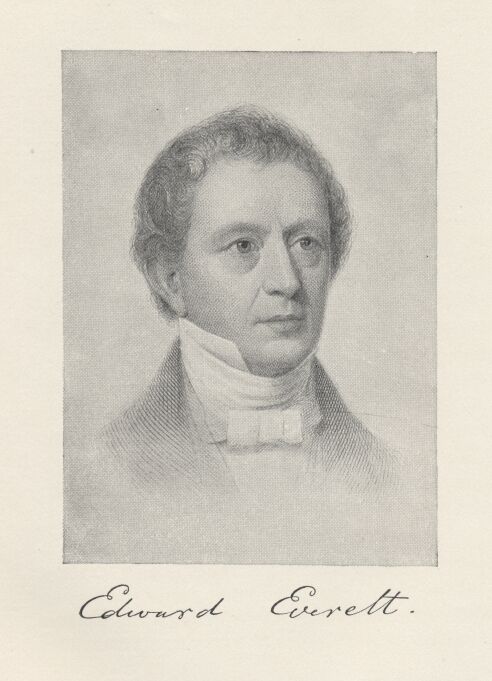
Edward Everett (1794–1865) was a Massachusetts Whig politician, noted orator and educator who served in national office, led Harvard, and delivered the principal Gettysburg oration before Lincoln's address.
Overview
Edward Everett (April 11, 1794 – January 15, 1865) was a prominent 19th-century American politician, educator and public speaker from Massachusetts. Renowned in his day for classical learning and eloquence, Everett combined an academic career with long public service at both state and national levels. He was associated with the Whig party and later with the Constitutional Union movement; he is often remembered now for his lengthy oration at the dedication of the Gettysburg cemetery, which immediately preceded President Abraham Lincoln's much shorter Gettysburg Address.
Image gallery
10 Images



Career and offices
Everett's public career spanned many roles: he served in the U.S. House of Representatives, sat in the U.S. Senate, held the governorship of Massachusetts, acted as a diplomat abroad, and occupied high federal office. He also spent substantial periods in education, including a leadership role at Harvard University. His versatility — scholar, statesman, and minister plenipotentiary — reflected the 19th-century ideal of a public intellectual engaged across civic life.
Oratory and the Gettysburg address
As an orator, Everett was celebrated for formal, rhetorical speeches delivered at ceremonies, commencements and political gatherings. At the November 1863 dedication of the Soldiers' National Cemetery at Gettysburg he delivered what became known as the Gettysburg oration: an address reported to have lasted about two hours. President Lincoln's brief address followed; Everett admired Lincoln's ability to compress the occasion's meaning into a few sentences and later wrote to praise the concision and depth of Lincoln's words. The contrast between Everett's expansive style and Lincoln's terse formulation has become a frequent point of historical comment.
Political positions and wartime role
Throughout the sectional crisis of the 1850s and during the Civil War, Everett identified as a Unionist. Earlier in his career he was viewed as more moderate on the issue of slavery than many abolitionists, but he worked vigorously to rally Northern public opinion in support of the Union once war began. In 1860 he was the vice-presidential candidate of the Constitutional Union Party, a short-lived group that sought to avoid secession through compromise and constitutional norms.
Education, scholarship and legacy
Everett's academic life informed his public work. He taught at Harvard and later served in an administrative capacity there, earning respect as a classical scholar and an advocate for liberal education. In his lifetime he was among the most famous orators in America; by the late 19th and 20th centuries his reputation became overshadowed by figures like Lincoln, whose shorter speeches became more enduring in public memory. Yet historians continue to study Everett for his influence on antebellum politics, diplomacy and American rhetorical culture.
Offices held (selection)
- U.S. Representative from Massachusetts
- U.S. Senator
- Governor of Massachusetts
- U.S. Minister to Great Britain
- United States Secretary of State
- President and professor at Harvard University
Further reading and resources
- Biographical overview and chronology
- Political career and electoral history
- Connections to Massachusetts public life
- Whig party context and positions
- Service in the U.S. House of Representatives
- Service in the U.S. Senate
- Governorship of Massachusetts
- Diplomatic service in Great Britain
- Tenure as Secretary of State
- Harvard roles and academic writings
- 1860 Constitutional Union ticket
- Gettysburg oration and Lincoln's address
- Civil War era activities
- Contemporary press and reception
- Views on slavery and unionism
- Public speeches and lectures
- Memorials and later assessments
- Selected primary sources and letters
Related articles
Author
AlegsaOnline.com Edward Everett: American orator, statesman, and educator Leandro Alegsa
URL: https://en.alegsaonline.com/art/118140