
Gettysburg Address (Abraham Lincoln's 1863 dedication speech)
Short speech by Abraham Lincoln delivered Nov 19, 1863 at Gettysburg. It affirmed equality, called for a "new birth of freedom," and remains a defining statement on American democracy, with several textual variants.
Overview
The Gettysburg Address is a brief but influential speech delivered by President Abraham Lincoln on the afternoon of November 19, 1863. Lincoln spoke at the dedication of the Soldiers' National Cemetery in Gettysburg, Pennsylvania, a few months after the Union victory at the Battle of Gettysburg. Given during the American Civil War, the address offered a compact reflection on the meaning of the conflict and the future of the United States.
Image gallery
10 Images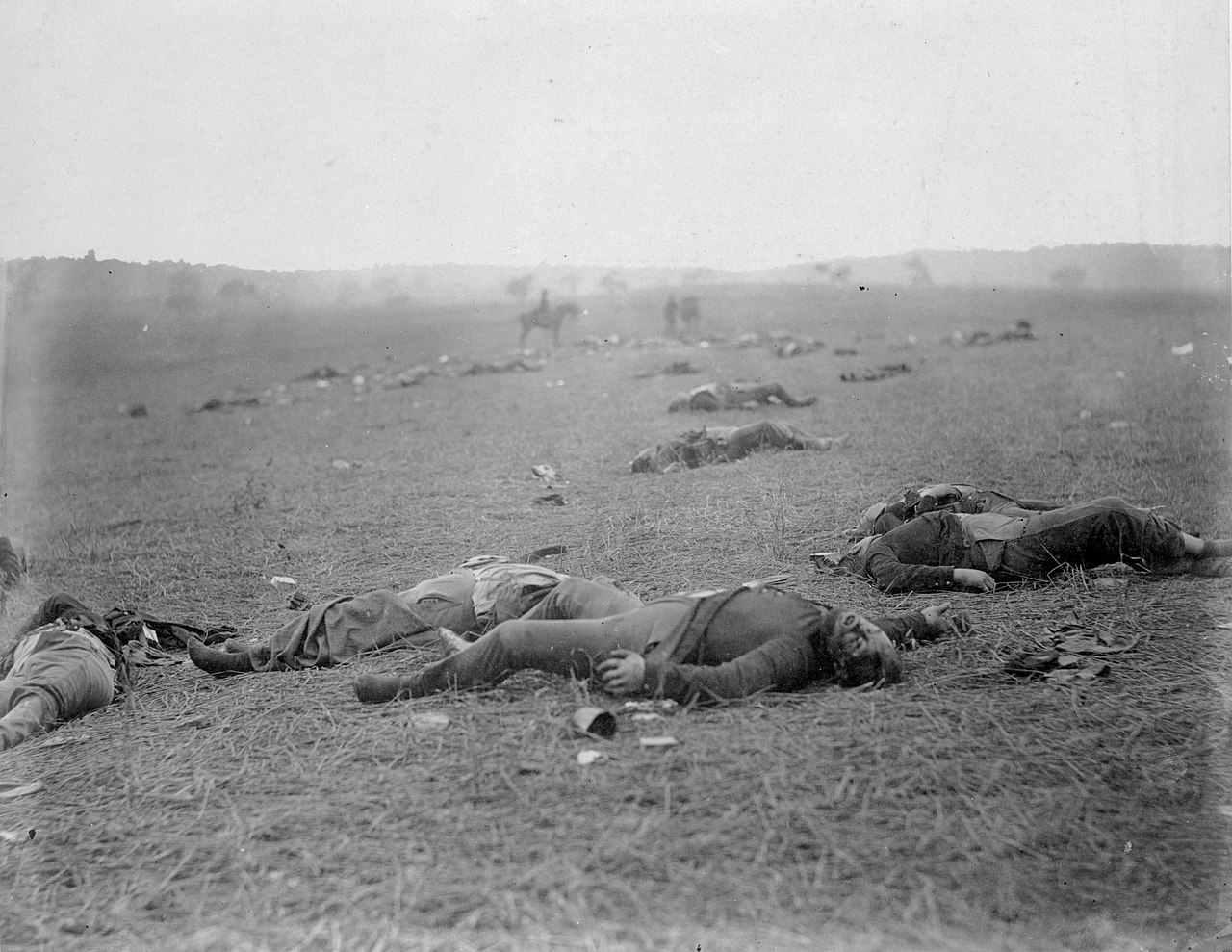




Content and key phrases
In roughly two minutes and a few hundred words, Lincoln framed the war as more than a territorial contest between the Union Army and the Confederate States Army. He evoked the Declaration of Independence's claim that "all men are created equal," called for a "new birth of freedom," and ended with the enduring line about "government of the people, by the people, for the people." The speech opens with the famous temporal phrase "Four score and seven years ago," where score denotes twenty years, situating the nation’s founding in 1776.
Manuscripts and variations
Scholars and the public note that several contemporary manuscripts and printed versions of the address differ in wording and punctuation. There are five widely discussed manuscript copies, and one commonly reproduced text often appears in textbooks and memorials. Because of these variants, historians sometimes examine the circumstances and timing of each copy to understand how the speech was recorded and disseminated.
Historical context and delivery
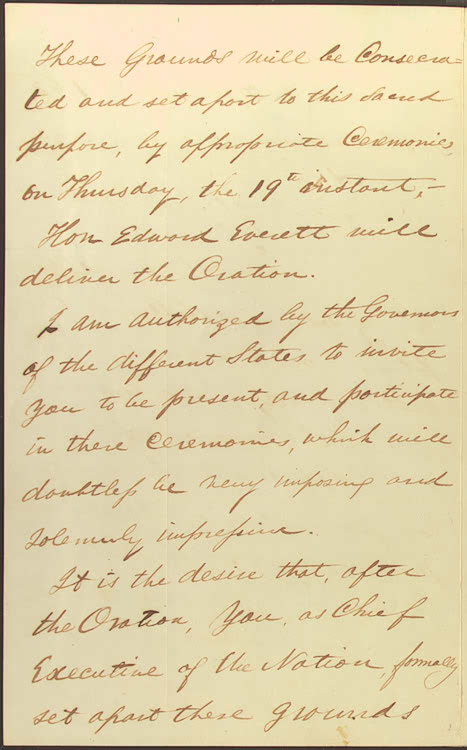
Lincoln's remarks followed a longer oration by Edward Everett and took place on a site recently stained by combat. The dedication ceremony served both to consecrate the cemetery for the fallen and to interpret the battle's significance for the nation. At a moment of high casualty and national uncertainty, the address redirected attention from immediate military concerns toward principles of equality and democratic endurance.
Importance and legacy
The Gettysburg Address quickly became a central text in American civic life and memory. It has been cited in legal and political discourse, read at commemorations, and taught widely as a concise articulation of republican ideals. Its phrases—most notably the call for a "new birth of freedom"—have been invoked during later movements for civil rights and national reform, underscoring the speech’s continuing cultural resonance (popular culture).
Characteristics and notable facts
- Brevity: The speech is unusually short for a formal dedication address but dense in meaning.
- Timing: Delivered four and a half months after the July battle, it followed a major Union victory and public mourning.
- Textual uncertainty: Multiple manuscript copies and printed reports differ in details, so modern editions often note variant readings.
- Enduring lines: Phrases from the address are frequently quoted as summations of American democratic purpose.
For further reading about Lincoln himself and the address’s place in the broader story of the nation, see biographical and historical sources on Abraham Lincoln, studies of the Union wartime effort, and analyses that link the ceremony to the recovery of the nation. Primary texts and contemporary reactions are available through collections and archives that preserve documents from the period (Gettysburg Address text, Lincoln materials and other resources).
This concise remark, delivered at a solemn public event, remains one of the most quoted and studied speeches in American history. It distilled the purpose of the struggle into a vision that aimed to ensure that the government established by the nation’s founders would survive and better realize the promise of equality.
Related topics and source collections can be explored via historical overviews, battlefield preservation sites, and scholarly editions that discuss variants and context (Civil War histories, cemetery records, and Gettysburg resources).
For military, cultural, and legal perspectives, see references to the Union Army, the Confederate States Army, and accounts of the Battle of Gettysburg, which together frame the address’s immediate backdrop.
Additional online and archival materials may be consulted through collections tagged under national documents and presidential writings; these include repositories indexed for public access and academic study (national archives, Union records, and national histories).
Key digital and print collections continue to bring the Gettysburg Address to new audiences while preserving the variations that make its transmission an object of historical inquiry (textual notes, cultural commentary).
Questions and answers
Q: What is the Gettysburg Address?
A: The Gettysburg Address is a speech by U.S. President Abraham Lincoln, delivered on the afternoon of Thursday, November 19, 1863 during the American Civil War at the dedication of the Soldiers' National Cemetery in Gettysburg, Pennsylvania.
Q: When was it given?
A: The speech was given four-and-a-half months after the Union Army had a victory over the Confederate States Army at the Battle of Gettysburg on November 19th, 1863.
Q: Why is it important?
A: The address is one of the greatest speeches in United States history and famously begins with "Four score and seven years ago", referring to American Revolution in 1776. Lincoln used this ceremony to encourage people to help America's democracy so that "government of the people, by the people, for the people shall not perish from earth". It has become very important in popular culture of United States.
Q: What does “score” mean?
A: Score in this case means twenty; it is an old word meaning twenty.
Q: How many manuscripts are there for this speech?
A: There are five known manuscripts for this speech which differ from each other in some details and also differ from words printed in modern newspapers.
Q: Who wrote it?
A: The Gettysburg Address was written by U.S President Abraham Lincoln.
Related articles
Author
AlegsaOnline.com Gettysburg Address (Abraham Lincoln's 1863 dedication speech) Leandro Alegsa
URL: https://en.alegsaonline.com/art/38593