
Principles of Aerodynamics: Airflow, Lift, Drag, and Vehicle Design
Overview of aerodynamic principles: airflow behavior, lift and drag generation, thrust vs. resistance, and how aircraft and vehicle design use streamlining and control surfaces to improve performance and efficiency.
Aerodynamics is the study of how air and other moving gases flow around bodies that move through them or remain stationary in a flow. Understanding this flow is essential for predicting forces on objects and for designing shapes that behave efficiently in airstreams.
One of the most practical objectives is improving streamlining to reduce drag on road and rail vehicles, which lowers energy consumption. Designing and refining aircraft—their wings, fuselages and control surfaces—is another central application of aerodynamic knowledge.
The study of gases at rest is a separate branch known as aerostatics. The term aerodynamics combines "aero" (air) with dynamics, the study of motion.
Image gallery
4 Images


Main aerodynamic forces
The primary forces considered in flight are lift and weight. Gravity (the weight of the aircraft) acts downward while lift acts upward; the balance between them determines whether an aircraft rises, descends, or maintains altitude.
Lift is generated by the shape and orientation of an airfoil such as a wing. As the wing moves through air, nearby molecules are accelerated and redirected, producing changes in pressure and momentum in the flow. The motion of the air around the wing creates pressure differences above and below the surface; these pressure differences and the resulting change in momentum together produce lift. Explanations commonly use both Bernoulli-style pressure arguments and Newtonian force-and-momentum reasoning—see Bernoulli's principle for one part of that view.
When lift exceeds the downward pull of gravity, the aircraft climbs; when lift is smaller than gravity, the aircraft descends.
Thrust, drag and sources of resistance
Forward motion is controlled by the balance of thrust and drag. Thrust is supplied by devices such as propellers or jet engines. Aerodynamic drag opposes forward motion and has several components: skin friction caused by viscous shear between air and a surface, pressure (form) drag from flow separation, and induced drag related to the production of lift. Skin friction is an important contributor, especially on long, smooth bodies at subsonic speeds.
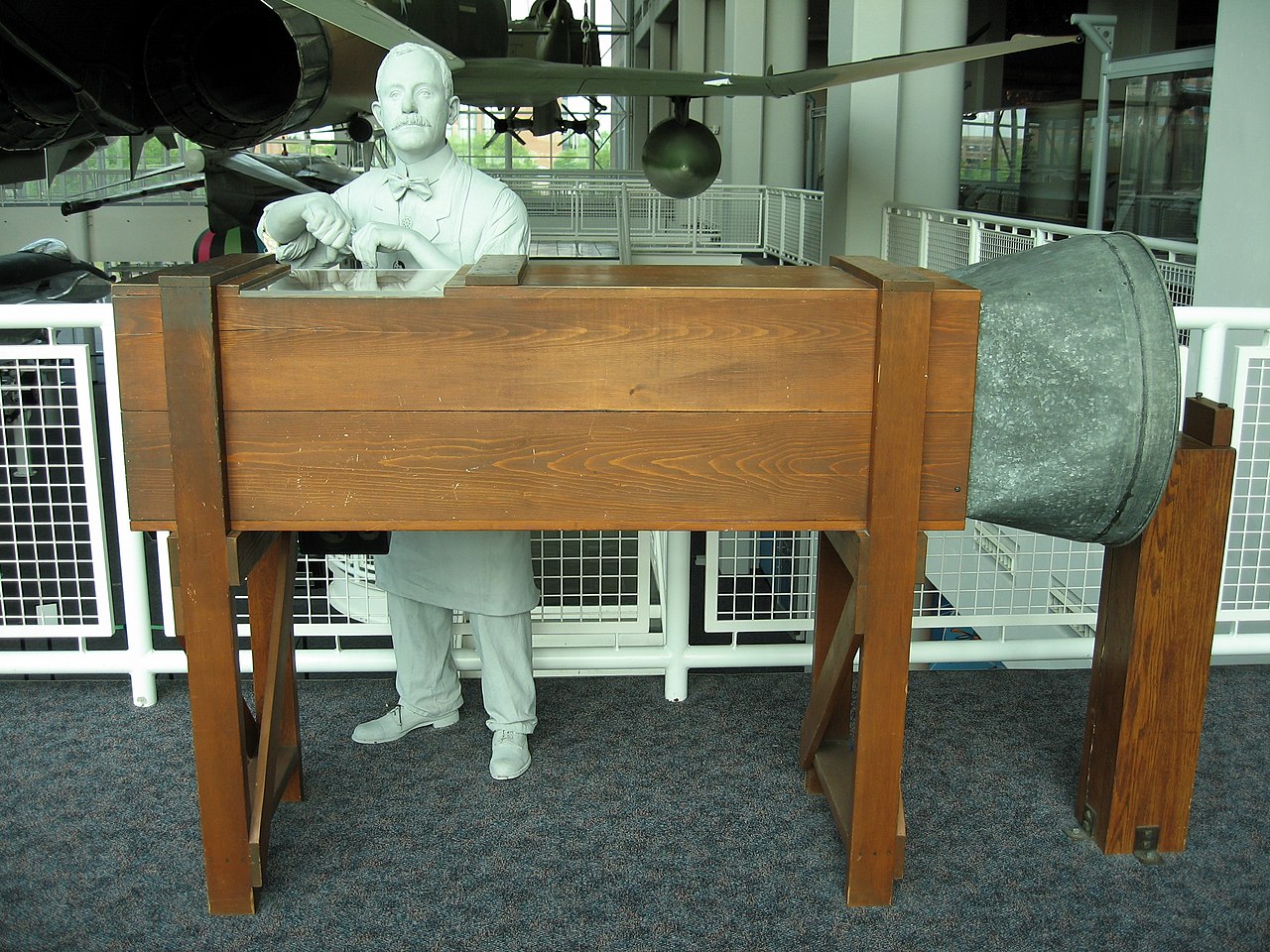
Engineers use wind tunnels, computational fluid dynamics and flight testing to measure and reduce undesirable forces, optimize control, and ensure stability across the expected flight envelope.
Tags
Related articles
Author
AlegsaOnline.com Principles of Aerodynamics: Airflow, Lift, Drag, and Vehicle Design Leandro Alegsa
URL: https://en.alegsaonline.com/art/1166